


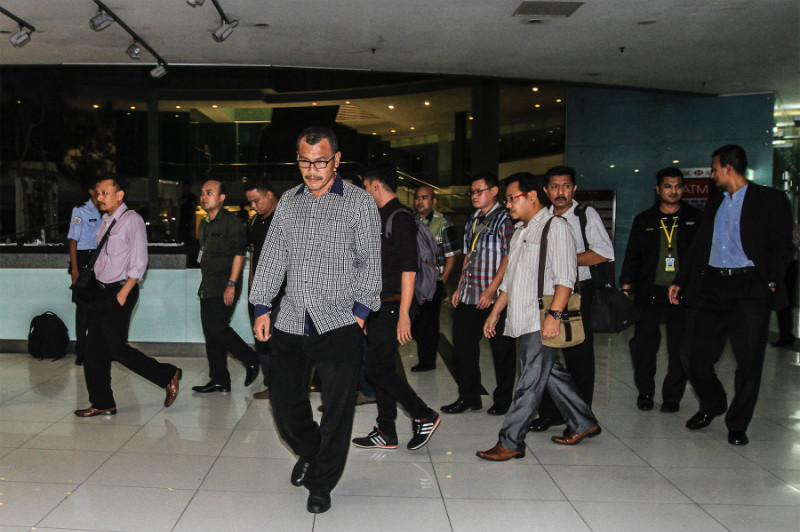
KUALA LUMPUR, Aug 7 — Two directors from the Malaysian Anti-Corruption Commission (MACC) have been transferred to the Prime Minister’s Department, a source confirmed today.
According to the source, the duo — MACC special operations division director Datuk Bahri Mohamad Zin and strategic communications director Datuk Rohaizad Yaakob — were transferred out from the anti-graft agency due to “disciplinary issues”.
“Transferred with immediate effect,” the source told Malay Mail Online, adding that the two are to report to the department on Monday.
It is not immediately known what disciplinary issues led to the duo’s transfers.
Earlier this week, Bahri lashed out at the apparent crackdown on MACC amid its ongoing probe on 1Malaysia Development Berhad (1MDB), raising the suspicion of “hidden hands” behind the order to arrest and question his men.
The police have since denied the allegation.
Yesterday during a visit to MACC’s office by several opposition lawmakers, Rohaizad said the agency was “grateful for the support shown” by the leaders and vowed to “continue to do our best work”.
Apart from hauling up seven MACC officers over the alleged leak of classified information on the 1MDB investigation, two of whom were also arrested and released after several hours, the police have also conducted two raids on the anti-graft agency’s offices over the span of two weeks.
1MDB is currently under investigation by four federal agencies — MACC, the Attorney-General’s Chambers (AGC) the police and Bank Negara Malaysia (BNM).
The investigation follows an article in business daily the Wall Street Journal (WSJ) on July 2, which cited leaked documents from government investigators as proof that one portion of RM2.6 billion worth of deposits in Prime Minister Datuk Seri Najib Razak’s accounts was funnelled through a former 1MDB subsidiary, SRC International.
MACC had on Monday issued a statement to confirm the existence of the funds in Najib’s accounts and clarify that they had come from donors and not 1MDB as previously alleged.
The statement triggered a flurry of responses from activists and opposition lawmakers, who demanded that the commission investigate the donation for possible corruption and money-laundering.


