




KUALA LUMPUR, Nov 29 ― The return of powers to detain individuals without trial that went away with the Internal Security Act (ISA) is likely the main agenda in Putrajaya’s proposed new law to address the threat of terrorism, said political analysts critical of the move.
Aside from casting a wary eye on the government’s motive in introducing another piece of legislation to supplement the Security Offences (Special Measures) Act, they also dismissed the efficacy of preventive detention in combating terrorism.
“Clearly, they are using preventive measures when they say people are coming back to organise Kumpulan Mujahidin Malaysia here, and the only way to prevent it is through preventive detention,” Prof James Chin, director of think-tank Jeffrey Cheah Institute, told Malay Mail Online.
Chin said the government had strong motivation to reintroduce the powers to detain individual without trial that it once wielded before the ISA and similar security laws were repealed.
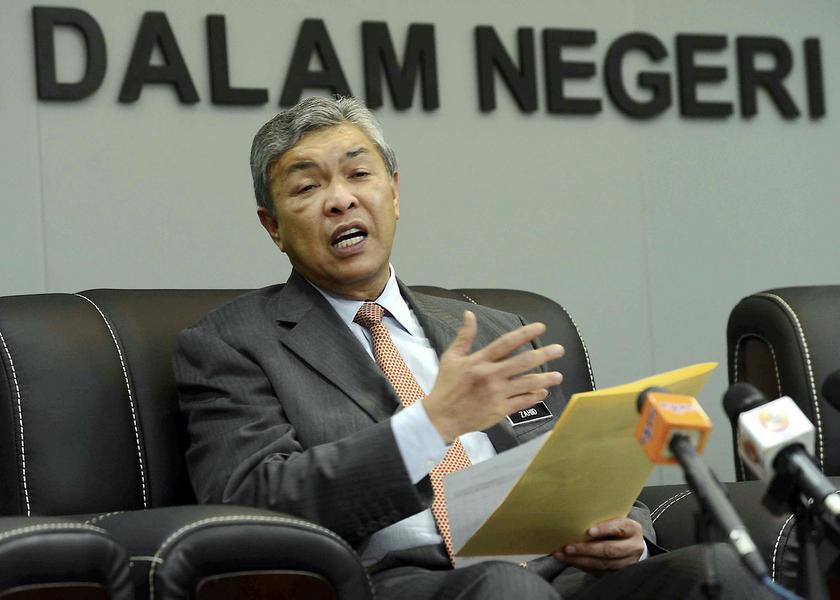
Two days ago, Home Minister Datuk Seri Dr Ahmad Zahid Hamidi announced that the anti-terrorism law Putrajaya will introduce to tackle the threat of militant groups such as Islamic State (IS) will contain “preventive measures.”
He said the new law may use the same template as the Prevention of Crime Act where the power of detention lies in the hands of a panel made up of five individuals.
Despite the broad powers coveted by authorities, political analyst Dr Wong Chin Huat said that war-torn Iraq and Afghanistan would be paradises now were preventive detention effective in combating militancy and insurgencies.
He said the real danger of IS, lies in its ideology, which can be spread through social media and not necessarily through the returning jihadists.
“We need to teach our students independent and critical thinking and we need free flow of expression and information so that the flaws of hatred-based ideologies can be exposed, debunked and refuted,” he said.
Wong’s prognosis mirrors that of Bukit Aman’s counter-terrorism division that found that the spread of militant activity and recruitment was occurring via social media and text messaging apps.
Wong explained that the only way to combat IS is to confront its ideology by denouncing ethno-religious supremacy and penalising violence.
Criminologist Assoc Prof Dr P.Sundramoorthy also agreed that long-term education is needed to minimise the risk of the nation’s young of joining terrorist or militant groups.
While he believed that the anti-terrorism law is needed to stop terrorism activities in the country, he cautioned that the law must only be used against terrorism or militant groups.
“The law should never be used against those who speak out against mainstream political ideology,” he said.
Authorities have been calling for the return of preventive detention without trial ever since Putrajaya repealed the ISA in 2012 as part of Prime Minister Datuk Seri Najib Razak’s legal reforms.
On Wednesday, Najib tabled a White Paper in Parliament titled “Addressing the threat of Islamic State”, where he outlined the history of IS, the threat the group poses and the impact it has on Malaysians as well as the danger in allowing its skewed Islamic teachings and practice of violence to spread in Malaysia.
The paper recommended a new law to address the threat, which will be tabled during the next parliamentary session in March.


