




KUALA LUMPUR, July 22 — Malaysia Airlines’ (MAS) overall liability insurance policy has no separate cap imposed on claims for search and rescue costs, which allows the carrier to seek reimbursement of hundreds of millions of ringgit for the MH370 tragedy, according to a report in today’s New York Times (NYT).
Citing unnamed sources, it said this is due to the “mysteriously” missing standard clause in MAS’ “all risk” jet crash insurance, which has a comparatively high overall liability limit of US$2.25 billion (RM7.14 billion) for each incident.
Explaining, the daily noted that among the many insurance policies taken up by airlines, the main one is the “all risk” policy, which covers crash-related expenses, including settlements with passengers’ next-of-kin and search and rescue costs.
MAS’s “all risk” policy, the NYT said, has a high cap in itself by industry standards, likely because the carrier operates large aircraft like Airbus A380s, which are each able to accommodate 494 passengers.
“But the policy is unusual in that it does not have a separate limit for search-and-rescue costs — it is limited only by the overall US$2.25 billion cap for the policy,” the daily reported, citing three people with knowledge of the policy.
The sources also said it is “unclear” why the clause was omitted.
As such, should the Malaysian or Australian government decide to bill MAS for the millions gobbled up in the expansive search for Flight MH370, underwriters would find themselves processing hefty insurance claims to the tune of hundreds of millions of ringgit from the troubled national carrier.
The NYT also reported that an Australian delegation has already been sent to Malaysia to discuss sharing costs for search and rescue operations related to MH370.
It said governments traditionally do not seek reimbursements from airlines for search and rescue efforts and in turn, airlines do not need to seek insurance payouts for these costs.
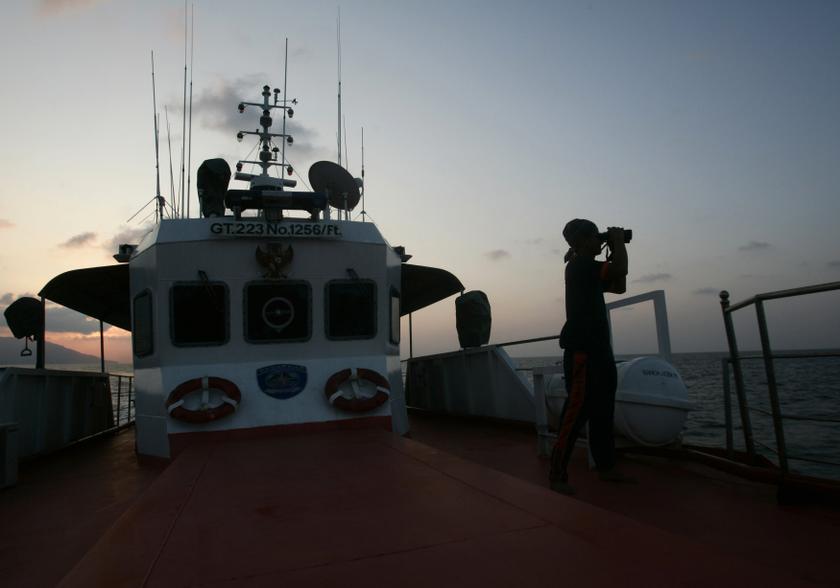
But in the case of Flight MH370, the Boeing 777 jetliner that disappeared on March 8 and has remained missing ever since, search efforts via land, sea and air have racked up a sizeable bill, turning the aircraft’s disappearance into the most expensive tragedy to hit the aviation industry.
The NYT pointed out that the Australian government is paying A$8 million to commercial contractors for the ocean floor search and has set aside a further A$60 million to tow deep-sea submersibles across the Indian Ocean floor to look for the wide-body aircraft.
Today, nearly five months after MH370’s disappearance, not a single shred of debris from the plane has been spotted. The Boeing 777 aircraft that was bound for Beijing from Kuala Lumpur has remained missing, along with all 239 people on board.
Last week, MAS lost another of its Boeing 777s. But this time, the plane carrying 298 people is believed to have been shot down as it flew over conflict-ridden Ukraine.
The tragedy sent even more shockwaves through the aviation insurance market, the NYT noted, as more insurance payments loom for insurers.
With the twin MAS tragedies, the shelling of Libya’s airport last week and the recent attack by Taliban militants on Pakistan’s airport in Karachi — more and more air insurers are growing nervous as just one category of the aviation insurance — war risk insurance on planes — has seen claims soar to a whopping US$600 million, the daily said.
Yet, the report said, the sector only collects US$65 million a year in premiums.
The NYT said Flight MH17’s crash has also caught air insurers by surprise as they usually prohibit airlines from flying over dangerous areas or cancel their policies.
But in the case of MH17, the route taken over Ukraine was approved by international aviation authorities and is commonly used by most other carriers. Furthermore, the number of flights taking that route had only dropped by 12 per cent in the month before the plane was shot down, the paper said.
“One assumes that if the war risk underwriters thought there was any risk, they would have prohibited airlines from flying or cancelled their policies,” the daily quoted Paul Hayes, head of accidents and insurance at Ascend, an aviation consulting firm in London, as saying.
Unlike its overall policy for claims on search-and-rescue costs, however, MAS’s war risk policy has a separate and much lower limit, the NYT said.
The daily reported that the lead underwriter for MAS’s war risk insurance — the Atrium Underwriting Group — had already confirmed immediately approving payment for the loss of Flight MH17.
MH17 is said to be insured by some US$97.3 million, the NYT said, citing Aon, a London-based insurance broker.
For MH370, however, Atrium only approved a half-payment under the carrier’s war risk policy for the plane after adjusters agreed that while a substantial possibility, there was no watertight proof to say that the aircraft had been downed due to pilot suicide or criminal action, the daily said.


