


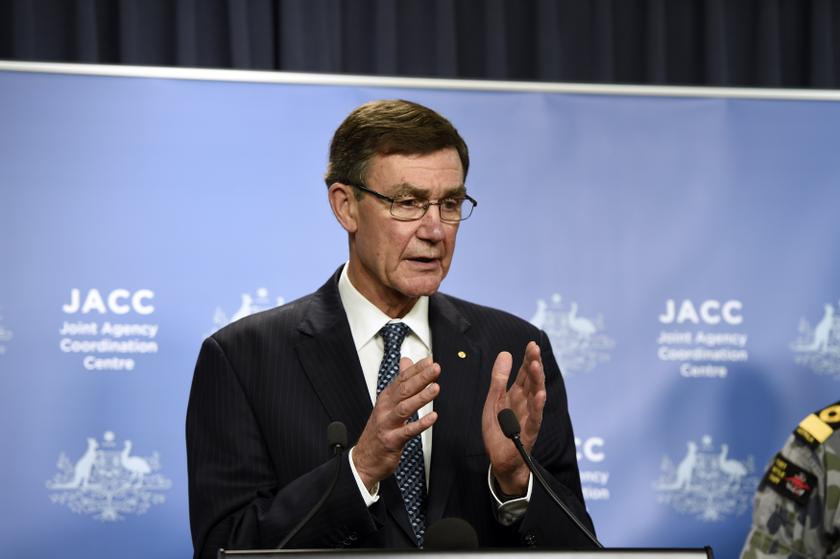


KUALA LUMPUR, May 2 — The Bluefin-21 submersible has a smaller chance of finding any evidence of Malaysia Airlines Flight MH370 in the Indian Ocean now than when the search first began, the Australian chief coordinating the effort said today.
Even as more than a month has lapsed without any wreckage of the missing plane found, Joint Agency Coordination Centre (JACC) chief Angus Houston acknowledged today that the Bluefin-21 has found nothing so far after covering 500 sq km in the southern Indian Ocean.
“I still have hope that between now and the end of May, the Bluefin might still find something,” Houston said in a joint press conference here with Malaysia’s acting Transport Minister Datuk Seri Hishammuddin Hussein and Jean-Paul Troadec, special adviser to France’s aviation accident investigation bureau.
“I must say that of finding it, the probability is lower than it has when we started the search,” he added.
Houston said he was confident that the plane's last position was in the southern Indian Ocean, off Australia.
When asked about the possibility of being wrong about the search area since the Bluefin has found nothing so far, Houston said the US-made sonar device was deployed to scour the ocean floor after several “pings” ― possibly from the missing plane's black box ― were heard.
“When we got the transmissions, it's obvious you have to go down and have a look,” he said.
Troadec said locating the missing plane was a “big challenge” as the search area was huge and the waters were "very deep".
Investigators believe that the commercial jet crashed in the southern Indian Ocean after running out of fuel, based on satellite analysis by UK satellite operator Inmarsat.
A huge search operation involving deep-sea underwater equipment, ships, aircraft and satellites has yet to yield any physical evidence, either wreckage or human remains, after the Beijing-bound Boeing 777 carrying 239 people disappeared on March 8.


