




KUALA LUMPUR, March 16 — In the search for the missing Malaysia Airlines flight MH370, investigators are forced to rely on satellite data that tells them “when” the plane last communicated but not “where”, according to the New York Times (NYT).
With all four other methods of tracking down the missing plane out of the picture, the only option left is a digital communication or electronic “handshake” between the Boeing 777-200ER plane and a satellite that orbits above the Indian Ocean, NYT reported.
NYT described this main search tool as being “awkward” as it lacked information that would have helped to show the plane’s last known position.
“But the handshake is mostly devoid of data, and cannot be used to pinpoint the plane’s last known location. It is the electronic equivalent of catching someone’s eye in the crowd; all it does is establish the angle between the satellite and the plane,” the paper said in an online report yesterday.
The usual ways to locate a plane would be through the use of primary radar, secondary radar, automated transmissions or direct verbal communication by the plane’s crew.
But the plane was not within the primary radar’s range when it went missing last Saturday, while its secondary radar and automated transmission system were likely switched off, the NYT pointed out, noting that the plane’s crew had not communicated with anyone since then.
Following the Malaysian government’s new revelations yesterday on the MH370 flight based on the plane’s last satellite signal, the focus has now shifted to two corridors - either the “southern corridor” from Indonesia to the Indian Ocean off Australia or the “northern corridor” from the borders of Kazakhstan and Turkmenistan to northern Thailand.
Yesterday, Prime Minister Datuk Seri Najib Razak said the plane carrying 239 people had made a final satellite communication at 8.11am on March 8, nearly eight hours after it departed Kuala Lumpur International Airport. The satellite data did not show the plane’s location then.
While Malaysia confirmed yesterday that the plane’s communication systems were disabled manually and was deliberately flown off course, it stopped short of saying that the plane was hijacked.
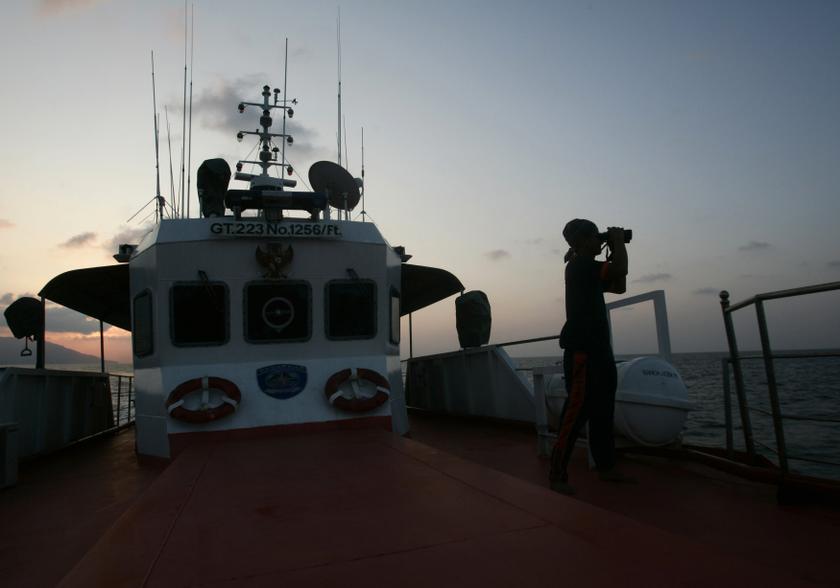
The multinational search for the plane - that turned back from a flight route to Beijing, China and headed west towards the Indian Ocean - is now in its eighth day.
Investigators are reported to favour the “southern corridor” as the more likely route flown by the plane, as the advanced air defence radar of the tightly-guarded countries in the northern area would have likely detected the MH370 flight.


