


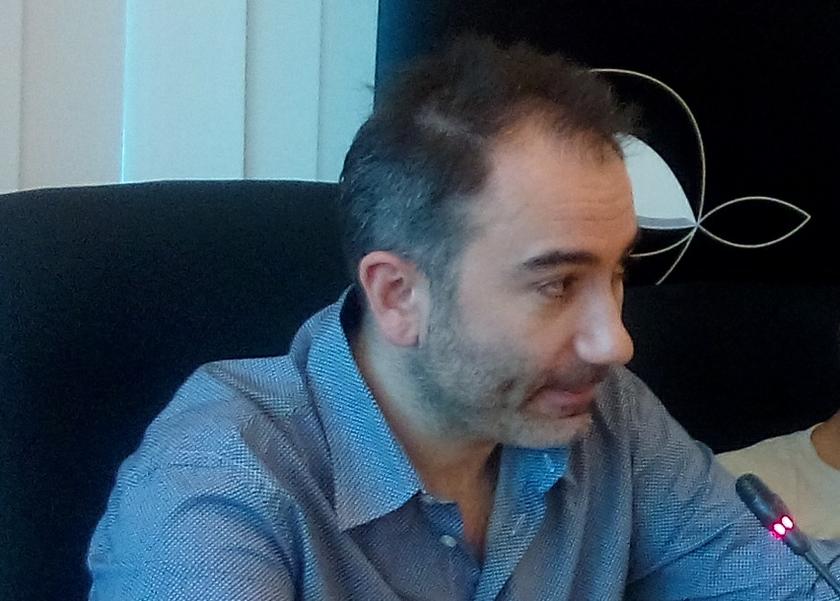


KUALA LUMPUR, Feb 16 — Alternate views allow people to gain better insight of their religion, prominent Turkish writer Mustafa Akyol told Islamic authorities fearful of Muslims being “confused” by other religions.
Arguing for freedom of speech, Mustafa also said that shunning other religious views, including that of atheism, instead reflects a lack of belief and understanding.
“I think freedom of speech is not something that we shrink from if we have confidence in our faith and the will to stand for our faith intellectually,” the journalist said in a public forum here titled “Is Islam a threat to freedom of expression?”
Mustafa pointed to early Muslim scholars who confidently studied and learned from “different intellectual traditions” belonging to the Greeks, Jews and Christians as well as ancient philosophers Plato and Aristotle, while reinterpreting them through Islam.
“If there are confusing ideas, these are good ideas, we should be confused a little bit so we will sit down and think how to defend our faith,” he added.
Earlier in the forum, he disputed the opinion that exposure to differing ideas from other religions would cause the Muslim community to lose faith.
“In our part of the world, generally Muslim authorities think that if such ideas are heard, Muslims will be confused, we will be misled, it’s a virus that we will all be drawn into,” said Mustafa, who is also a Muslim.
He said that allowing freedom of speech instead helps the public to develop their arguments and mature their own ideas, adding that the public would otherwise be left with “simplistic ideas” if they were constantly protected from contrary opinions.
“The other thing is that freedom of speech also helps moderation of ideas,” he added, saying that suppression of ideas would only stir up more anger.
Acknowledging that freedom of speech is limited by differing restrictions in different cultures and countries, Mustafa stressed that these limitations should be “objective” such as the barring of hate speech and defamation.
Limitations on this freedom should not be based on subjective reasons such as claims that the public would be “confused or seduced by wrong ideas”, he said.
Last October, the Court of Appeal upheld a ban on the Catholic Church from using “Allah” in its weekly paper Herald, saying that the Arabic word of God may confuse the local Muslim community.
Earlier, law lecturer Dr Azmi Sharom said that freedom of expression in Malaysia is guaranteed under Article 10 of the Federal Constitution, but noted that it was legally restricted by various considerations such as national security and public order.
While acknowledging that such a freedom is not absolute, Azmi said that too many limitations would render it meaningless.
He noted that the need for public order was frequently cited when banning books.
While saying that the public has a right to protest against books if they so desired, he said publishers should not prevented from producing the material simply because of the threat of violence during such protests.
“But if they go beyond a peaceful protest and it becomes violent, who is at fault? It’s not the publication, it’s those who are taking part in opposing the publication.
“You can’t take away a freedom because a group of people are going to do something unlawful,” the Universiti Malaya academic said during the forum.
The forum, which was jointly organised by the Islamic Renaissance Front and the Penang Institute, was held at the Global Movement of Moderates Foundation’s office.


