


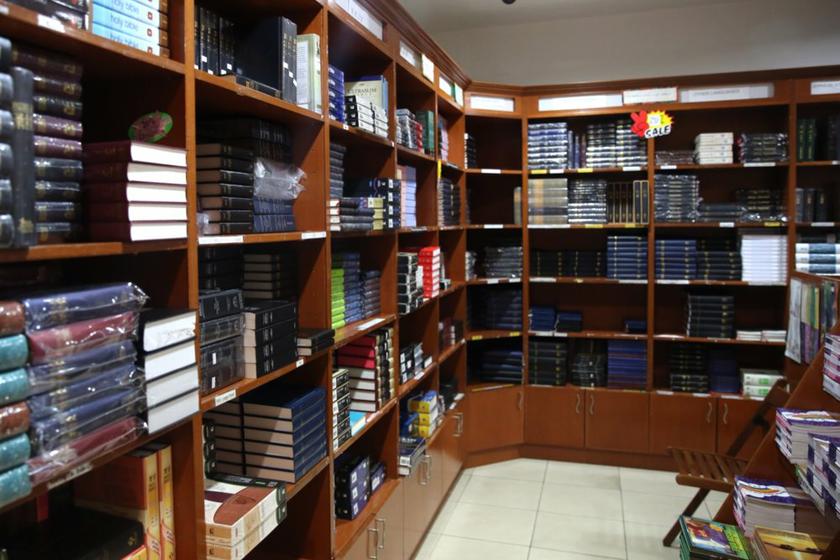


SHAH ALAM, Jan 7 — The Selangor government will seek some tweaks to the state Islamic Religious Department’s (Jais) standard operating procedures, saying today that it wants to be notified before all future raids.
Sallehen Mukhyi, the Selangor executive councillor in charge of Islamic affairs, said last week’s raid at the Bible Society of Malaysia’s (BSM) Petaling Jaya premises had been above board as Jais’ present SOPs do not require it to notify the state government first.
He added, however, that the SOP would be reviewed to compel Jais to report to him and the state government before it conducts future raids, saying that this was important because it concerns other religions.
In a report by Jais to him last Friday, Sallehen said the department had “justified” its Thursday raid of BSM’s office as a move to search for evidence after it purportedly received complaints that there were efforts to propagate Christianity through the use of bibles containing the word “Allah”.
“So the Jais director has said that action was taken based on complaints from the public about the issue of propagation,” Sallehen, who is also the Selangor PAS deputy commissioner, told reporters here.
Later, Sallehen said that Jais had acted based on a 1988 state enactment that bans non-Muslims from using the word “Allah”.
“Jais, as a state enforcement body, doesn’t take care of the Federal Constitution. Jais’s action was based on the state enactment.
“The action was correct according to the existing SOP, so we will fine-tune it...so it doesn’t become a political issue,” he said.
The Selangor Non-Islamic Religions (Control of Propagation Among Muslims) Enactment 1988, passed by the then Barisan Nasional state government, prohibits non-Muslims in Selangor from using 35 Arabic words and phrases in their faith, including “Allah”, “Nabi” (prophet), “Injil” (gospel) and “Insya’Allah” (God willing).
The Bar Council and lawyers have questioned the constitutionality of the 1988 enactment, noting that it was too general and did not limit the blanket ban to instances of propagation of other faiths to Muslims.
When asked about the recent proposal by three DAP lawmakers to amend the 1988 law to ensure its consistency with the Federal Constitution, Sallehen said the trio were merely offering their “personal” proposals.
Critics of Jais’s actions have accused the department of breaching Article 11 of the Federal Constitution, which guarantees freedom of religion, including the right to manage one’s own religious affairs.
Today, DAP’s Klang MP Charles Santiago claimed that Jais’s raid was “politically-motivated”, noting that it was not the first time that the Islamic authority had carried out raids on a non-Muslim place.
“Is Jais accountable? Who are they accountable to? Jais must be made accountable, they are not a supra organisation that they are above everything else?” said Santiago, who was also at the media conference.
When previously explaining why he did not know of Jais’s raid, Sallehen had told The Malay Mail Online that the department takes its orders directly from the Selangor Islamic Religious Council (Mais) or the Selangor Sultan himself.
Santiago also criticised Jais for carrying out the raid, questioning the necessity for it to take such a “confrontational” approach instead of holding dialogues and discussions to solve the matter.
He also quizzed Jais over who had lodged the complaints and what its SOP was.
The controversial raid had taken place even as an ongoing legal dispute between the government and the Catholic Church over its right to print the word “Allah” in the Herald’s Bahasa Malaysia section lies pending before the Federal Court, which is set to hear arguments from both sides on February 24 before deciding on whether it will hear an appeal by the Catholic Church.
Christians make up about 10 per cent of the Malaysian population, or 2.6 million. Almost two-thirds of them are Bumiputera and are largely based in Sabah and Sarawak, where they routinely use Bahasa Malaysia and indigenous languages in their religious practices, including describing God as “Allah” in their prayers and holy book.


