




KUALA LUMPUR, Jan 3 — Two Bible Society of Malaysia (BSM) officials arrested in a stunning raid by Islamic authorities yesterday have been ordered to show up at the Selangor Islamic Religious Department (Jais)’s office next Friday, despite doubts about its jurisdiction over non-Muslims.
Rev Dr Simon Wong, the BSM general secretary, confirmed that the society’s president Lee Min Choon and office manager Sinclair Wong were arrested yesterday in the joint raid by Jais and the police.
“Two of them were arrested - our president and Sinclair. I was there to bail them out.
“The police didn’t record their statements. The police just told them to report to Jais on January 10. But, I will accompany them,” Simon told The Malay Mail Online when contacted today.
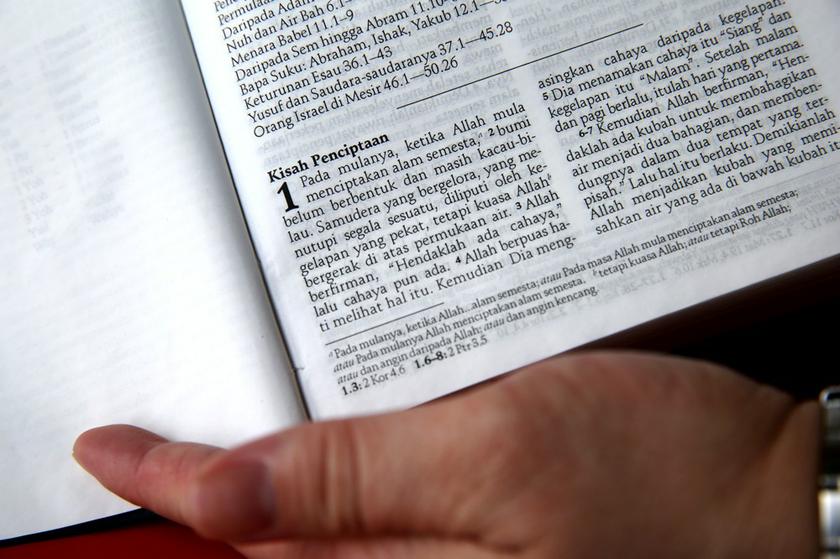
Yesterday, Jais raided BSM’s office in Selangor and seized more than 300 copies of the Malay-language bible, Alkitab and the Iban-language bible, Bup Kudus.
Jais’s raid followed its announcement last week that it planned to tell all churches in the state to cease using “Allah” in their worship, as part of a 1988 state law and royal decree limiting its use to Islam.
The Selangor Non-Islamic Religions (Control of Propagation Among Muslims) Enactment 1988, passed by the then Barisan Nasional state government, prohibits non-Muslims in Selangor from using 35 Arabic words and phrases in their faith, including “Allah”, “Nabi” (prophet), “Injil” (gospel) and “Insya’Allah” (God willing).
But lawyers have since questioned the authority of Islamic authorities to raid the BSM premises or seize the bibles, pointing out that Jais and other such departments have no jurisdiction over non-Muslims.
They also cast doubt on the validity and constitutionality of the 1988 enactment, which not only imposes the statewide ban, but was also used to arrest and probe two BSM officials during the raid.
Previous seizures of the Al-Kitab were executed by the Home Ministry under the Printing Presses and Publications Act (PPPA) that required these to convey that they are restricted to Christians only.
Putrajaya previously sought to reassure the Christian population of Sabah and Sarawak that the ban did not apply to them, issuing a 10-point solution in 2011 that allowed them the continued use of “Allah”.
Yesterday, BSM president Lee told reporters at the Damansara police station that BSM’s Malay bibles, the Al-Kitab, are imprinted with an image of the cross and the words “Christian publication”, as required by the 10-point solution for bibles distributed in the peninsula.
The 10-point solution, which was issued by the Najib administration shortly before the Sarawak state election in 2011, allows bibles in the Malay and indigenous languages to be distributed freely without such conditions in Sabah and Sarawak.
Lee added that BSM’s customers are not just the churches in Sabah and Sarawak, but also Sabahan and Sarawakian Christians, Orang Asli churches and other Malay-speaking Christians in the peninsula.
Christians make up about 10 per cent of the Malaysian population, or 2.6 million. Almost two-thirds of them are Bumiputera and are largely based in Sabah and Sarawak, where they routinely use Bahasa Malaysia and indigenous languages in their religious practices, including describing God as “Allah” in their prayers and holy book.
Temperatures have risen of late over the so-called “Allah” row that remains unresolved four years after it shocked the nation and led to the worst religious strife in the country’s history.
Umno Selangor and Muslim groups are now set to protest outside churches this Sunday over Christians’ refusal to yield to their insistence that “Allah” was exclusive to Islam in Malaysia.
The ongoing legal dispute between the government and the Catholic Church over its right to print the word “Allah” in the Herald’s Bahasa Malaysia section is still pending before the Federal Court, which is set to hear arguments from both sides on February 24 before deciding on whether it will hear an appeal by the Catholic Church.


