


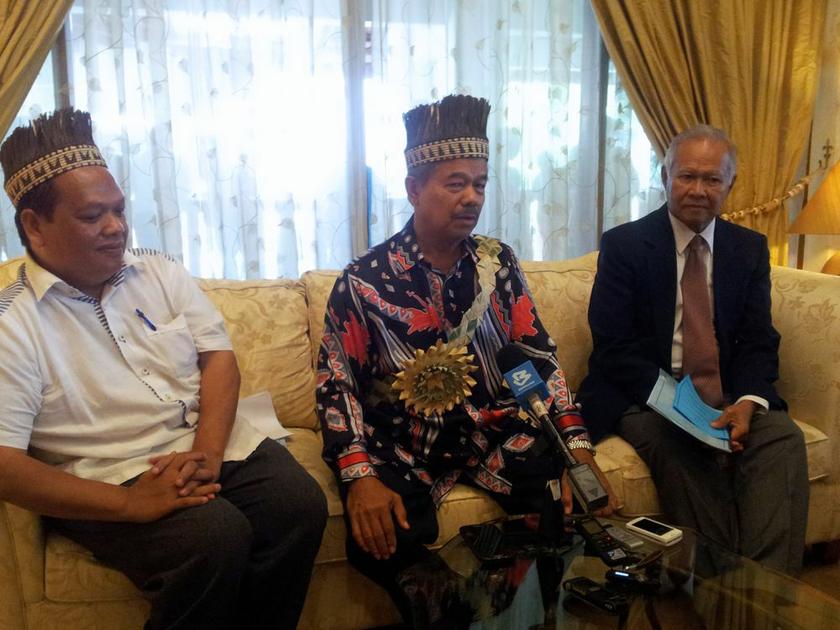


PUTRAJAYA, Dec 24 — Putrajaya should treat the indigenous people in Peninsular Malaysia better as they hold a “more special” constitutional position than do the country’s Malays, a former high-ranking judge said today.
Datuk Mohd Noor Abdullah, who has since retired as a Court of Appeal judge, suggested the ruling Barisan Nasional (BN) government may have taken the tiny community of tribal Orang Asli voters — some who still live a semi-nomadic lifestyle — for granted since they are not considered as “kingmakers”.
“The government looks at Sabah and Sarawak as a saving [sic]. Orang Asli are just a couple of per cent... they do not determine the government,” Mohd Noor told reporters during the Society of Peninsular Malaysia’s Orang Asli (POASM) extraordinary general meeting here.
“This is a mistake, because sometimes the minority determines who wins. Don’t just dismiss them, they will be a determiner later.”
Mohd Noor explained that the Orang Asli’s position is more special than the Malays since the Federal Constitution provides for any law to be made if it will benefit their community, who are undisputed as the country’s original settlers.
He also noted that Article 8 in the Federal Constitution, which states that all Malaysian citizens are to be treated equally in law.
The ex-judge said the constitutional provision does not invalidate any provision “for the protection, well-being or advancement of the aboriginal peoples of the Malay peninsula”.
“For [the] Orang Asli, any type of law can (be implemented). This means they are more special... If they are more special, the government should have been more concerned,” he said.
“This land was opened up by them, it is theirs, but they are the ones dropping out, they are marginalised. Things must be done so that they are on the same level, or even better than other communities.”
In a high-profile announcement in September, Prime Minister Datuk Seri Najib Razak had trotted off a list of over RM31 billion in various loans, contracts and programmes that will be made available to the group, with the stated aim of strengthening Bumiputera economic participation and boost their ownership of commercial property.
However, he was criticised by DAP MP Ong Kian Ming, who said that Najib should first implement the 18 recommendations for indigenous people compiled in a recent report by the Malaysian Human Rights Commission (Suhakam) to improve Bumiputera welfare.
The opposition lawmaker advised the Najib adminstration to adhere to international conventions it had ratified, including the United Nations Declaration of the Rights of the Indigenous Peoples, the Convention on the Elimination of all Forms of Discrimination Against Women and the Convention on the Rights of the Child.
Among the 18 recommendations in Suhakam’s “Report of the National Inquiry into the Land Rights of Indigenous People’s”, was for the government to establish a Native Title Court or Special Court to deal with the backlog of native land rights cases that have piled up in the civil court.
Suhakam also proposed a review of the Orang Asli Development Department (Jakoa).
There are officially 19 ethnic subgroups of indigenous people, and according to the last national census in 2010, they make up around 3.3 million or 11 per cent of Malaysia’s 28.3 million population.
The government has accorded Malaysia’s aborigines but their people are seen to be missing out on preferential policies that favour the Malays, who are also deemed by the constitution to be Bumiputera — literally translated as “Princes of the Soil”.


