


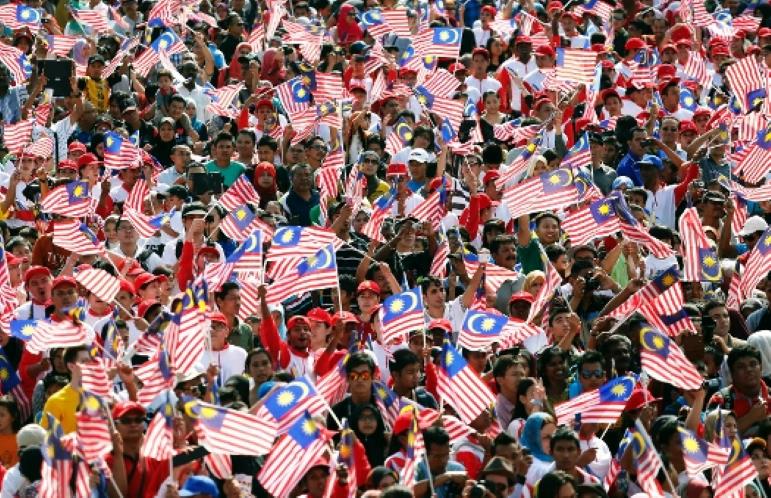


KUCHING, Sept 16 — Prime Minister Datuk Seri Najib Razak said he is confident that the close collaboration between the federal government and Sarawak government politically through the Barisan Nasional (BN) would guarantee the state will continue to move forward in the future.
Expressing thanks over the success of the 50th Malaysia Day celebration here today, Najib said he was convinced that BN rule in Sarawak under the leadership of Chief Minister Tan Sri Abdul Taib Mahmud will ensure the state does even better in the next 50 years.
“”This example of collaboration promises Sarawak will be more progressive over the next 50 years. That is why I am representing the federal government, which will continue to help and support Sarawak transform to become a more developed state,” he said in adressing the 50th Malaysia Day parade and rally at Padang Merdeka here today.
Yang di-Pertuan Agong, Tuanku Abdul Halim Mu’adzam Shah opened the celebration themed “Sarawak Harmoni Kemakmuran Dinikmati” (Sarawak Harmony, Prosperityy Blessed). His Majesty was accompanied by Raja Permaisuri Agong Tuanku Hajah Haminah.
However, Najib said the Sarawak-level Malaysia Day celebrations were not measured merely in terms of the scale, in the number of people involved, turnouts or gun salutes.
He said it was a reflection of Sarawakians through the Cobbold Commission 50 years when the majority wanted independence through the formation of Malaysia, which involved the state, Sabah and the peninsula.
“That decision made 50 years ago (on Sept 16, 1963) was very apt and that is why we are witnessing this joyous and meaningful celebration today,” he said.
On January 4, 1962, the British colonialists in Sarawak published a White Paper titled “Malaysia and Sarawak” supporting Sarawak’s participation in Malaysia and a referendum on the matter.
Besides this close collaboration, Najib said he was also proud to see the people of Sabah and Sarawak although of various ethnic groups were able to have seamless harmony which served as a fine example to others.
There were 27 ethnic groups in Sarawak which was very unique, but in their daily lives, there were no barriers among them, he said. – Bernama


