KUALA LUMPUR, Sept 21 — Duane Adler’s teen romantic dance film Step Up likely played a key role in shaping how many Malaysians came to understand the culture of street dancing.
For some, the term “street dancers” might even evoke images of buskers — performers dancing outdoors with their own music equipment, hoping for donations.
Malay Mail is here to show you there’s more than meets the eye.
“It’s not just ‘pick a spot and dance’ — there’s a real culture behind it,” said local street dancer and internet personality Imranul Effendy.
“Sometimes it’s for training and vibing, other times it’s to share ideas, dance battles, or film content.”
The cultural footing in Malaysia
The culture first began in America, and through the internet, accelerated its influence across Europe, Asia, and right here in Malaysia.
Many nationwide came to embrace the movement, around the 90s, something local street dancers Loh Jia Min, 31 (stage name Carmen CL), and Eric Soon Tze Mun, 29 (stage name Ezeeric), can personally attest to.
Though they weren’t around when the culture first took root in Malaysia, they shared that seniors often speak about how street dancing initially emerged out of necessity — at a time when dance studios were scarce.
Today, even though studios are much more accessible, some crews still prefer dancing outdoors — bringing their energy to public spaces like Bukit Bintang and KLCC.
“Maybe there aren’t many doing it in Bukit Bintang or KLCC these days, but it’s still happening — in places like football fields or basketball courts,” added Carmen.
Those aren’t the only spots as parking lots, badminton courts, and neighbourhood areas around USJ and Petaling Jaya are also popular.
“It really depends on where the groups are based,” Carmen explained.
As of 2025, Tam Wei Chien — founder of Freedom Dance School and a fixture in the Malaysian street dance scene since 2008 — says the culture has only grown, crediting the rise of K-pop, urban choreography, and social media for fueling its continued popularity.
The dance crews in Malaysia and why they do it
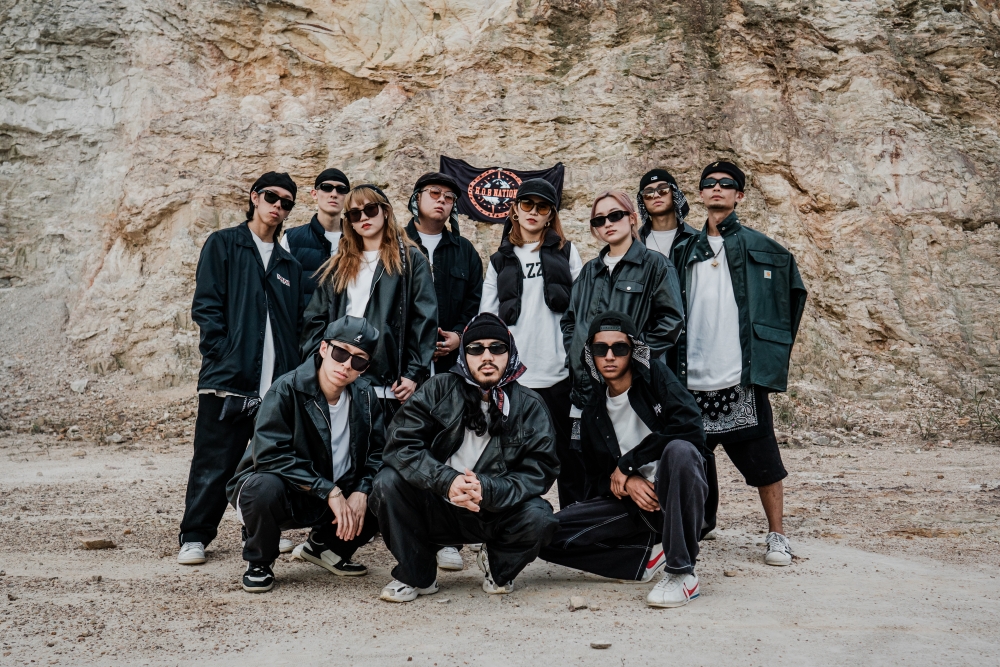
Did you know that today there are over 50 active street dance crews across the country? Crews like VRP and KOB Nation are keeping the spirit alive alongside many others, each bringing their own unique style and flavour.
When asked why they continue doing it, Carmen stated it’s all about love and passion — and that’s all there is to it.
“Without the passion, we couldn’t have done this,” she said.
“As we got deeper into the scene, we started to truly understand the culture,” said Ezeeric.
“By street dancing, it has also helped us understand ourselves better,” he added.
Street dance events nationwide
If you think street dancing is just about performing in public spaces, think again — the community is much more than that, as dancers here also organise events and competitions, often funding them out of their own pockets.
According to Ezeeric, two major street dance events are usually held in Malaysia each year where one being Repz Your Style, typically hosted at Lalaport in May and the other, scheduled for October, is called Break to Prove.
“There are actually more,” Ezeeric said.
“In street dance, there are many different styles, and different organisers tend to focus on specific ones — so each style usually has its own competitions.”
He added that Repz Your Style and Break to Prove are unique in that they bring together multiple styles in a single event.
You might be surprised to learn that while most competitors are teenagers and young adults, dancers in their 50s have also taken the stage and wowed the crowd.
However, both Ezeeric and Carmen noted that many events do include age-based categories — such as Under 15, Under 18, and Open — to ensure fair competition.

Challenges of being a street dancer in Malaysia
Just like other niche communities in Malaysia — such as pro wrestling and live-action role-playing (LARP) — the street dance scene faces its fair share of challenges.
For starters, it’s difficult for dancers to enter competitions or attend workshops overseas, and likewise, organisers often struggle to invite international dancers to Malaysia for events.
Both Carmen and Ezeeric believe this is largely due to currency exchange rates and tight budgets.
“I’d say the biggest challenge is getting sponsorship,” Carmen shared.
“Many brands or companies don’t really focus on this community or scene.”
There’s also a lingering misconception that street dancing is a negative influence — though, as Ezeeric noted, public perception is gradually improving.
Pushing it to the limit!
Malaysia's street dance culture has grown into a living, breathing community — driven by passion, and ready for greater recognition.
As the scene continues to expand, street dance is becoming more visible and influential than ever before.
Carmen noted that many advertisements in Malaysia now feature dance choreographers or hire dancers to promote products — a clear sign that the art form has entered the mainstream.
“Dance has gained much more attention now than in our generation,” said Tam.
“Schools and parents are more supportive.
"But there’s still room to grow — we need stronger platforms, better systems, and more long-term support,” he concluded.