


KUALA LUMPUR, Feb 20 — Just a short walk from three of Chinatown’s best-known places of worship — the Guang Di Temple, Sri Maha Mariamman Temple and Szin Sze Si Ya Temple — a narrow lane is being quietly reintroduced to the city.
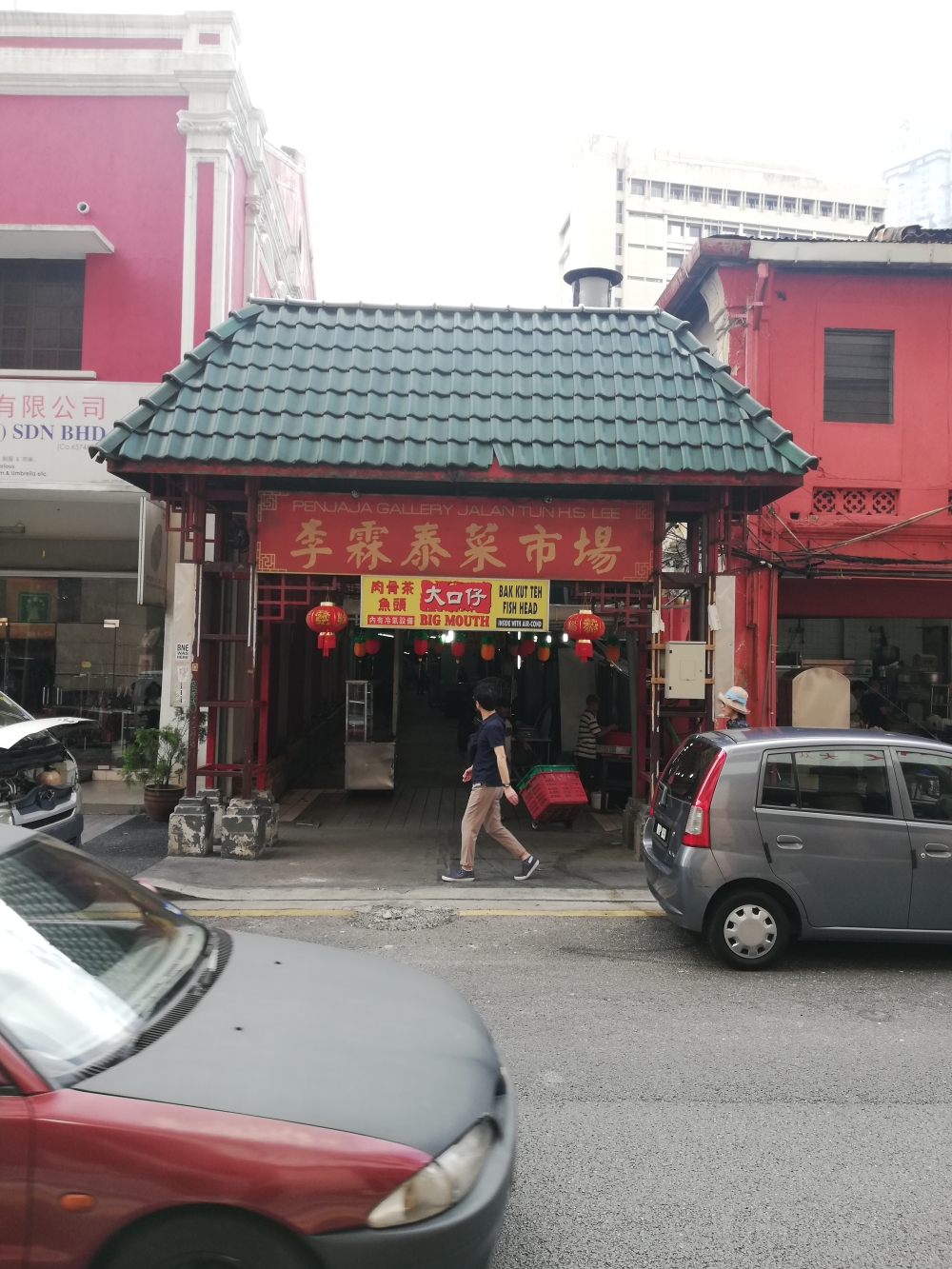
Jalan Sang Guna, formerly called Drury Lane and for the longest time referred to as Madras Lane, sits tucked behind the busy Jalan Tun H.S. Lee corridor, near the Petaling Street tourist belt.
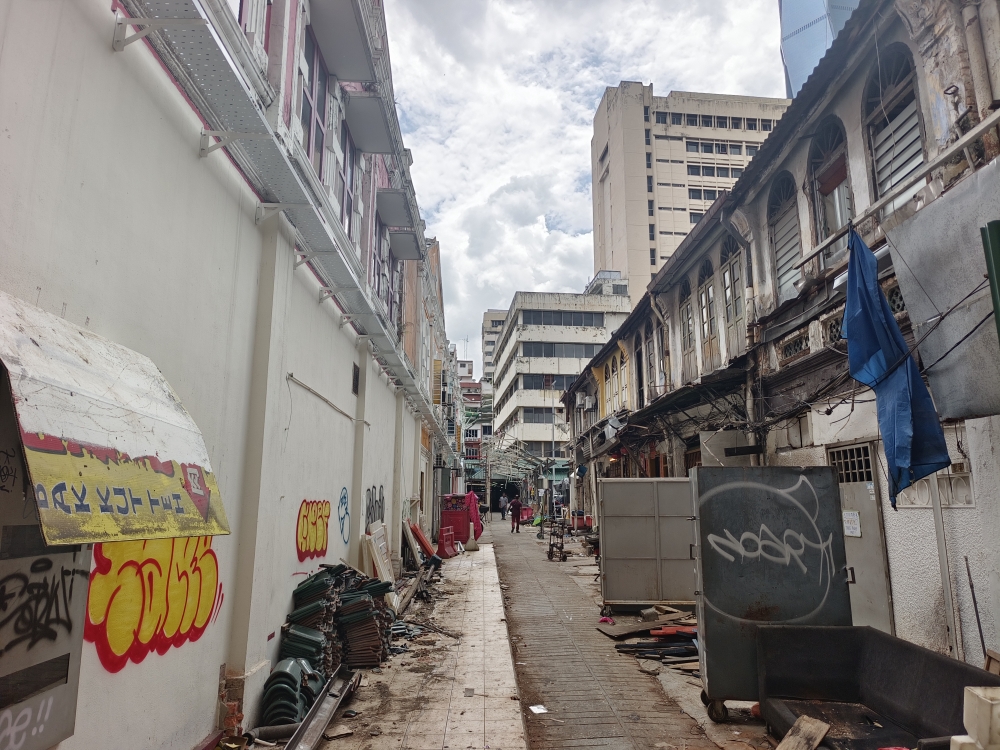
For decades, it survived as a service lane and later as a fading strip of sundry shops, its ageing shophouses standing as reminders of a much larger role it played in Kuala Lumpur’s urban life.
Once known for Chinese theatre performances, a cinema and later a bustling hawker street centred around a wet market, the lane gradually declined as businesses closed and buildings deteriorated.
Traders who remained recall a time when the lane was lively with vegetable sellers and poultry traders, before an ageing workforce and the lack of younger successors led to its slow hollowing out.
That decline, coupled with long-standing infrastructure problems, prompted a heritage-led revival effort that began in 2019 through a collaboration between Kuala Lumpur City Hall (DBKL), Think City, the Bukit Bintang parliamentary office, local communities and partners including the Ministry of Finance (MOF) under the Warisan Kuala Lumpur framework.
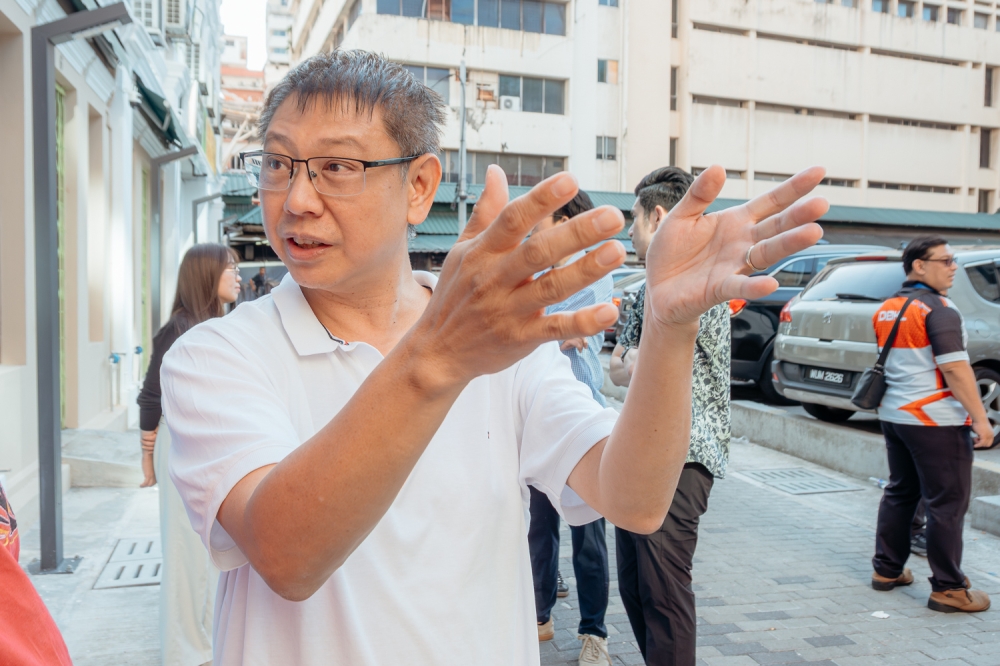
Bukit Bintang MP Fong Kui Lun said the decision to rejuvenate Jalan Sang Guna was driven not only by its historical value but also by practical concerns.
He said the basic facilities in the area had become too old, with drainage systems that frequently failed during heavy rain, leading to flash floods in and around the lane.
“During rain, this area would always flood, so we had to upgrade the drainage system and change the old covers and infrastructure to make sure there is no more flooding,” he told Malay Mail.
Fong said the lane’s location near Petaling Street, one of Kuala Lumpur’s busiest tourist zones, made the upgrades all the more urgent.
“This is an important historical area next to Petaling Street, which is a major tourist centre. Basic facilities like drainage and the condition of the buildings had to be improved,” he said, adding that repainting and repairs were also carried out to improve the overall appearance of the street.
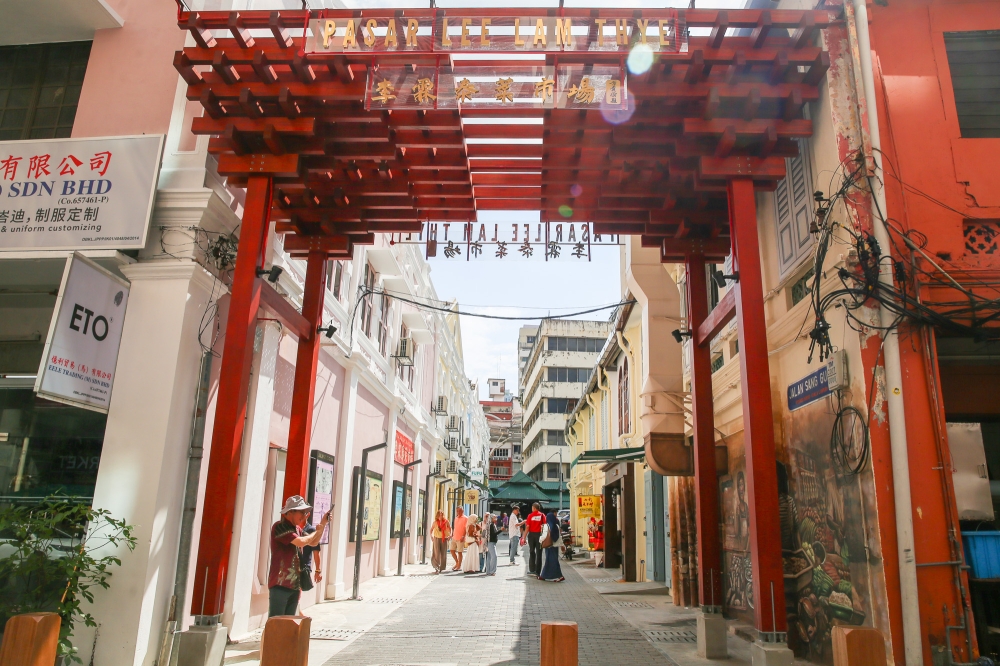
Today, the lane bears little resemblance to the dim passageway it once was.
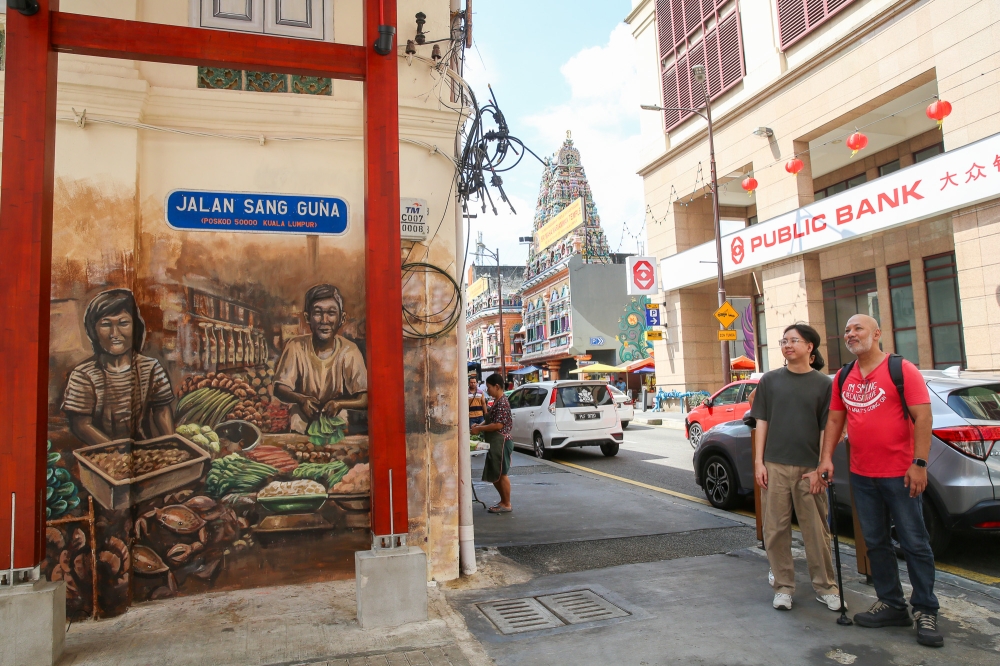
A timber archway now marks its entrance, its name etched across the top and bearing Fong’s signature.
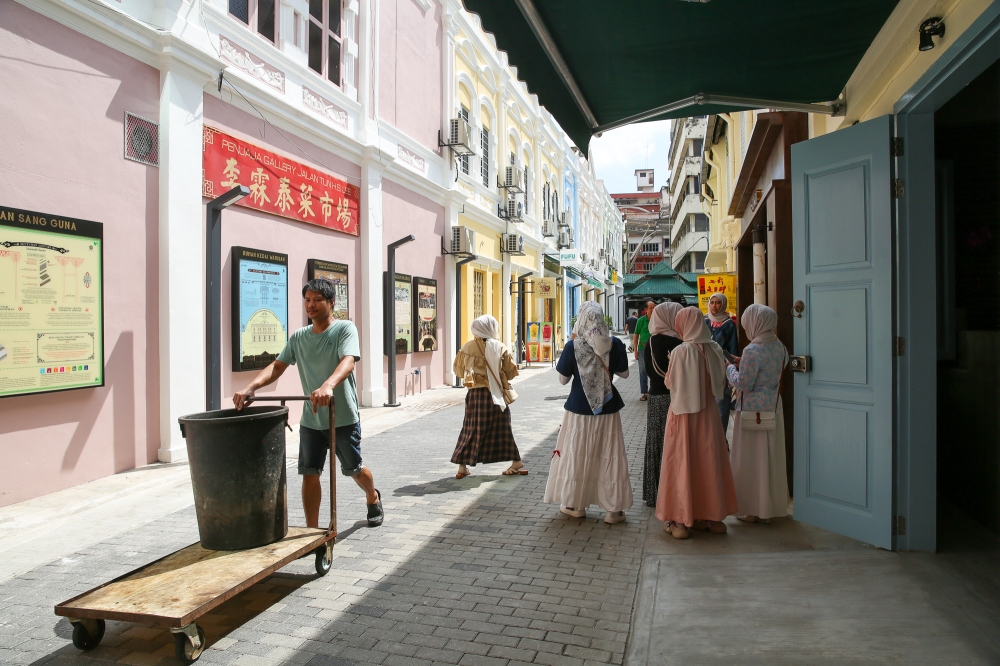
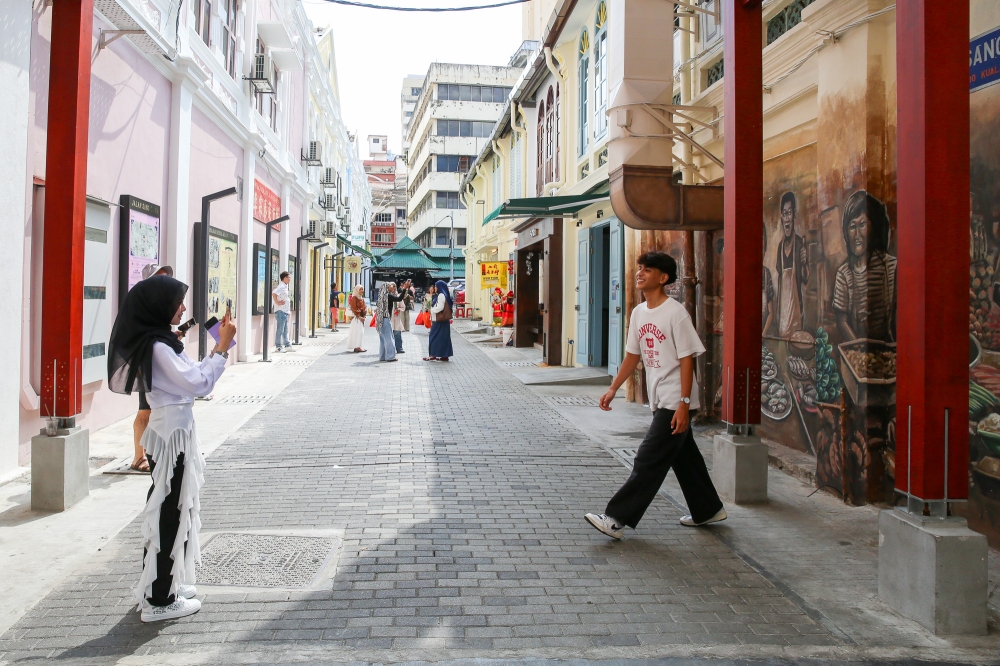
Known as the Pasar Lee Lam Thye Archway, it frames a walkway paved with new stone surfaces, softened by pockets of greenery, benches and heritage-style lighting.
Along one stretch, murals line the walls of old shophouses. Some are painted to resemble windows, creating the illusion of occupied interiors where none exist — a visual device meant to echo the street’s former vibrancy while acknowledging its present-day emptiness.
Storytelling panels trace the lane’s past, from its theatrical roots to its later life as a market street.
Think City, which led the design of the streetscape upgrades, said the project was guided by a heritage-led approach that balanced visual renewal with environmental considerations.
Gan Yi Reng, Think City’s Urban Solutions Senior Manager, told Malay Mail plans to preserve the city’s heritage and culture were always at the forefront of their plans.
“Back then it was very vibrant with the market scene, but in terms of cleanliness, accessibility and walkability, it had deteriorated,” he said, adding that the project was part of a broader effort to encourage laneways to function as secondary connectors and community spaces rather than just service alleys.
Gan said the material choices for the project were guided by heritage conservation principles, with new elements designed to reflect the original construction methods of the surrounding shophouses.
“The materials we used needed to reflect what was originally there. Some of the facades date back to the 1890s and early 1900s, so we used lime plaster and lime mortar based on what was recommended by conservators and DBKL, instead of modern cement.”
He said the timber archway was built using engineered laminated wood — a modern construction method inspired by traditional timber joinery.
“It is a modern way of building, but the idea and inspiration come from traditional wooden structures,” he said.
Gan said one of the key upgrades involved replacing hard surfaces with porous pavement to allow rainwater to seep into the ground instead of flowing directly into drains.
“In the city, we have too many hard surfaces, so water cannot seep through and it causes ponding everywhere. For this lane, the material allows water to naturally seep through the gaps, which helps reduce pressure on the drainage system.”
Although the materials and restoration techniques cost more than conventional construction, Gan said the long-term benefits justified the investment.
“It is slightly more expensive because of the technology and conservation methods used, but we are not looking at price alone. If this investment can reduce flood risk and improve the environment, then that is what we are trying to achieve.”
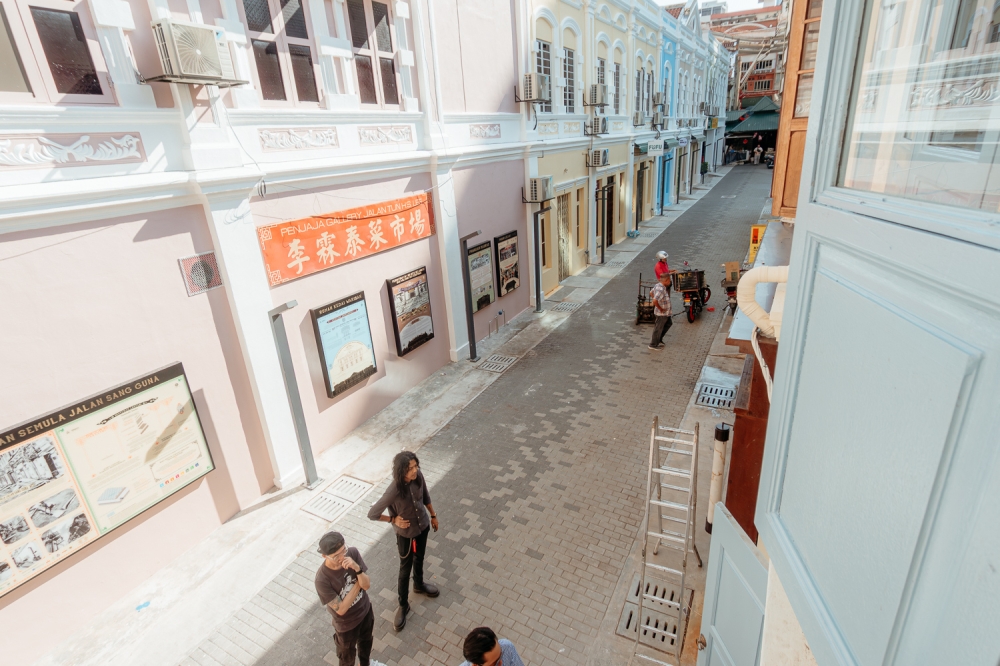
Improved lighting and space are intended to make the lane safer and more comfortable, while greenery and public art were used to soften what had been a hard, narrow corridor.
The aim, according to the project team, was to turn the lane into a “second connector” within the city — not just a shortcut between streets, but a place people could pause in, meet in and spend time.
The project forms part of a broader urban renewal push in Chinatown, where about 10 laneways have been identified for upgrading as part of a wider effort to reimagine small urban spaces as “third places” — areas beyond home and work that support everyday social life.
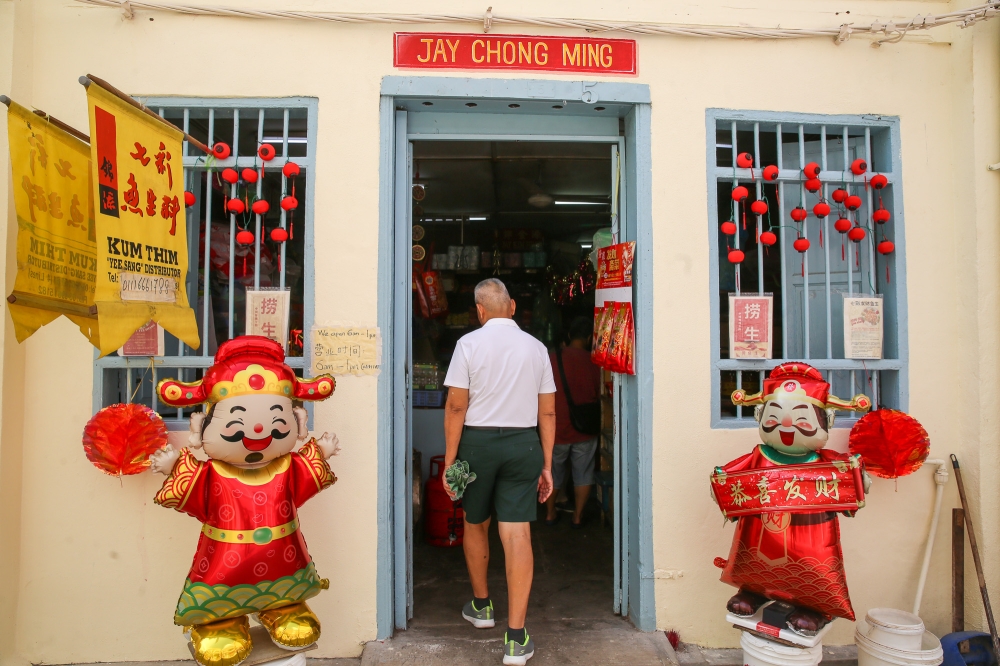
Not all of the shoplots are occupied yet. On a recent weekday afternoon, several remained shuttered, while only a handful of businesses operated behind the refreshed façades.
One long-time shopkeeper said the transformation had improved the look and cleanliness of the lane, but also signalled a shift in what kind of trade could survive there.
“This place is much cleaner and nicer now, and I hope it will grow,” said Madam Lau AI Chu, 70, who runs a wholesale business in the lane.
“But I think in the future most of the shops here will be cafés and food and beverage businesses.”
She and her son Steven Jay, 48, added that there was little nostalgia left to preserve in the row of ageing buildings, many of which were more than a century old and had fallen into disrepair.
“These shops are very old and already dilapidated. It is not like before, when there were many different kinds of shops,” said Jay.
“The back of the shop and parts of the roof have caved in as well, so this renovation was timely. We may find another spot to move to as this place transforms and like my mum, I think it’ll be a top tourist spot in the future,” he added.
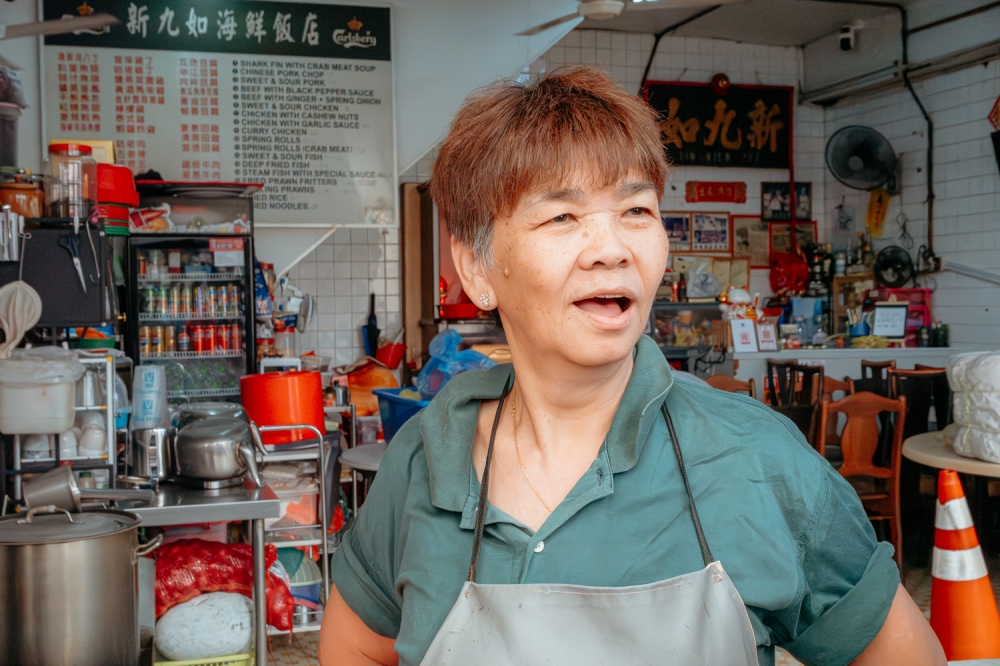
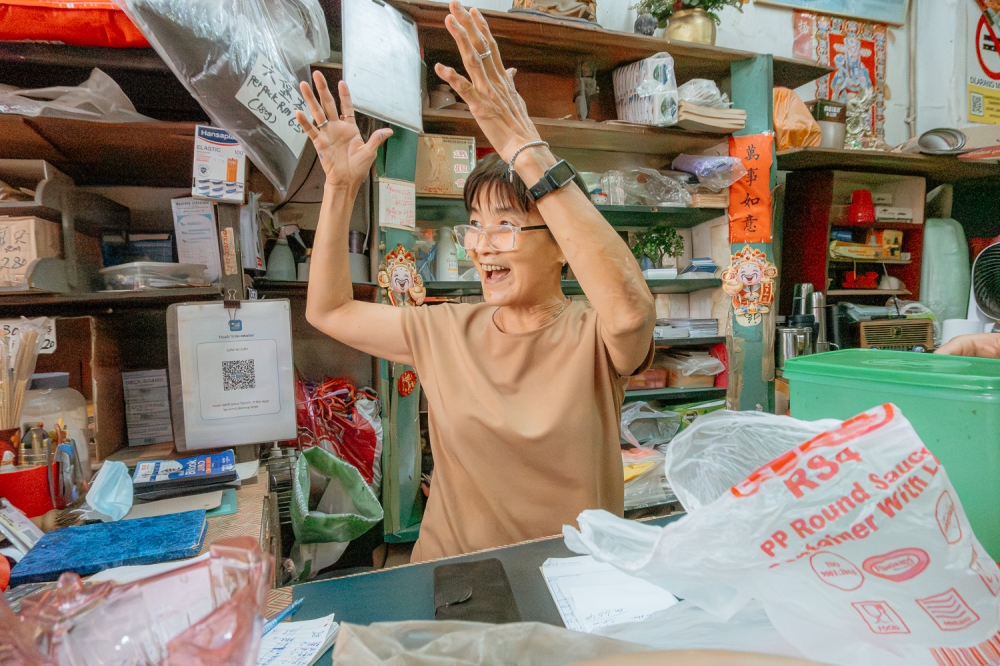
Restaurant owner Kong Siew Chang, 64, was very happy to see the lane spruced up and looking nice and clean. She said her restaurant selling Chinese delicacies will stay and she expects foot traffic to increase.
“For now not many people know what’s happening here, that’s why we need to put the word out first. What I like is to see us preserve some of the history of the city, this place as a former hot spot with the cinema and shows and market and turn into something modern.
“For a long time the place was dilapidated and run down and the change of governments and so on delayed the project. But look at it now, it’s so nice and well done. I’m glad and I’m looking forward to seeing how it grows as it’s still in its infancy,” she said.
Tim Loo’s family owned a shop lot which was unoccupied for a few years until they decided to turn it into a cafe called Drury Heritage Cafe.
Loo maintains some of the old structural beams in the shop but admitted a lot of upgrading and reconstructing work was done as the building was old.
He uses wood and traditional looking material and furniture to make the place have an authentic Malaysian theme while also being cozy.
He said the improved lighting, cleaner surroundings and new visual elements had made the lane more inviting to visitors who might otherwise have walked past without noticing it.
“Before this, people didn’t really stop here. They just passed through,” he said.
“Now, when they see the archway and the murals, they slow down and come in to look around.”
Loo said the project had given new life to a part of Chinatown that had long struggled to attract younger visitors, and believed the street’s future would depend on how well it balanced heritage with new uses.
“This place has a lot of history, but it also needs new businesses to survive,” he said.
“If you combine the old stories with cafés and small shops, it can become a place where people actually want to spend time.”
For now, most visitors appear to stumble upon the lane by chance.
Most of the people Malay Mail spoke to on-site admitted they did not know what Jalan Sang Guna was, or that it had a name at all. Several said they had simply followed the timber archway out of curiosity after visiting nearby temples or walking through Petaling Street.
“I don’t know what this place is, but it looks nice,” said one tourist from Bahrain, who had just finished visiting the Sri Maha Mariamman Temple.
“We saw the arch and the paintings and decided to walk in.”
Another visitor described it as “a pretty alley” and said the murals and seating made it feel calmer than the surrounding streets, even if its history was unfamiliar.
Adam Leray from the US said he noticed the lane stood out from the surroundings and when he walked past saw how clean it was and was attracted to the historical posters adorning the walls.
“I like to see how a place changes from old to new. I only stopped to take pictures,” he told Malay Mail when approached.
Fong said he hoped that once all upgrading works in the area are completed, the lane would be able to offer a wider variety of food and activities that could draw both local and foreign visitors.
“I hope that after all the upgrading, certain places here can offer different kinds of Malaysian food and attract more people — not just tourists but also local residents.
“Having a lot of variety in one place is great for people in a time crunch and they don’t need to go many places to try something new,” he said.
He also thanked MOF for its role in carrying out the project, noting that substantial funds had been spent to improve the area because of its importance to Kuala Lumpur’s tourism economy.
“This is a very important tourist centre in KL. When people come to Kuala Lumpur, they go to Petaling Street and the surrounding areas, so we must keep it running well,” he said.
Fong added that the project aligned with Prime Minister Datuk Seri Anwar Ibrahim’s emphasis on tourism ahead of Visit Malaysia 2026, which he said would be crucial for the country’s economy.
“I would like to thank the Prime Minister because he has focused on tourism, especially with Visit Malaysia 2026. Tourism is important for Malaysia, especially in Kuala Lumpur, which is one of the busiest cities in the country,” he said.
As more tenants move in and surrounding renewal projects take shape, Jalan Sang Guna’s future may be decided less by what it once was, and more by what it can become — a small but telling experiment in how Kuala Lumpur treats the overlooked spaces between its main streets.
For more on Jalan Sang Guna follow Think City on Instagram.


