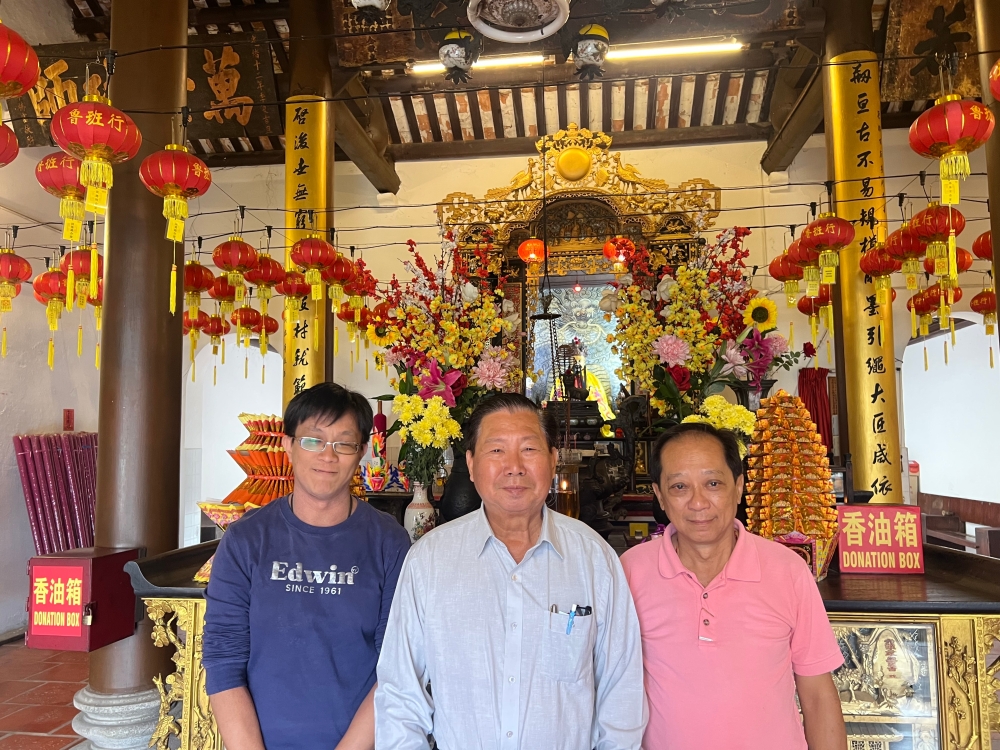
GEORGE TOWN, Aug 17 — Over 224 years ago, when migrants from China's Kwangtung province first arrived in Penang, many sought the help of local associations to find lodging and work.
This led to the establishment of various district- and trade-based guilds to help newcomers settle.
Among them was Loo Pun Hong, a carpenters’ guild established in 1801 on Penang Street to support the growing number of carpenters from Kwangtung (also spelt Guangdong today).
The guild became a vital hub where skilled craftsmen took in apprentices, training them in woodworking while providing shelter.
New arrivals from Kwangtung could seek shelter here while picking up a skill, said Loo Pun Hong president Chong Cheok Henn.
“They would undergo apprenticeships with master carpenters and be provided with lodging, he explained, adding that the guild would help the apprentices find jobs once their training was complete.
From guild to sacred temple
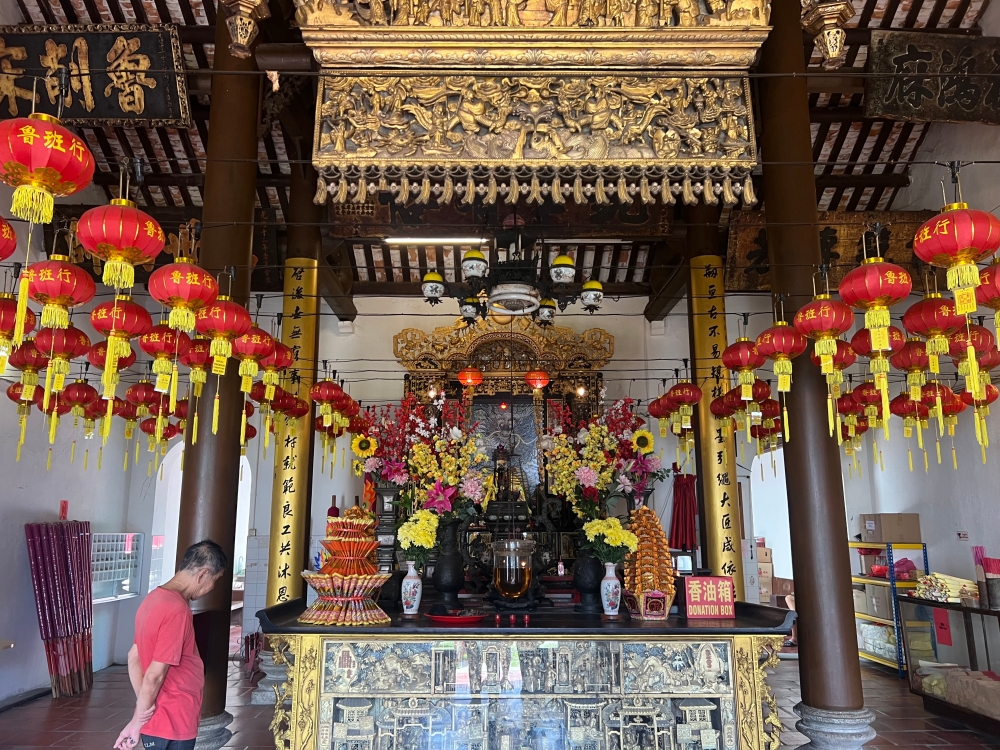
The carpenters of that era revered Lo Pan, the Chinese patron saint of their trade, and soon began collecting funds to build a temple in his honour. Lo Pan, also known as Lu Ban, was a master architect, engineer, and inventor during China’s Zhou Dynasty.
Construction of the temple at its current site on Love Lane began in 1855 and was completed in 1886.
“It took many years to complete as it involved manual construction, all done by Loo Pun Hong's own members,” Chong explained.
The temple was named in honour of Lo Pan (Loo Pun being a spelling variation), while 'hong' signifies a workshop or an establishment of traditional craftsmanship.
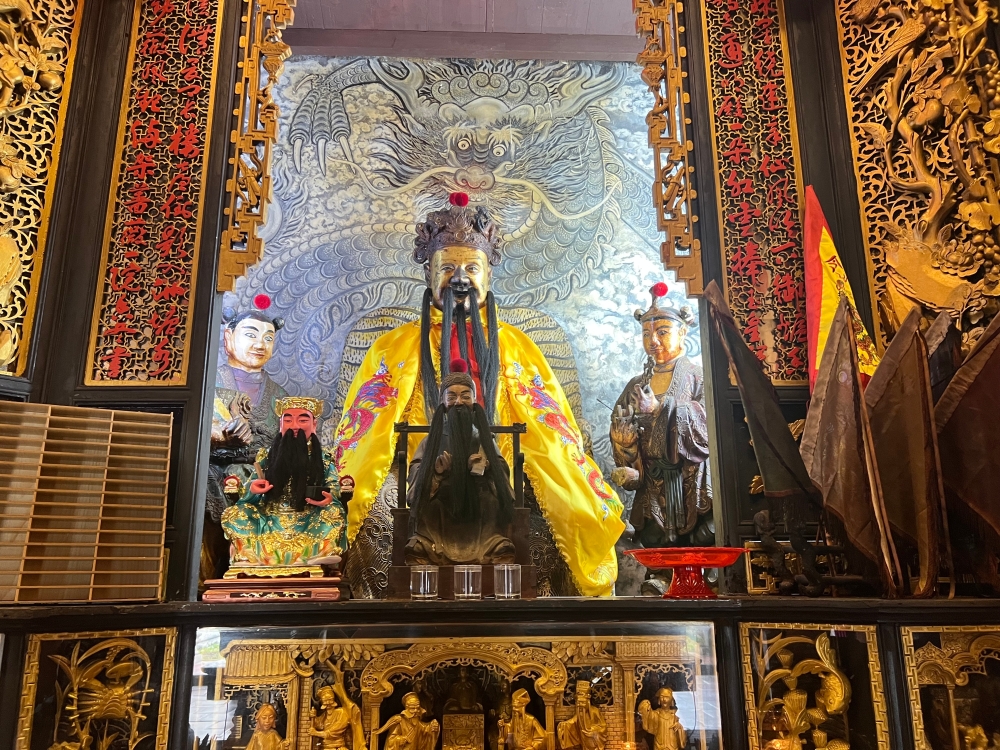
A large statue of Lo Pan, flanked by his assistants, dominates the main prayer hall.
Each year, the temple celebrates the deity's birthday on the 13th day of the sixth lunar month, a tradition that has recently been revived with a grand street parade every three years staring in 2019.
“We held the second parade in 2023 after the pandemic and we are planning to hold a third one next year,” Chong said.
A showcase of craftsmanship
The 139-year-old temple itself is a testament to the guild's artistry. Though it has undergone several restorations, it retains much of its original build and intricate woodwork.
The latest restoration works, funded by the state government and George Town World Heritage Inc, were completed last year.
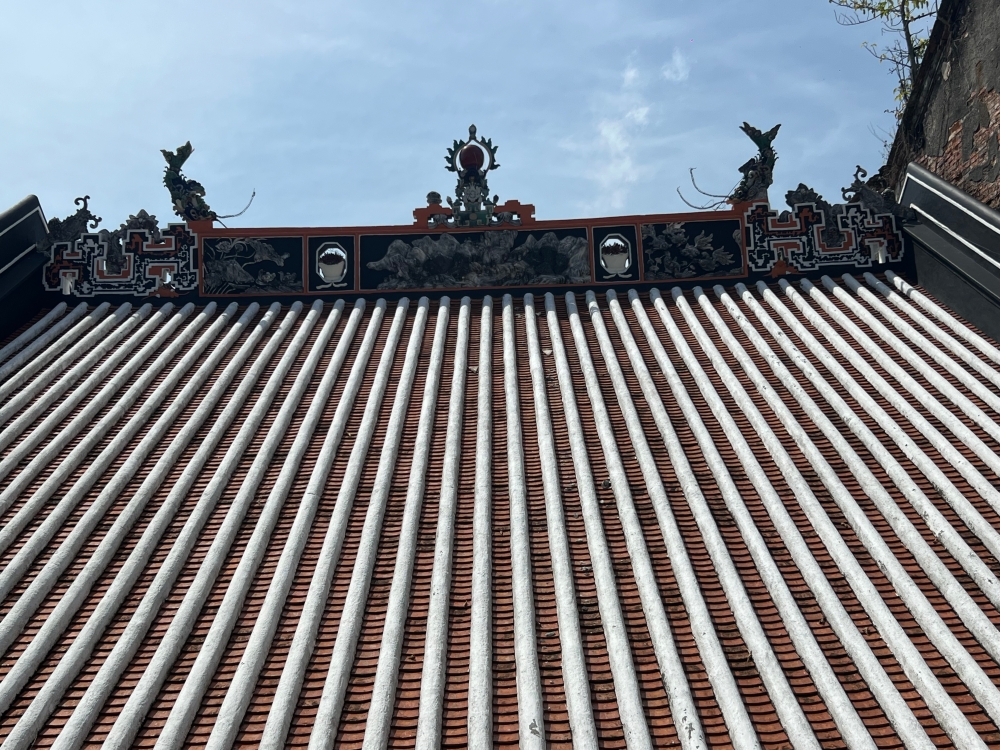
On the roof, a classic Cantonese “Bogu Ridge” is decorated with ceramic ornaments: an orb symbolising good fortune, fish-dragons for outstanding achievement, bats for luck, and peonies for wealth.
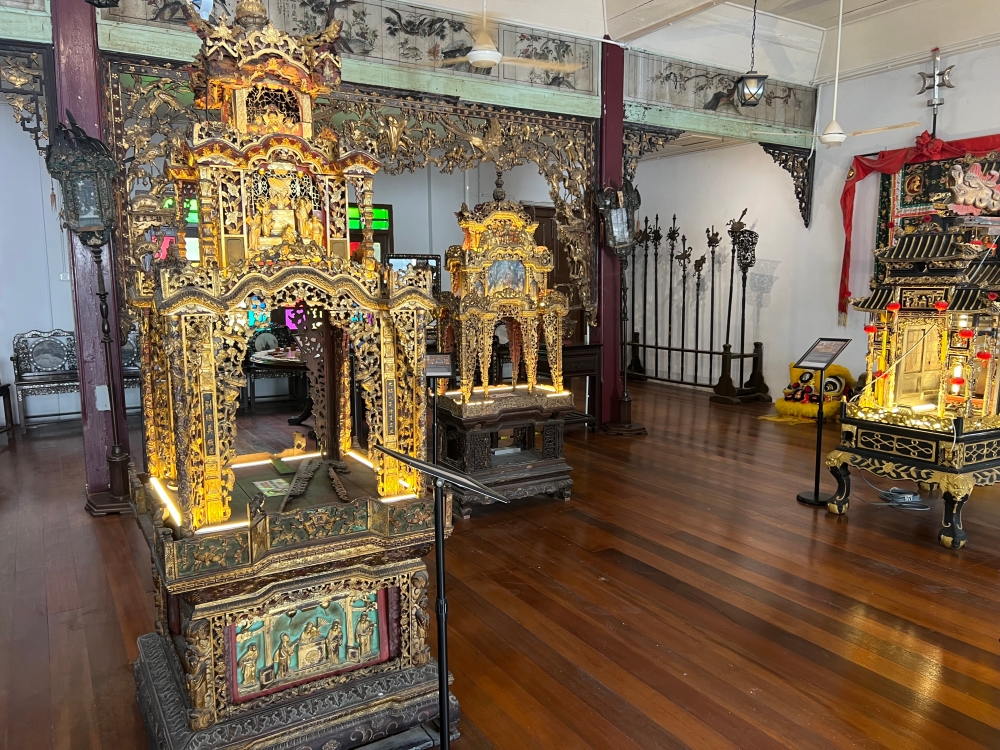
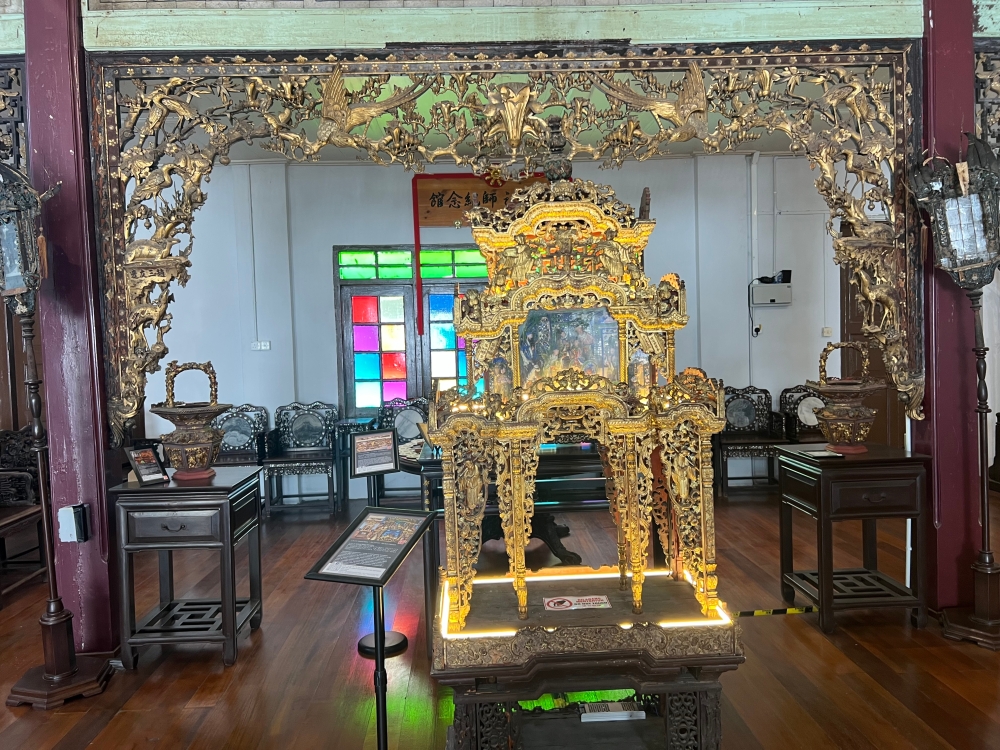
Inside, the newly established Lu Ban Master Memorial Hall on the second floor showcases the temple's antique woodwork and furniture.
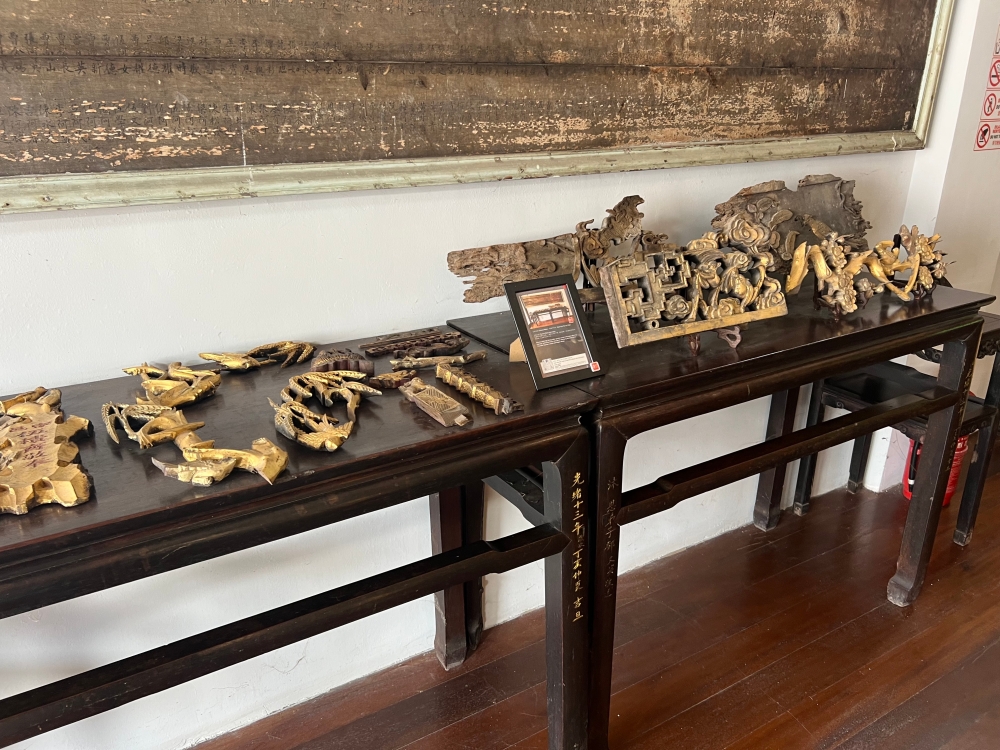
Open to visitors for a small donation of RM5, the hall features golden wood carvings, ceremonial weapons, and gilded palanquins.
Chong said a lot of the antique furniture was previously auctioned off to raise funds for the temple, so they are now very careful with preserving those that still remain.
Welcoming a modern audience
Recognising its status as the only Lo Pan Temple in Malaysia and a growing tourist attraction, the temple committee has made efforts to cater to non-Chinese visitors.
Visitors who wish to pay homage to Lo Pan and the other resident deities in the temple will also be guided by a clear numbering system, with instructions on how many joss sticks to place and the name of the deity, written in English and Chinese next to the incense burners.
The number system starts with the Jade Emperor or Heavenly Deity, with the large incense burner at the main entrance of the temple, to be followed by the two stone lions guarding the entrance, the Thai Pak Koong (Deity of Earth and Prosperity), Lo Pan, an Inner Heavenly Deity in the inner hall, the Great Emperor Huaguang (a Taoist war deity), the god of earth, the kitchen god and finally Dato Kong (a localised deity) outside the gates of the temple.
Loo Pun Hong secretary Chun Kah Choon said they are in the process of updating their social media with English translations.
“Sometimes the nuances of some phrases are lost in translation and it could lead to misunderstandings, so, we have to be very careful about it,” he noted.
While the deity may not be common in most households today, Chong said many Chinese carpenters and contractors still maintain altars for Lo Pan in their workshops.
Loo Pun Hong is open to the public from 8am to 5pm daily.