













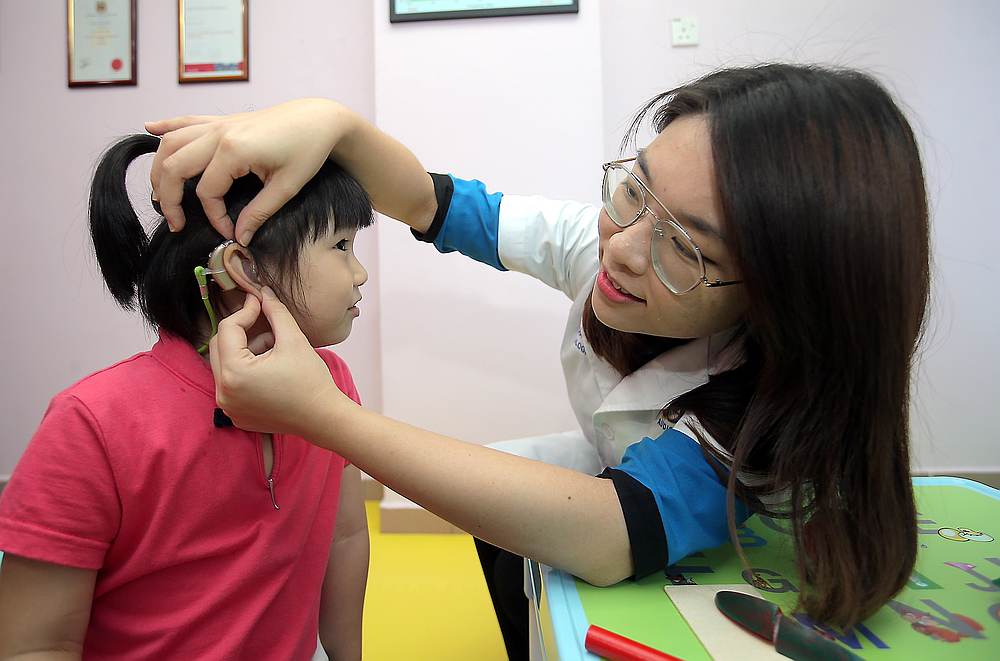


IPOH, July 2 — With the World Health Organisation estimating that up to three children are born deaf for every 1,000 live births, one audiologist is advising parents to have a baby's hearing checked.
This is especially so if your baby was born premature and underweight or had jaundice, said senior audiologist Sylvia Lee.
Currently, she added that universal newborn hearing screening was available to check on a newborn's hearing.
“The baby will be hooked on to a machine to check its hearing. And if the baby could hear 20 decibels and below, its hearing is normal,” she said.
Lee said in her seven years experience as an audiologist, she had seen more than 500 children born deaf.
“Once a child is confirmed deaf, we will need to determine the severity of hearing lost before deciding on the treatment,” she said.
The treatment, added Lee, varies between having a hearing aid or cochlear implant.
A hearing aid, explained Lee, serves more to amplify the sound.
“This is for those diagnosed as not completely deaf while cochlear implants are those completely deaf,” she added.
Lee said parents are advised to have their newborns checked out before the baby reaches three months old.
“This is because once the child is confirmed deaf, we can proceed to treat its condition,” she said.
Lee said the ages of between one and three years was the the child's golden period for speech and language development.
“I have a client whose mother only brought her in for checks when she was four-years-old. The girl, who was diagnosed with 80 per cent hearing loss, was placed on hearing aid,” she said.
Due to the lapse in treatment, the girl had difficulty speaking.
“When she first came in, she only had one word vocabulary. She did not react when called out. After undergoing treatment, she can converse now,” said Lee.
“If she had undergone treatment earlier, her chances of leading a normal life would be higher.”
Lee said her biggest challenge was making parents accept that their child was deaf.
“I have a former client whose father barred his son from wearing a cochlear implant when outside of their house. I also had a former client whose mother refused to accept her child is deaf despite seeing two specialists,” added Lee.
Despite the challenges, Lee said her biggest joy was when a deaf child could lead normal lives.
“I have clients who attend normal schools and not schools for the handicapped all because their parents took early intervention steps,” she said.