


NEW YORK, Aug 3 — I didn’t think much about it at the time: I was appearing in a short television segment and had quickly brushed my hair, then slapped on some concealer. I figured my glasses would cover the circles under my eyes.
Only later did I behold what I looked like — and it was terrifying. It wasn’t that I was dishevelled; it was the actual face that looked back at me in the frozen screen shot.
My mouth curled slightly downward; my brows were furrowed; my lips were a little pursed. My eyes aimed forward in a deadpan stare. I looked simultaneously bored, mad and sceptical. I was basically saying to the newscaster: Die.
In that moment, I joined the ranks of a tribe of women who suffer from the scourge known as “resting bitch face” or, increasingly, just RBF.
If you’re up on your Internet memes, perhaps you’ve heard of its linguistic predecessor: “bitchy resting face,” which emerged from a parody public service announcement.
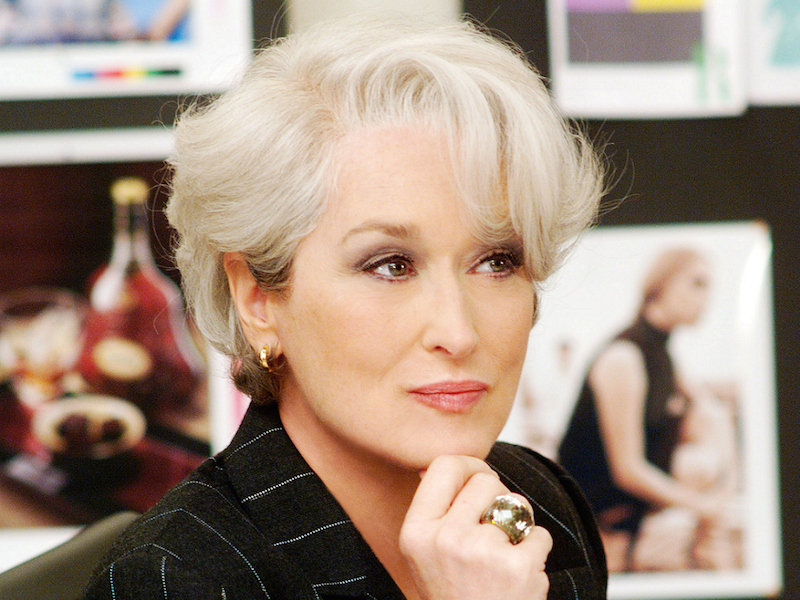
For those who need a review, RBF is a face that, when at ease, is perceived as angry, irritated or simply ... expressionless. It’s the kind a person may make when thinking hard about something — or perhaps when they’re not thinking at all.
At a crowded bar, the expression can serve as a kind of armour against unwanted pickup artists (better, as one young woman put it, “than a fake engagement ring”).
And, as Tanya Tarr, a 36-year-old professional coach, described it: When engaged correctly, it can part a crowd of tourists on a busy street “like the Red Sea.”
But it is also a problem (and, like the word “bitch” itself, one that seems to predominantly affect one half of the gender equation).
RBF is now the topic of multiple “communities” on Facebook, dominated by women.
Plastic surgeons say they are fielding a growing number of requests from those who want to surgically correct their “permafrowns” (again, primarily from women).
Country star Kacey Musgraves recently helped BuzzFeed create a list of 17 more accurate names for RBF (among them, Resting “this wouldn’t bother you if I was a guy” face).
Yes, the tyranny of RBF is real.
For Nora Long, a 22-year-old intern at a Florida law firm, the struggle began in kindergarten, when her school’s headmaster summoned her to his office “because he thought I looked unhappy.” “From that day on until he left the school when I was in the seventh grade,” Long said, “he would say 'Smile Nora!' every time he saw me.”
Morra Aarons-Mele, a small-business owner in Los Angeles, said she “Botoxed away” her “congenital frown line” so that people would stop asking, “Are you mad?” “Then people were warmer to me — I swear,” she said.
Tarr, after being told by a mentor that her scowl was “setting her back” at work, began taking pictures of her face so she could try to look more cheerful. “I have since trained myself on what my face feels like,” she said.
There is some science behind it. Anthony Youn, a cosmetic surgeon in Detroit, said that as we age, the corners of our mouths droop, causing us to look a little more grumpy — a natural response to gravity and genetics.
In mild cases, this has the capacity to make a person look less cheerful when their face is resting. But in “severe cases,” said Youn, it can cause the face to look “mean, angry, and give people a false perception of what our mood is.”
“The mouth tends to denote a lot of expression,” said Scot Bradley Glasberg, president of the American Society of Plastic Surgeons.
But RBF is not a problem merely of the old. It matters at all ages because, as science has long proved, humans make judgments based on facial cues. Studies have found that people are less likely to find friendly-looking faces guilty of crimes; people who look “happy” are generally deemed more trustworthy, too.
And yet: Men do not experience RBF, at least not by name.
“When a man looks stern, or serious, or grumpy, it’s simply the default,” said Rachel Simmons, an author and leadership consultant at Smith College. “We don’t inherently judge the moodiness of a male face. But as women, we are almost expected to put on a smile. So if we don’t, it’s deemed 'bitchy.'”
“I like RBF,” Simmons said. “I think it’s fun to say. I think it can be empowering to own a serious face. But the problem with it lies with the fact that there is no male equivalent.”
And then there are those who rebuff the concept altogether.
“It doesn’t make me feel like I’m unhappy, un-fun or unpleasant,” said Noelle Wyman, 19, a junior at Columbia University. “My RBF makes me feel serious, pensive and reserved, like someone who only engages those who deserve it.”
Who has the energy to smile to strangers all day, anyway? — The New York Times


