


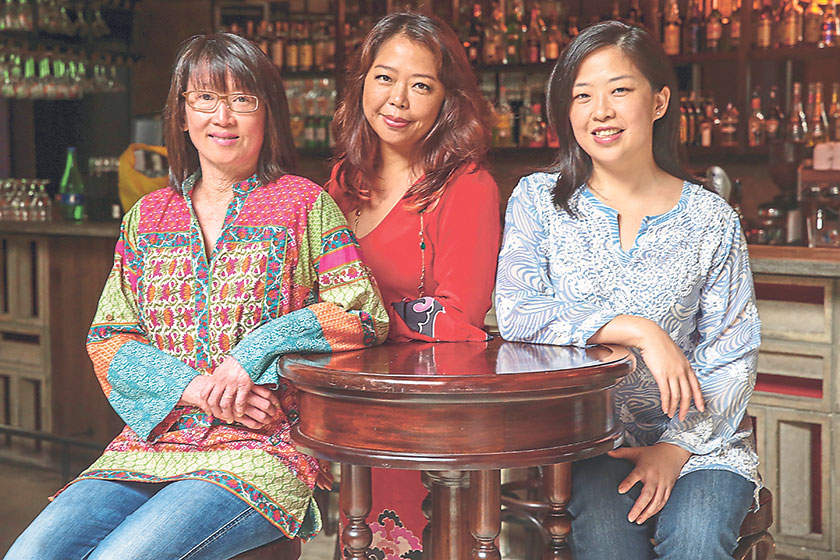


KUALA LUMPUR, Jan 18 — Ten years after Malay restaurant Bijan opened its doors, the three owners — Yuen Sze To, Lissa Yeoh and Way Cheng Yeoh — released their own cookbook.
But it is more than just a book of recipes though, this is a personal memoir of the Good Food Trio, the name coined for the three who love food and travel. Both Yuen and Lissa had connected as good friends, while Lissa and Way Cheng are siblings.
Prior to opening Bijan, Yuen Sze and Lissa had started the Italian restaurant, La Risata in 1996 with a group of friends. Subsequently, both quit their jobs and decided to manage the restaurant on a full-time basis.
As a testament to its popularity, the Italian restaurant still operates out of its original Ampang outlet and its second outlet in Medan Damansara. In 2008, they opened gourmet burger restaurant The Daily Grind in Bangsar.
The story of Bijan started as far back as 2002, when they first started researching about serving Malay cuisine in a modern restaurant setting.
By that time, Way Cheng had also joined the duo to help them open the restaurant. During that time, only a few Malay restaurants existed, making Malay food unavailable to many. “ It was inaccessible when you’re not Malay, as all the good food was normally eaten at people’s homes or on the streets but not in restaurants. If you look for Malay food where can you go?” explained Way Cheng.
In addition, the restaurant could showcase Malay cuisine to overseas visitors. “If you had international guests, there was nowhere to go for Malay food, especially if you did not want stall food,” says Yuen Sze.
The trio held fast to their idea of opening Bijan despite negative responses from friends. “Even before we started everyone was telling us it was not going to work,” said Yuen Sze. Lissa recalled one comment that the food in the streets was much cheaper.
Nevertheless, the trio persevered and hired renowned recipe consultant Rohani Jelani to devise their opening menu. In September 2003, Bijan opened its doors to serve Malay food, fine dining style.
After many years of hard work, the restaurant has chalked up awards like Tourism Malaysia’s Best Malay Restaurant in 2004, The Hospitality Asia Platinum Award for one of the Top 10 Asean Restaurants in 2007, and Time Out KL’s Best Malay Restaurant from 2010 to 2013.
Throughout the years, Bijan’s menu has been tweaked many times as the trio learned more about the business. “Over the years, we have figured out what people like and what people don’t like. It’s actually quite hard to guess and sometimes you think it’ll be very popular but no one likes it,” said Way Cheng.
For instance, there’s only a handful of dishes from the original menu from Rohani. “As Rohani does home style Malay cooking, some of her recipes like cencaru sumbat do not keep very well for a commercial basis, which requires mass quantity. You have to prepare and sell it immediately, hence we have had to tweak according to our business needs,” said Lissa.
The trio also work closely with Chef Zul who is the executive chef of their three restaurants. Initially, Chef Zul had joined the La Risata kitchen, but they only found out much later that he also excelled in Malay cooking, as he was the mastermind behind the famous Johor Laksa served every Monday at The Royal Selangor Golf Club.
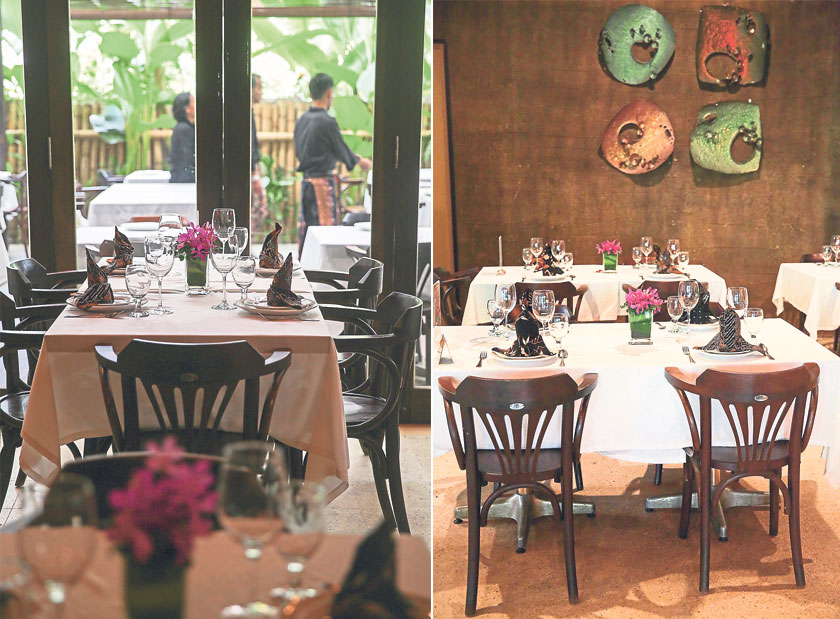
“That was Zul’s Johor Laksa. When the chef from Bijan left, we gave him the task and he rose to the occasion,” said Lissa. The trio obviously have a good working relationship with Chef Zul. “We will come out with the way we want, for instance how some dishes are presented in a more modern manner. He has a lot of ideas hence it’s a working collaboration with Zul,” said Lissa.
The decision to produce a cookbook to chart their journey of running Bijan was mooted about two years ago. “For us, we wanted to share our experience, as it’s been 10 years and a real journey for us,” said Way Cheng who was put in charge of the project.
Most restaurants tend to shy away from sharing their recipes. Some prefer to hold on to them fiercely to guard their commercial value. Way Cheng feels otherwise. “You are only as good as your last recipe. Apart from our signature dishes, you can find some variation of the same dish on the Internet. Even cucur udang can be found on the street.”
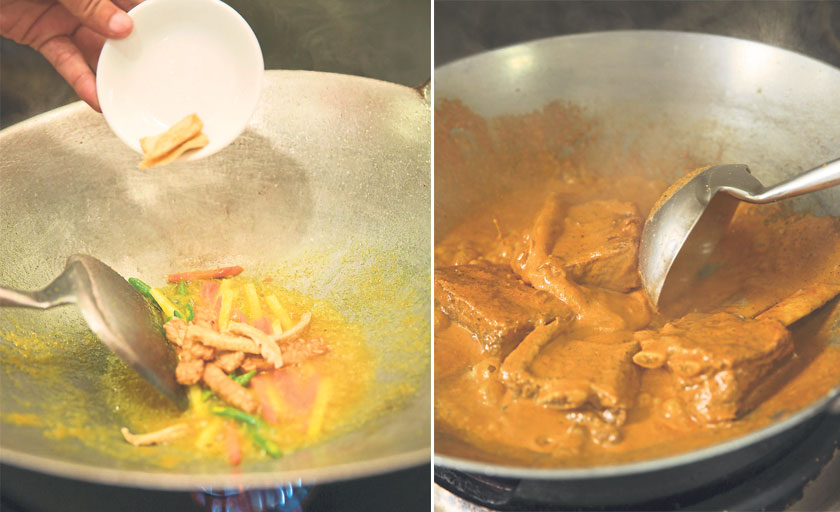
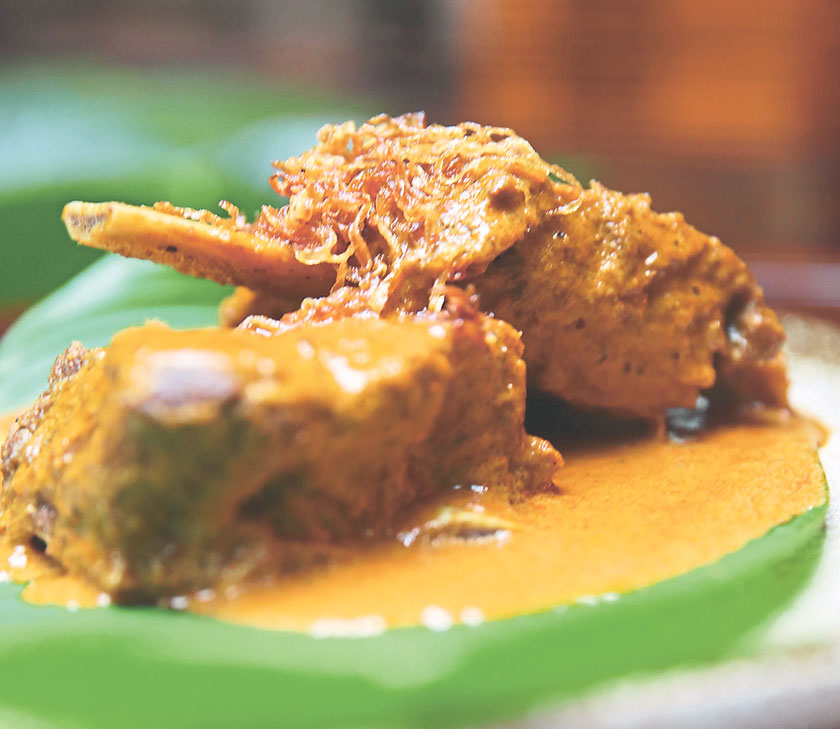
Each of the restaurant’s signature dishes holds a special meaning for them. “There is so much story and history behind each recipe,” said Way Cheng who also included her own wedding dinner memories in the cookbook. The recipes shared include their famous rusuk panggang or chargrilled beef ribs, and iconic chocolate durian cake that many have enjoyed. The Yeoh siblings also share their mother’s recipe for otak-otak. “We don’t like the Muar type, but we grew up eating this kind of lemak otak otak,” said Way Cheng.
The cookbook also has cocktail recipes concocted by Lissa, including a nifty sounding Don’t Cut Ali, a twist on Tongkat Ali, the miraculous herb that is said to improve men’s virility. When Bijan first opened, one of the important elements they introduced was wine paired with Malay food. “People just don’t get it. If Chinese, Japanese and Thai food can be paired with wine, why not Malay food? It’s just the dining experience,” said Yuen Sze. The cookbook also contains a section on pairing various Malay dishes with wines.
For Way Cheng, the cookbook was very much a labour of love, since it took them two years to see it from concept to print. It was also a very long process, as each recipe was for restaurant portions, which had to be edited down to fit the home cook and tested subsequently.
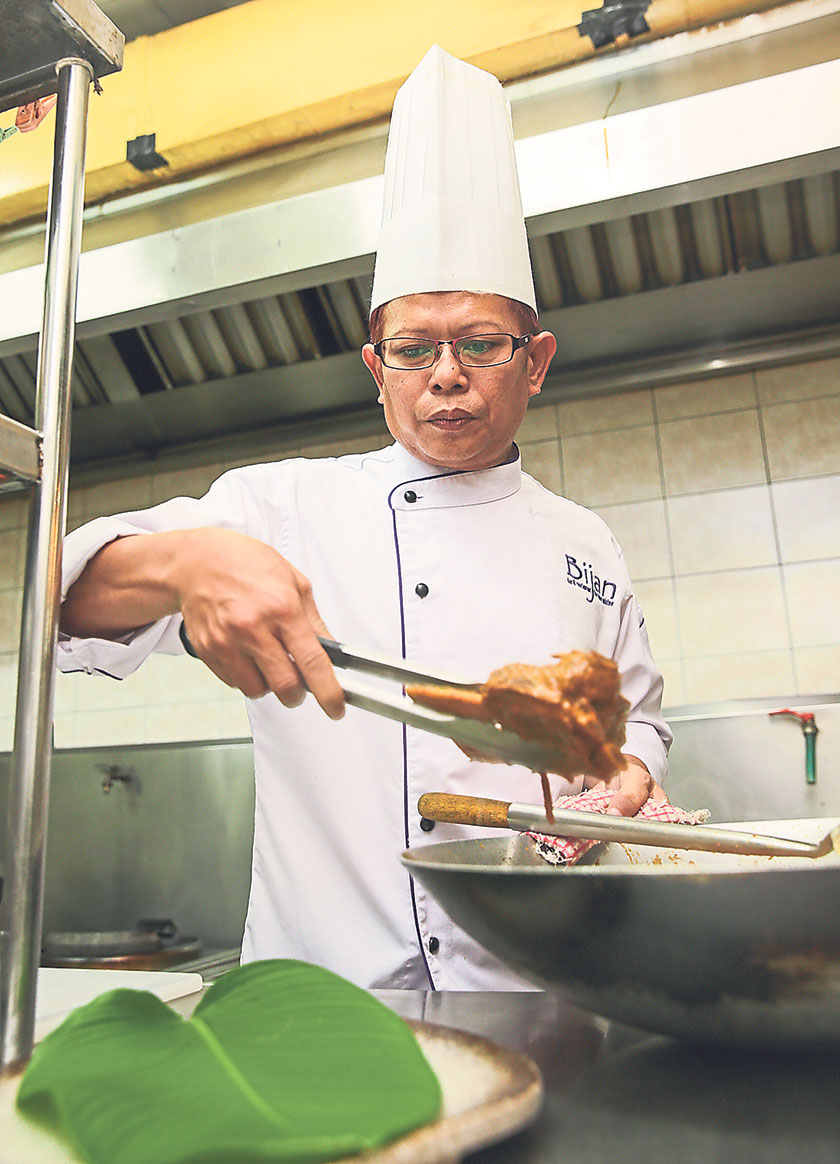
“We had to be very specific with the recipes, down to 5 grams, and Malay cooking is not like that,” said Lissa. Way Cheng would style the food cooked by Chef Zul, directing the photographer. “It is not tweaked. The picture is as it is because I am not a professional. I don’t know how to brush stuff over it to make it look beautiful. The best part of the photography sessions was we ate all the food after that.”
The photography sessions were done in a few stages, but occasionally they had to reshoot some pictures due to colour, composition or just appeasing the other two partners who were not happy. “Can you imagine if there was six of us?” quipped Yuen Sze.
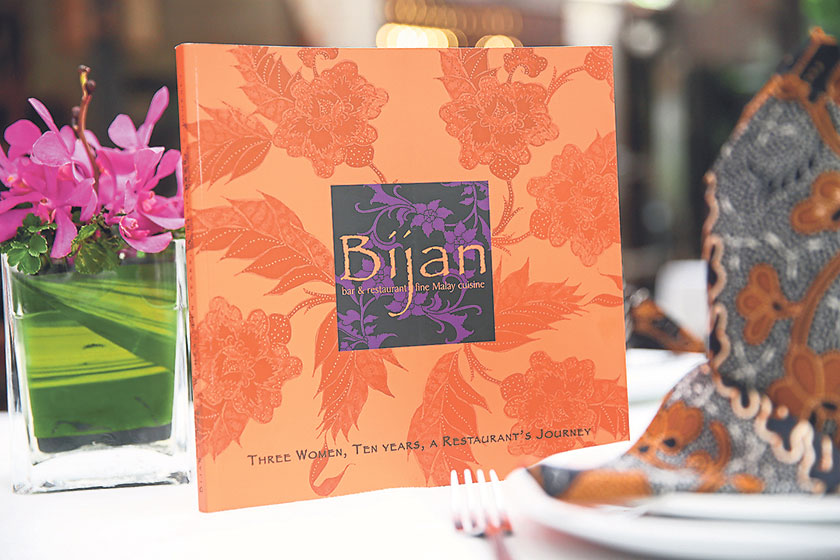
The process also took some time as they struggled with the cover of the cookbook. “We had various choices like a girl holding a bowl and other exotic looking pictures, but we thought it wasn’t us,” said Lissa. Eventually they settled for a bold orange colour with a batik print that personifies Bijan, as it’s the same print you find on their menu and restaurant logo.
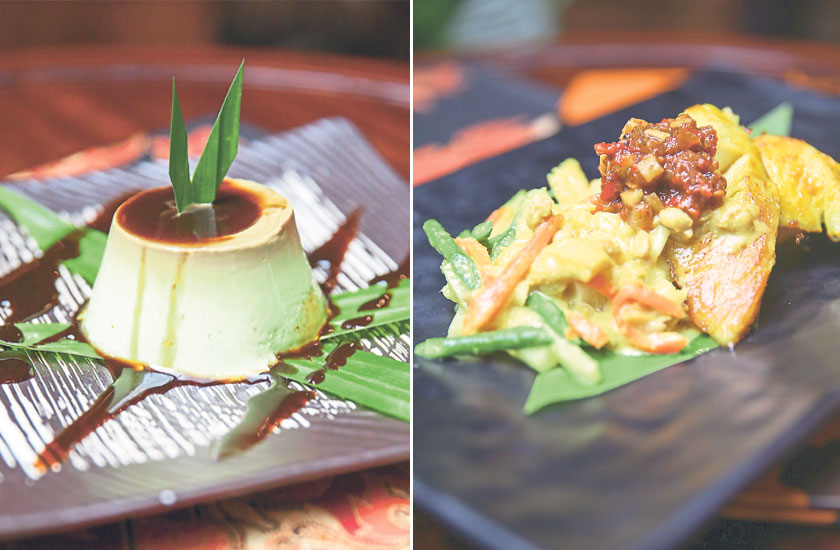
Inside the cookbook, illustrations using the same batik flower also add a unique touch to the pages. “The other cover shots all seemed very generic. Part of this exercise was also for marketing, as we do get a lot of tourists who want to bring this back.
It’s something for their home, so what better way to remember us with,” said Yuen Sze. With that in mind, the book also sports a soft cover and a manageable size for overseas visitors to carry a few copies home for their family and friends.
Like how they approach their business, everything was done by the trio, from writing the recipes, editing and even publishing it, as explained by Way Cheng. “We have always done everything ourselves, as we’re so involved in the restaurant. I guess people don’t realise that but we really do eat our food every week and enjoy it. It’s a very personal thing. We wanted to do it ourselves and be there rather than pay someone to do it.” In the future, they hope to distribute the cookbook to bookshops and online portals.
Most importantly, the trio who are all mothers also see it as a legacy for their children. “It was really a book to commemorate our 10 years and also for our children to pick it up one day and go... this is our mums,” said Way Cheng.
The cookbook is currently available at Bijan Bar & Restaurant,
No. 3, Jalan Ceylon, Kuala Lumpur. Tel:03-20313575.


