


- A study by Iman Research found Malay youths feel abandoned by political elites, cut off from community structures, and restricted from expressing themselves online.
- Some respondents expressed nostalgia for Datuk Seri Najib Razak’s administration, citing policies that directly improved their daily lives compared to the current government.
- The report warned that without integrity and reforms felt on the ground, resentment among young Malays towards political elites will only deepen.
KUALA LUMPUR, Aug 21 — Young Malay voters find themselves feeling abandoned by political elites, cut off from local community structures, and silenced online, according to a new study by think tank Iman Research.
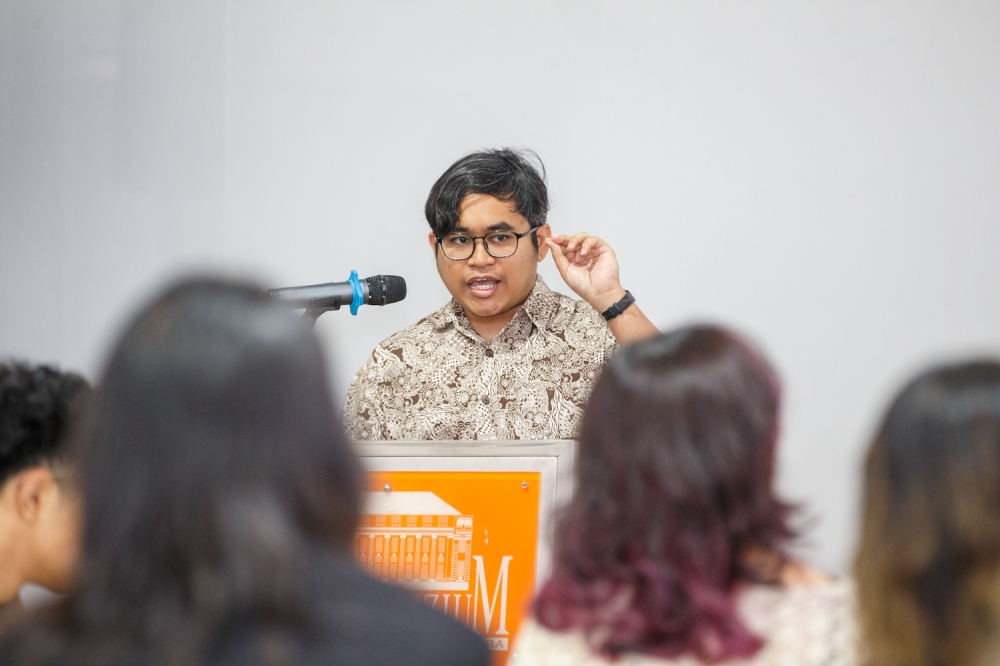
Its report “Orang Kita: The Politics of Acknowledgement and Resentment” suggested widespread anger towards the political and elite class, with research director Aziff Azuddin explaining the apathy was due to youths associating them with constant infighting.
“They are really tired of the elite class. The elite class could mean the upper middle class, the rich, and it could also mean politics,” he said during the report’s launch yesterday.
The respondents cited Deputy Prime Minister Datuk Seri Ahmad Zahid Hamidi’s discharge not amounting to acquittal (DNAA) of corruption charges as one evidence of broken promises on reform by the ruling government.
“Many participants expressed disappointment that the government had broken their promise on reforms, citing how Zahid was either discharged or acquitted of his many corruption charges pre-16th general elections.
“Despite the current government being a ‘unity government’, participants focused on the Pakatan coalition’s past statements on reform. They compared it to the situation where Pakatan had made political concessions to their Barisan Nasional partners,” the report said.
Infrastructure breakdown leads to disconnect from leaders
The report said young Malays also spoke of a breakdown in community infrastructure that previously allowed them to interact with decision-makers.
“There is a significant lack of community spaces or restrictions by government, particularly in semi-urban and rural areas, where youth can express, organise and form communities,” the study noted.
Aziff said discussions with youths in the northern states revealed a lack of guidance from political leaders, even on basic community issues.
“When we were up in the northern states, one of the groups was saying, ‘Hey, I care a lot about mental health in my community because nobody’s really talking about it. But how do we get started?’” he related.
Aziff recounted how his wife, a clinical psychologist, had to step in to advise the group, since there was no direction from their constituency representatives.
He added that youths wanted change in their respective communities, rather than somewhere distant.
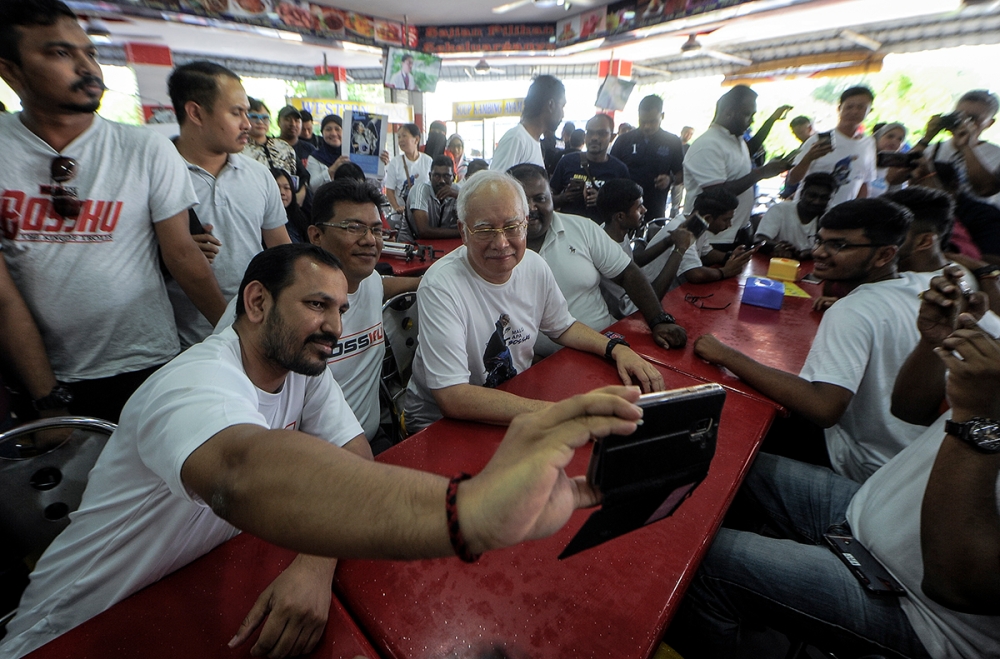
In a surprising finding, Aziff said some respondents even spoke highly of former prime minister Datuk Seri Najib Razak and pining for the days of his administration.
“Policies that affect our lives are a sign that the government cares for me. And I think, this is why on a controversial point, why a lot of people miss Najib Razak. A lot of them spoke very highly of him.
“It’s really because when Najib designed the policies under this side, under Barisan Nasional, a lot of the policies were transformative to their lives,” Aziff said.
He gave the examples of the Urban Transformation Centres (UTC) that made youths able to access this infrastructural development.
“It’s how you can see the world from around and how you feel the government cares about you and how they’re trying to make changes to your life.
“And this is what I think this government is lacking,” Aziff suggested.
Space for political awareness and education
With traditional platforms shrinking, respondents said they had turned to social media as their main space to discuss politics and gain literacy.
“Social media was identified as the main space where youths discussed politics and gained literacy,” the report stated.
It said that it was grounded in three factors — including how social media platforms did not have adequate safeguards against misinformation and disinformation.
“The medium of social media-which prioritises short, concise, and visually-rich content, also leaves much context out of the story, potentially leading to misunderstandings and narrative manipulation,” the report warned.
“This lack of safeguards in a medium that incentivises short-form visual content is something some participants saw as a concern for youths who lack the necessary media and political literacy to assess information online critically.”
The second factor is an assessment of the youths themselves, with a distinct “generational” shift between two cohorts of youths: those under 21 years old, and those above 21.
“Participants in the older cohort were critical of those in the younger cohort, often expressing concern that younger youths were more easily swayed by political rhetoric and emotion. This situation results from a lack of political awareness and critical thinking,” it said.
Perceived censorship on sensitive issues
But they also expressed frustration with restrictions on online discourse, particularly under the “3R” clampdown on issues of race, religion, and royalty.
The report said that the youths felt that political criticism was being categorised as “sensitive” and removed.
“A lot of these places, they feel like politicians are not caring about them so why should they care?
“Why should we get involved in the process, which is why then a lot of them then end up going to TikTok, Threads, Facebook, being angry because what are the channels of expression that they have left if not online,” Aziff said.
He added that he agrees on some points when Communication Minister Datuk Fahmi Fadzil said the government is trying to regulate the Internet, as there are some things needed to be dealt with.
“But on the other hand, the 3R, whatever that means to them, is very fussy. A lot of them also mentioned what is 3R? What is it supposed to mean? Is it criticism against the government? Is it criticism against the political party?” he asked.
“So because this term is an opportunity defined by policy, a lot of views when they have the account shadow ban, when they have their content removed, they feel like, ‘oh, this is the government trying to shut me out. They are already shutting me out of public spaces, they are already shutting me out of the political process and now they want to shut me out online as well’.”
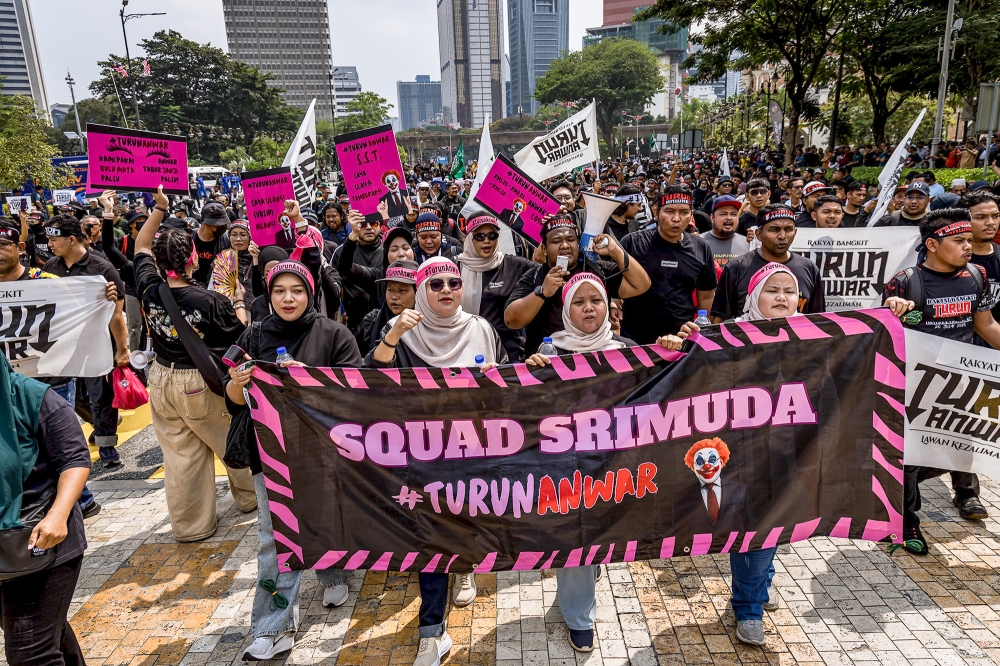
Aziff pointed out that many Malay youths, who are chronically online, attended the Opposition-led “Turun Anwar” rally last month because it was their only avenue to express their opinions.
The report concluded that Malay youths were demanding integrity and reforms that could be felt in their daily lives, warning that their anger towards elites would deepen if grievances continued to be ignored.
“The demand is clear: young Malays want integrity and reforms that can be felt in their daily lives. Without it, their anger towards elites will only grow,” the report said.
The study employed focus group discussions and in-depth interviews with Malay youths in several states between July 2023 and March 2024. It also drew on desk research and a review of existing literature.
Based in Kuala Lumpur, Iman Research describes itself as a think tank which focuses on the domains of protective security, peace-building, and sustainable development.


