


JULY 10 — The world is now in a big mess. No thanks to conflicts which should not have erupted. Oil prices are back to new highs. Costs of freight have risen thanks to disrupted shipping lanes. So are the insurance. Many expect to see the impact on world food prices soon as fertiliser supply lines continue to choke. Many are asking why is the UN not taking the necessary action to arbitrate the fighting. The truth is the UN has increasingly become toothless. Then what about the super powers? Why are they keeping quiet? In fact, one superpower is embroiled in the conflict which is largely responsible for the mess.
This week, the world watches as the President of the United States touches down in China. The formal agenda is the usual diplomatic choreography — trade imbalances, technology transfer, and territorial grievances. But the unspoken subtext is far more consequential: Can two giants, conditioned for decades to see each other as rivals, learn to share the weight of a fragile world?
For too long, the US-China relationship has been framed as a zero-sum contest. One’s gain is the other’s loss. On trade, tariffs rise. On technology, supply chains are weaponised. On development, the Global South is asked to choose sides. And in the crossfire, the world has been dragged into proxy tensions — from the South China Sea to Ukraine, from semiconductor bans to climate finance standoffs.
The inconvenient truth is that neither Washington nor Beijing can win a true decoupling. The US still leads in frontier innovation — AI, biotech, space — but China has matched and even surpassed in green tech, 5G, and manufacturing scale. To pretend otherwise is hubris. To panic is paralysis. The reality is interdependence dressed as rivalry.
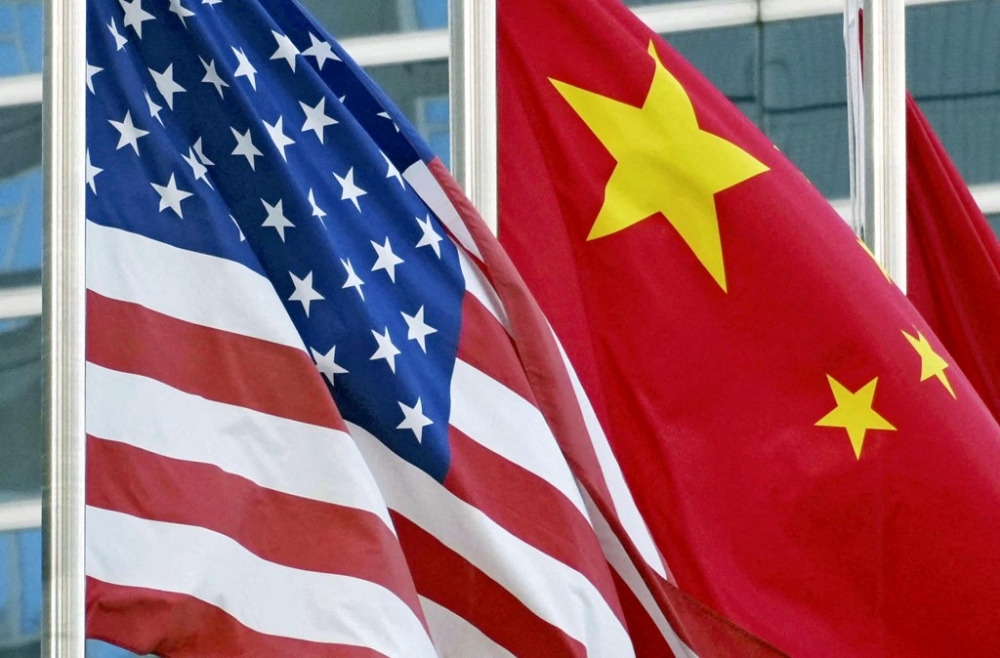
Meanwhile, humanity’s common challenges do not wait for diplomatic thaw. Climate collapse, pandemics, debt distress in low-income nations, and the spectre of new regional wars — none respect borders or spheres of influence. A fractured US-China relationship does not just hurt them; it leaves the rest of the world without a rudder.
Is there a common round? Can they work together? Yes — but not through grand gestures of friendship. Through grudging, self-interested cooperation. Three pillars stand out:
Climate can be a platform for compulsory collaboration. No decarbonisation succeeds without US capital and Chinese manufacturing. Joint R&D on carbon capture, coordinated rare earth recycling, and shared methane standards would benefit both economies. Let them compete on EVs — but agree on a global minimum environmental benchmark.
They should just embrace conflict arbitration. Instead of each backing opposing sides in civil wars or regional disputes, the US and China could establish a bilateral crisis hotline and a joint mediation framework for conflicts like Myanmar, Sudan, or even a future Taiwan Strait contingency. Not as rivals, but as co-guarantors of no-escalation. Peace is not the absence of rivalry; it is the presence of shared veto power over catastrophic possibilities.
Technology is set to rule for the rest of the century. Rather than a fragmented internet and dual AI standards, they could negotiate a limited but enforceable digital Geneva Convention: no state-sponsored hacking of critical infrastructure, shared protocols on lethal autonomous weapons, and a moratorium on cyberattacks against hospitals or power grids.
None of this is easy. Trust is near zero. Domestic politics in both countries reward toughness, not compromise. But the alternative — unmanaged competition sliding into confrontation — benefits no one except arms dealers and disaster capitalists.
The US and China do not need to become friends. They need to become responsible adversaries — disciplined, communicating, and capable of arbitration. The world does not need a new leader. It needs two superpowers that understand a simple truth: in an age of planetary crises, the only winning move is to build the guardrails together.
So, as they sit down this week, let us hope for less theatre and more architecture. The blueprint for common ground already exists. What is missing is the will to admit that neither can go it alone — and that peace, however imperfect, is still the greatest technology of all.
* Professor Datuk Dr Ahmad Ibrahim is affiliated with the Tan Sri Omar Centre for STI Policy Studies at UCSI University and is an Adjunct Professor at the Ungku Aziz Centre for Development Studies, Universiti Malaya.
** This is the personal opinion of the writer or publication and does not necessarily represent the views of Malay Mail.


