


JUNE 15 — Every year, World No Tobacco Day brings renewed calls for stricter tobacco and nicotine control measures.
This year, several advocacy groups in Malaysia have urged the government to ban vape products and further increase tobacco taxes.
While these proposals are often framed as public health solutions, good policy should be judged by outcomes rather than intentions.
The growing call for a blanket vape ban rests on a simple assumption: if legal products are removed from the market, consumption will decline. Experience from other countries suggests otherwise.
Countries that have adopted highly restrictive approaches towards vaping continue to struggle with unintended consequences.
Despite maintaining one of the world’s strictest prohibitions on vape products, Singapore has acknowledged that vaping remains present among its population and continues to conduct enforcement operations against illegal vape sellers and distributors. This suggests that demand has not been eliminated despite the ban.
Brazil offers another important lesson. Although e-cigarettes remained prohibited for years, a recent nationally representative survey involving more than 50,000 adults found that e-cigarette use increased dramatically, 600 per cent between 2018 and 2023.
The findings suggest that prohibition alone was unable to suppress consumer demand. Instead, usage continued to expand through informal and unregulated channels.
These experiences demonstrate a simple reality: banning a product does not necessarily eliminate demand.
More often, demand shifts into markets where products are sold without quality controls, age-verification requirements, or regulatory oversight.
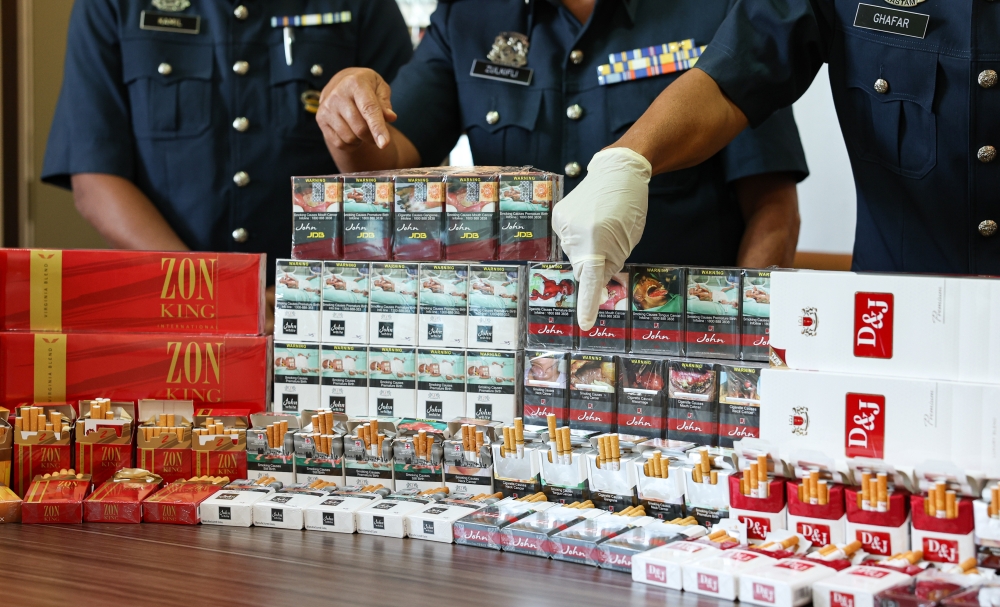
Malaysia should take note of these lessons. The country is already facing one of the world’s largest illicit cigarette markets.
The latest Illicit Cigarette Study found that illicit cigarettes accounted for 56.7 per cent of total cigarette consumption in early 2026, up from 54.4 per cent previously and marking the first increase since 2021.
More than one in every two cigarettes consumed in Malaysia now comes from the illegal market.
If legal vape products are removed from the market, there is a real risk that consumers will simply migrate to illicit channels that are far harder for regulators to monitor and control.
This concern is particularly relevant when discussing recent cases involving synthetic drugs found in vape devices.
Some groups have used these incidents to justify a complete ban on vaping. However, this confuses a criminal enforcement issue with the broader regulatory framework governing nicotine products.
The problem is not the existence of vape devices. The problem is that criminal actors are using these devices to distribute illegal substances.
Governments do not ban mobile phones because criminals use them to coordinate illegal activities, nor do they prohibit motor vehicles because they are sometimes used for drug trafficking.
Instead, law enforcement agencies target the criminal conduct itself.
The same principle should apply here. Synthetic drug contamination is fundamentally an enforcement challenge requiring stronger border controls, intelligence gathering, targeted inspections, and tougher action against organised criminal networks.
Conflating criminal misuse with the entire vaping category risks punishing legitimate consumers while leaving underlying enforcement weaknesses unresolved.
The second argument often raised is that higher tobacco taxes will significantly reduce smoking rates.
Taxation can play a role in public health policy, but it has limits, particularly when tax increases outpace enforcement capacity.
Australia offers an important warning. After years of aggressive tobacco tax increases, economists and policymakers have begun questioning whether tobacco excise has passed a “tipping point”.
While smoking prevalence has continued to decline only gradually, the illicit tobacco market has expanded significantly and tobacco tax revenues have fallen as consumers increasingly shift to illegal products.
Rather than eliminating demand, excessively high taxation appears to have redirected demand towards criminal suppliers.
Malaysia faces similar risks. The increase in illicit cigarette consumption to 56.7 per cent suggests that enforcement efforts are struggling to keep pace with market realities.
When legal products become significantly more expensive while illicit alternatives remain widely available, many consumers are incentivised to switch markets rather than quit altogether.
This highlights an important point often overlooked in public debates: smoking and vaping behaviours are not determined solely by price or product availability. Socioeconomic factors matter.
Many nicotine users come from lower-income households facing financial stress, economic uncertainty, unstable employment, and limited access to healthcare support.
Likewise, concerns about youth vaping cannot be separated from broader social realities.
Family environment, parental supervision, educational opportunities, peer influence, mental health challenges, and community support systems all shape behaviour.
Treating youth vaping purely as a product issue risks oversimplifying a far more complex challenge.
Reducing youth nicotine use requires stronger educational interventions, better parental engagement, effective enforcement of age restrictions, and targeted support for vulnerable communities.
Rather than introducing new prohibitions, policymakers should focus on making existing regulations work.
The Control of Smoking Products for Public Health Act 2024 (Act 852) already provides a framework to regulate products, restrict youth access, and establish enforcement standards.
The greater challenge lies in ensuring consistent implementation, effective enforcement, and stronger coordination among relevant agencies.
Pursuing additional bans before addressing these shortcomings risks creating new problems while leaving existing ones unresolved.
Public health policy is most effective when it recognises how people actually behave rather than how policymakers wish they would behave.
Demand cannot simply be legislated away. When regulation becomes disconnected from reality, illicit markets flourish, enforcement burdens increase, and consumers become harder to protect.
If the goal is to reduce harm and protect public health, Malaysia should focus on better regulation, stronger enforcement, and evidence-based interventions.
Blanket bans and excessive taxation may sound decisive, but they risk repeating policy failures that have already been observed elsewhere.
* Tarmizi Anuwar is a Malaysia Country Associate at Consumer Choice Center.
** This is the personal opinion of the writer or publication and does not necessarily represent the views of Malay Mail.


