


AUGUST 5 — In late May 2020, the outrage-soaked social media landscape amplified a chaotic 17-second video.
Shot in darkness from a shaky, first-person perspective, the footage allegedly showed protesters burning down a store in Minneapolis.
It conveyed a sense of raw truth and fuelled national racial tension amidst the George Floyd protests.
However, a subsequent investigation by fact-checker Nur Ibrahim at Snopes revealed that the video was actually from a 2019 music festival.
The uploader had maliciously reframed the content to simulate a live riot.
This incident embodies a dangerous tension of our digital age: citizen journalism — news reported by laypeople — is unparalleled in its transparency, yet it simultaneously creates a severe trust gap.
With a smartphone in hand, any bystander can become a reporter.
Consequently, the line between eyewitness verification and online manipulation has blurred, leaving us caught between the democratic triumph of a free press and the chaos of “post-truth” manipulation.
The ‘aesthetic of amateurism’ and echo chambers
One of the greatest controversies surrounding citizen journalism is what scholars call the “aesthetic of amateurism.”
In his 2021 book Ethics and the Media: An Introduction, media scholar Stephen Ward explains that humans have a natural bias toward unpolished media.
Highly produced, high-definition professional broadcasts can look staged or sanitised.
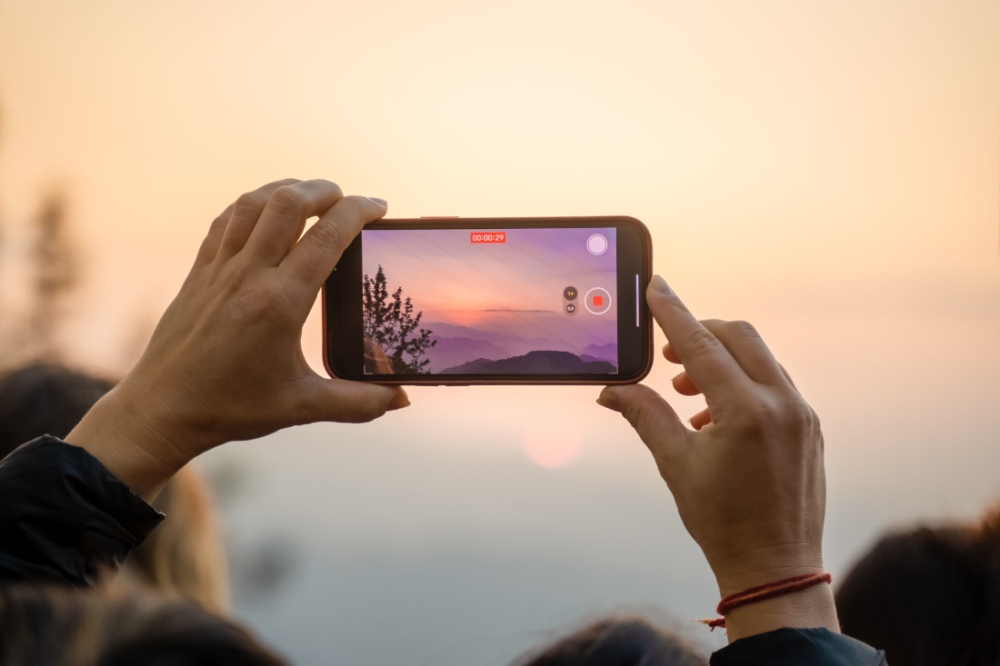
Ironically, audiences decode the visual imperfections of citizen journalism — shaky movements, background noise, and bad lighting — as proof of unfiltered honesty.
This visual rhetoric bypasses our logical verification processes, replacing critical thinking with immediate emotional empathy.
Furthermore, as researcher Andreas Morten argues in a 2021 study in the Nordicom Review, citizen journalism inherently lacks the authority to verify its own claims.
When high-conflict footage is amplified by algorithms, it creates a media sociology crisis, according to a 2021 study in PNAS by Michela Cinelli and colleagues.
Their research claims that the 21st-century gatekeeping process has shifted from professional editors to engagement-driven algorithms that trap people in echo chambers.
Inside these digital silos, audiences implicitly trust a citizen-shot video simply because it confirms their underlying biases, even if the content is completely stripped of its original context.
Legal and ethical perspectives
The ethical dangers of citizen journalism are most glaring when it results in cyber-lynching.
Without the ethical constraints of traditional gatekeepers, a single out-of-context video can destroy an innocent person’s life.
A 2021 article in the London Evening Standard detailed a viral incident initially framed as a racist attack on the London Tube.
A 12-second clip of a man yelling at passengers led to his immediate doxxing and the loss of his job.
However, when full CCTV footage was released months later, it revealed the viral video had been maliciously doctored; the man was actually reacting to minutes of unprovoked physical abuse.
This “verdict before verification” culture demonstrates a complete disregard for basic ethics.
Despite these risks, public trust in citizen reporting remains problematically high.
In The Elements of Journalism, Bill Kovach and Tom Rosenstiel point out that professional news relies on a strict “discipline of verification.”
Most citizen reporters lack this discipline, regularly posting without systematically checking facts.
This issue is compounded by a 2022 study in the journal Journalism, where researchers Deborah S. Chung and Hyun Ju Jeong discovered that citizen journalists tend to significantly overrate the credibility of their own reporting, highlighting a major gap in self-awareness.
The law is also struggling to define the responsibilities of digital platforms.
The European Union’s Digital Services Act (DSA), which came into force in 2022, serves as a legal benchmark.
Under the DSA, large platforms are treated as “gatekeepers” and are legally required to impose transparency in content moderation and efficiently flag false information.
Globally, however, a legal vacuum remains.
In many jurisdictions, it is still incredibly difficult to hold citizen reporters — and the platforms that host them — accountable for the long-lasting harm caused by viral, manipulated content.
How can we rebuild our line of defence for the truth?
Social media platforms must take an active role in establishing “digital provenance.”
Drawing inspiration from the EU’s DSA, platforms should introduce and mandate features like “Community Notes” for crowdsourced fact-checking to provide immediate context to viral media.
The public must distance itself from “visual-only trust.”
Media literacy programmes need to teach users that a shaky camera does not guarantee the whole truth.
We must adopt a “verify before you share” mindset, especially when viewing high-conflict videos that conveniently confirm our existing biases.
Legislatures must future-proof defamation and privacy laws against digital manipulation.
Following the EU’s lead, more countries need to explicitly define the legal duties of citizen reporters, ensuring that malicious editing with harmful intent carries real legal consequences.
As Kovach and Rosenstiel argue, “The public’s right to know should not overwhelm the individual’s right to protection against falsehoods.”
Citizen journalism is a double-edged sword; it empowers the voiceless while handing a powerful weapon to deceivers.
We must protect the right of every citizen to document reality, but we must never blindly trust the recording itself.
As we navigate this post-truth era, we must remember that the truth itself does not budge; our judgment does, especially when blinded by emotion and guided by algorithms.
Only through platform accountability, forceful legal frameworks, and widespread public scepticism can we steady the “shaky lens” of citizen journalism and bring a reliable picture of reality back into focus.
* The authors are from the Department of Science and Technology Studies, Faculty of Science, Universiti Malaya and can be reached via [email protected]
** This is the personal opinion of the writer or publication and does not necessarily represent the views of Malay Mail.


