


MARCH 1 — Less than a week ago, at a dinner attended by Malaysian diplomats and foreign dignitaries, Prime Minister Anwar Ibrahim was cryptic yet piercing in his warning.
The Asia-Pacific region, he said, is fine. Others are not.
At the time, some may have interpreted this as diplomatic flourish. It was not. It was a sober assessment of a world inching toward conflagration.
In Panama and the Caribbean basin, tensions have been escalating over canal access, maritime security, and great power manoeuvring. In Cuba, renewed geopolitical rivalry is stirring echoes of Cold War brinkmanship.
But it was in Persia — modern-day Iran — where the storm clouds were thickest.
For weeks, military analysts had observed force mobilisations not seen since 2003.
On February 28, 2026, those fears materialised. Israel and the United States conducted a joint military strike on Iran. Retaliatory strikes soon followed.
The US bases in Bahrain were reportedly hit. Other installations across the Middle East are on alert.
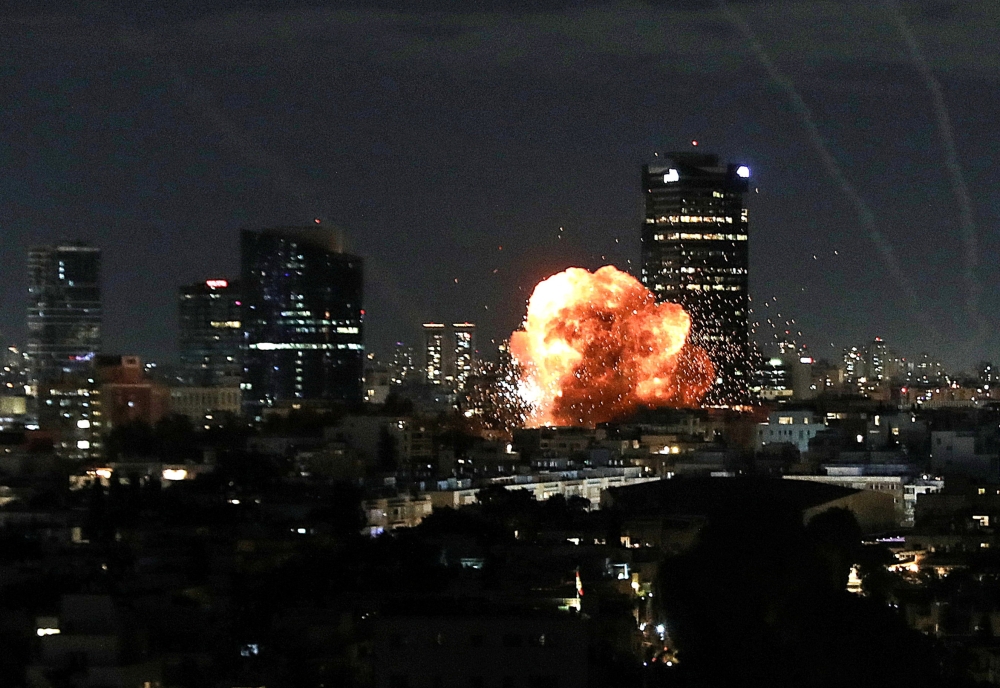
The spiral has begun.
And yet, South-east Asia remains calm.
This is not an accident. It is the product of decades of deliberate statecraft.
Asean was born in 1967 amid the Vietnam War, ideological rivalry, and regional insurgencies. It matured through the Cambodian conflict, the Asian Financial Crisis, and post-9/11 security turbulence.
Today, its members navigate the rivalry between Washington and Beijing with remarkable restraint.
Consider the contrast.
In the Middle East, negotiations between Washington and Tehran were burdened by escalating demands: dismantle the nuclear programme; dismantle the missile programme; dismantle drone capabilities; sever ties with regional allies and proxies.
Each additional demand deepened mistrust. Iran, heir to a civilisation stretching back millennia, perceives such maximalism as humiliation. National pride hardens positions. Diplomacy narrows.
Military options widen.
In contrast, Asean has refused zero-sum ultimatums.
Through mechanisms such as the Asean Regional Forum and the East Asia Summit, dialogue persists even when disagreements are sharp.
No member state demands the capitulation of another’s entire security doctrine as a precondition for coexistence.
That is why the South China Sea, despite tensions, has not exploded into a region-wide war.
That is why Taiwan-related tensions have not fractured Asean unity.
That is why US-China competition in South-east Asia remains largely economic and technological rather than kinetic.
Anwar’s point was not triumphalism. It was caution.
The Asia-Pacific is “fine” not because it is immune to rivalry, but because its leaders understand the catastrophic cost of war.
The region’s prosperity is anchored in trade. Supply chains crisscross borders. Energy flows through narrow straits. Tourism, education, and digital connectivity bind societies.
War here would be self-destruction.
Elsewhere, however, geopolitical theatres are less economically interwoven and more ideologically charged.
The Middle East remains scarred by unresolved conflicts, sectarian divides, and external interventions. Latin America, too, risks becoming a stage for renewed strategic competition.
When Prime Minister Anwar spoke of “others” not being fine, he was signalling that the rules-based order is fragmenting unevenly. Some regions have internalised restraint.
Others remain trapped in cycles of coercion and retaliation.
Malaysia’s posture reflects this awareness.
Kuala Lumpur has consistently advocated dialogue with Iran, de-escalation between Israel and Palestine, and neutrality in great power rivalry. It has resisted being drawn into militarised blocs. It has emphasised humanitarian principles while avoiding inflammatory rhetoric.
This is not weakness. It is strategic prudence.
The Asia-Pacific’s stability rests on three pillars.
First, economic interdependence. Asean’s trade with China, Japan, South Korea, the United States, and the European Union creates mutual stakes in peace.
Second, institutional density. Forums may appear talk-heavy, but they build habits of consultation.
Third, leadership culture. Many Asian leaders, shaped by histories of colonialism and development struggles, prioritize growth and poverty reduction over ideological crusades.
Although scams that are becoming in Indo China must be stopped by the leaders at the highest levels too.
The Middle East crisis unfolding now underscores what happens when maximalist demands replace incremental diplomacy.
When negotiations shift from preventing nuclearization to dismantling entire defensive architectures, red lines multiply. Sovereignty becomes non-negotiable.
Nationalism surges.
Military strikes then become the language of last resort — and sometimes of first impulse.
Anwar’s cryptic remark was thus a plea for sanity.
The Asia-Pacific cannot assume immunity.
Energy price shocks from Middle Eastern conflict will ripple through South-east Asia. Supply chains may be disrupted. External powers may pressure Asean states to align.
But if the region maintains its commitment to balance, dialogue, and non-alignment, it can remain insulated from the worst.
In times of global turbulence, calm regions must not grow complacent. They must double down on restraint.
Anwar Ibrahim’s warning was not about schadenfreude. It was about vigilance.
This region is fine — for now — because it refuses to equate strength with escalation.
Others are not fine because escalation has become normalised.
The lesson is clear.
Sanity is not automatic. It is chosen.
And in 2026, as missiles fly over the Persian Gulf and bases in Bahrain absorb retaliatory strikes, South-east Asia must choose sanity again.
* Phar Kim Beng is a professor of Asean Studies and director of the Institute of International and Asean Studies, International Islamic University of Malaysia.
** This is the personal opinion of the writer or publication and does not necessarily represent the views of Malay Mail.


