


JANUARY 24 — The language of peace is often comforting, even seductive.
When states announce a new “Board of Peace,” complete with charters and handshakes, the message is clear: cooperation has won. Yet history warns us otherwise.
Peace boards often look like best friends forever — until interests diverge, power intrudes, and silence replaces solidarity.
Peace is rarely neutral.
It is political.
It reflects who is invited, who is excluded, and which conflicts are considered worthy of attention.
Many peace mechanisms exist less to resolve violence than to manage appearances.
They reassure elites and international audiences, not victims.
The problem begins with selective moral vision.
A board may call loudly for ceasefires in one place, while remaining silent elsewhere.
When a peace charter avoids naming an ongoing humanitarian catastrophe — such as the devastation in Gaza — this is not neutrality.
It is hierarchy.
Some lives are simply more inconvenient than others.
This selectivity is not accidental.
It mirrors the global order built after 1945.
The United Nations Security Council, with its veto powers, institutionalised a conditional peace.
Stability mattered more than justice.
Order trumped equity.
Peace became something administered by the powerful, not negotiated among equals.
A Board of Peace operating within this logic risks becoming an imperial court in all but name.
It speaks the language of universality while practising exclusion.
It invokes the Charter while ignoring civilians trapped under bombardment, sanctions, or siege.
In doing so, it erodes its credibility before it even begins.
There is also the illusion of permanence.
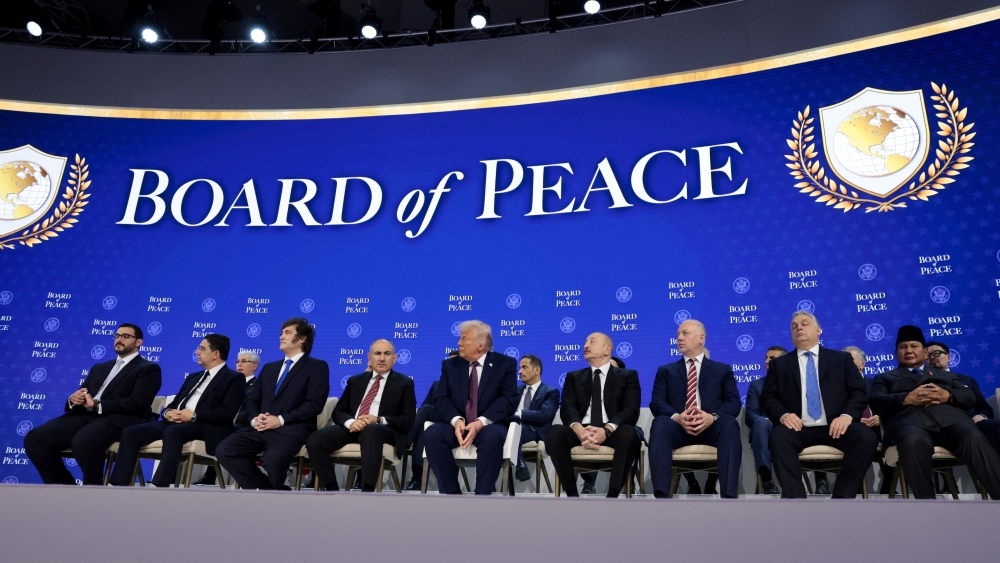
“Best friends forever” sounds reassuring, but international politics offers no such guarantees.
Alliances are transactional.
Friendships last only as long as interests align.
When costs rise or politics shift, today’s peacemakers become tomorrow’s bystanders — or enablers. We have seen this before in the colonial and even the post-colonial age.
Institutions born in optimism slowly hollow out as power realities return.
What remains is ritual without resolve.
Meetings without enforcement.
Statements without consequence.
For Southeast Asia, the lesson is sobering. ASEAN values consensus, quiet diplomacy, and non-interference.
These norms preserve stability, but they also risk silence in the face of atrocity.
A global Board of Peace that normalises omission sets a dangerous precedent.
That peace is compatible with looking away.
Words matter.
If Gaza cannot be named today, what disappears tomorrow?
Ukraine?
The Rohingya?
Peace built on strategic amnesia is not peace.
It is postponement.
Real peace requires moral courage. It must be willing to offend.
It must name perpetrators and recognise victims, even when inconvenient.
Otherwise, peace boards become clubs of mutual reassurance.
Best friends congratulating each other while the world burns outside the frame.
The irony is clear.
The more peace is institutionalised without justice, the more brittle it becomes.
Trust evaporates.
Cynicism grows.
Those excluded conclude — reasonably — that international law is spoken only among the powerful.
If the Board of Peace is to matter, it must confront this legitimacy crisis.
Peace is not merely the absence of war among friends.
It is the presence of fairness for all.
Until then, we should remain clear-eyed.
Best friends forever is a slogan, not a strategy.
In world politics, friendships dissolve quickly when power and prestige are at stake.
A peace that cannot survive disagreement is no peace at all.
It is merely a pause.
* Phar Kim Beng is professor of Asean Studies and director of the Institute of International and Asean Studies, International Islamic University of Malaysia.
** This is the personal opinion of the writer or publication and does not necessarily represent the views of Malay Mail.


