


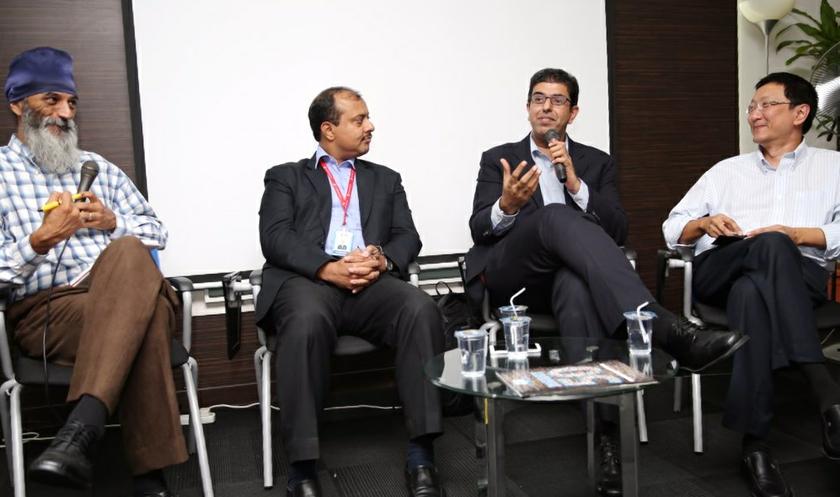


KUALA LUMPUR, March 27 — With technology becoming so much a part of our everyday personal and professional lives, with its marvels bombarding us through the mass media, with just about everyone on the Internet on social media too — everybody has an idea of what technology can do.
The trouble is, their conceptions of the potential of technology may not be entirely accurate, and that’s where today’s chief information officer (CIO) or his equivalent has to step in.
“This is just my personal opinion — everyone’s a CIO,” said Malik Murad Ali, the IT director at Mydin Mohamed Holdings Bhd, which runs the Mydin chain of hypermarts, as well as shopping malls and a host of minimarts.
Speaking at a DNA-TeAM Disrupt panel discussion themed “Meet The Buyers”, Malik said that many a time, he has been approached by someone in his company with a great new idea of how technology can help the business.
“That’s because they saw it on television the night before,” he chuckled. “The technology may be available but it may not be feasible, and it’s the job of the CIO to filter that information and determine if it is practical for us. Does it make sense? Is the value there for us?”
Malik was responding to a question from the floor about the changing role of the CIO, and whether today’s CIO is getting the support he needs from the other C-levels.
The Disrupt session on March 26, the 16th in a series of monthly meetups and panel discussions organised by DNA (Digital News Asia) and the Technopreneurs Association of Malaysia (TeAM), was focused primarily on what large technology buyers like Mydin were looking for, and the role that local technology startups and even more established companies could play in filling those needs.
However, today’s technology trends such as mobility, the cloud and even big data have changed what businesses expect from technology, and thus, even the role CIOs play. As a participant put it, the “I” in CIO can now mean “innovation”, “inspiration”, or even “investment”.
“How are you preparing for this, essentially a very different job scope from managing the systems in place, to helping to shift the business direction of your company,” he asked.
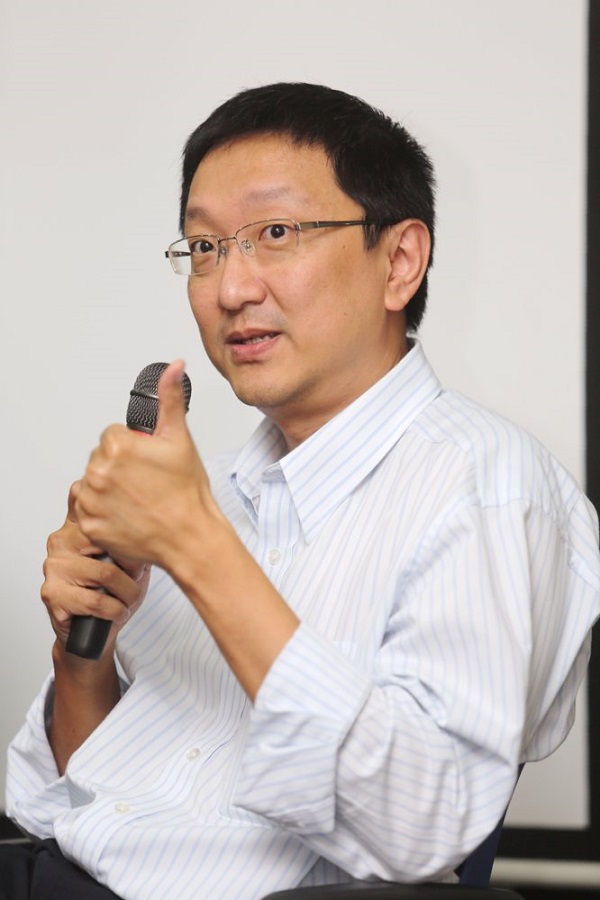
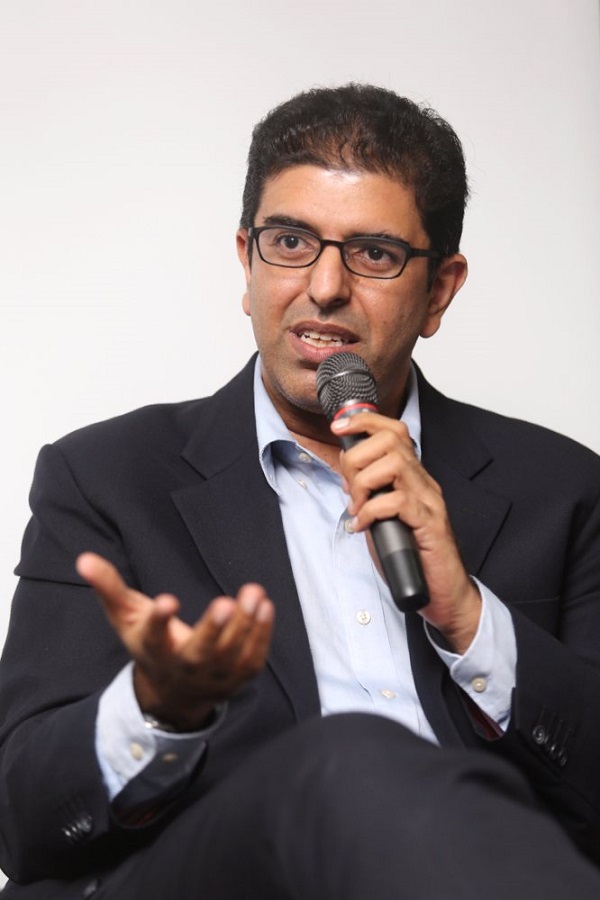 “It’s an interesting question, and one I’ve been struggling with, actually,” said Malik (pic).
“When I was first hired for my job, it was to fix computers; after that, it was to fix a few thousand computers. Now, yes, IT has become ingrained into business processes, and is even more important to customers.
“Previously, POS was about selling a product and collecting the money; now it’s not so much ‘point of sales’ but ‘point of service’. There are lot of things running on it.
“What must the CIO do? He must go out, figure out what’s going on, and come back and be a sounding board to his CEO (chief executive officer).
“For instance, my boss has a lot of ideas, and some of them are fantastic, but the problem is that technology has not reached that level yet.
“Businesses have great ideas, and we have to be within the business — we have to become kind of a bridge [between what the business needs or wants, and what technology can do], and the only way to do that is to get out of our shell,” added Malik.
That means going to conferences, going overseas and seeing what others in the industry are doing, and meeting a lot of people.
It was view that his fellow panellist Goh Eng Choon, head of IT at Eversendai Corporation Bhd, concurred with.
“The CIO has to be exposed to the various types of technologies and innovations in the market. So you have to read a lot, explore a lot, do a lot of PoCs (proofs of concept), and speak to a lot of people,” he said.
“That’s the only way how you can come across technology solutions you never before considered and can then incorporate them into your annual IT plan,” he added.
That annual IT plan is also how a CIO can contribute to the business, Goh noted.
“Every year, senior management will sit down and look at the crystal ball and discuss where they want the business to be two or five years down the line. Say, for Eversendai, it is to be a two-billion-dollar company by 2017.
“In order to reach that, senior management will brainstorm: How are we going to get there, what do we have to put in place for us to get there?
“From a CIO standpoint, I will look at how we’re going to become a two-billion-dollar company — we will need to get things done faster, there must be fewer mistakes and more collaboration in real time — so what is the technology we need to put in place to enable people to work faster, information to be shared, to the right person at the right time?” he added.
 The Facebook generation
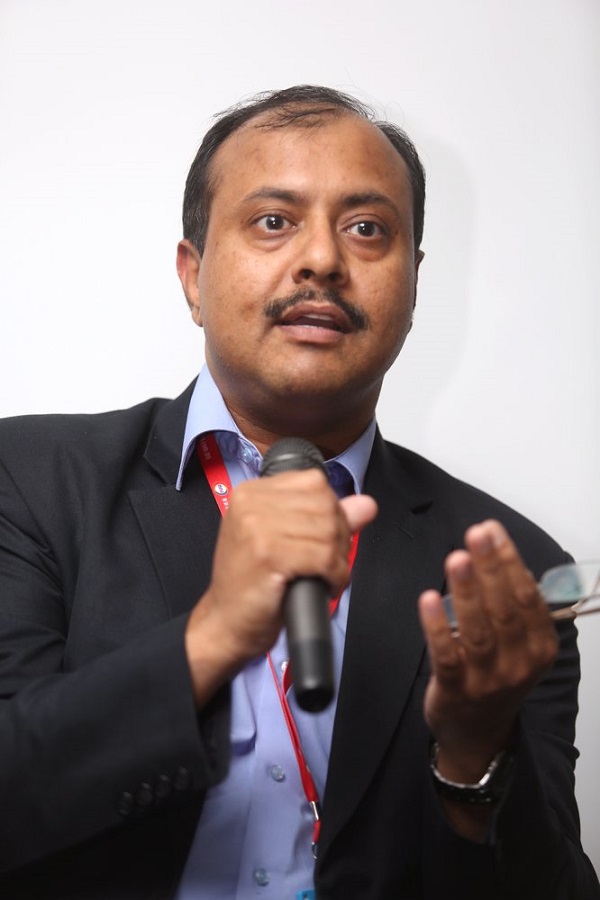
The fact that technology has become so pervasive produces its own set of problems, noted fellow panellist Dr Mubbashir Iftikhar (pic), the CIO of Malaysia’s largest healthcare practitioner KPJ Healthcare Bhd.
“Everybody wants IT today,” he said, “and we’re not just talking about young doctors.”
Dr Mubbashir said that KPJ Healthcare’s IT journey began in 1997 with a simple, inhouse-developed backoffice application for both doctors and nurses called, simply enough, Electronic Medical Records.
The company — which has 24 hospitals in Malaysia, two in Indonesia, one each in Thailand, Australia and India, and “a few more in the pipeline”, he said — has got three hospitals running their entire workloads on this application.
Yet at a recent meeting with doctors, one of them “told me to throw away the application because it couldn’t do everything”, he said. “One of them wanted analytics because he publishes in medical journals.
“They’re so used to doing everything on their iPads, they want to do everything on it. We (IT) start from this end, they start from the far end. Facebook has done this, it has thought them how to upload pictures and videos,” he chuckled.
But healthcare applications were more complex, Dr Mubbashir noted.
“On the backend, our HIS (hospital information system) does about two-billion-dollars-plus worth of calculations. Healthcare calculations are very different from banking calculations, because healthcare is 24 hours — every single minute, patients have something to do or are doing something, consumables are constantly in use, and so on.
“We calculated that there are 2.2 million different transactions going on every day on our backend systems,” he added.
Meanwhile, session moderator Karamjit Singh, founder and CEO of DNA, spoke about a former CIO who told him that most of his time was not spent on reading about technology, but about managing people.
Eversendai’s Goh said he could relate to that. “Technology is forever changing, so no one person can keep up.
“Most of my time is spent managing people, and managing issues. Tech is not really a big part of the role, so I depend a lot on vendors and partners to tell me what’s going on — but you still need to understand technology enough because vendors will promise you everything can be solved with their technology!”
Visions of the future
The CIO’s challenge is not only about dealing with what’s out there today, but charting a roadmap for the future. All three panellists expect the cloud and mobility to play a big role in their plans.
According to KPJ Healthcare’s Dr Mubbashir, two of the group’s hospitals have been running in a virtual private cloud environment for the past six months.
“Four of our 24 hospitals have, since 2012, moved from client-server mode to virtualisation and the cloud, and by June we hope to have 16 hospitals on the cloud.
“We have seen a lot of improvement in terms of infrastructure services and savings, and in so many other areas,” he added.
It is virtually, no pun intended, the same for Goh, who joined Eversendai last November.
“I’m new to the company, so I see a lot of areas in which we can improve — we’re still running a traditional hardware server and software shop, so I’m looking at moving it to a virtualised environment or towards the cloud.
“My plan for this year is moving to the cloud, but on top of this, also looking at disaster recovery planning and business continuity in relation to the cloud.
“Moving to the cloud is such a loose term. How do you do it? Big enterprises invest a lot on inhouse development and using traditional software like ERP (enterprise resource planning), so we need people with the technical knowledge to propose solutions for how we can move to the cloud without affecting our operations.
“That’s the biggest challenge — we cannot afford to stop our systems to move to the cloud,” he said.
Goh also said that local companies could play a role here, but they would need to get serious about their value proposition.
“I have looked at the big vendors, but also local players who rent some data centre space and propose some open source solutions,” he said. “It is easy to propose solutions; the question is, can you also provide the kind of support we need?”
Mydin is also exploring the cloud. “A private cloud is cheaper; and the public cloud is even cheaper — but more important is the agility,” said Malik.
“The golden rule for me is that a system should be able to be deployed within three months — 90 days. On average actually, with the cloud, it can be done within a month.
“The days of customisation are over; we’d rather take an available application and adopt it – chances are, that fellow who developed a helpdesk system knows more helpdesks than you,” he added.
‘You guys need to step up’
This is where smaller, local players can come in. Malik said that Mydin is very open to working with local players, and in fact, prefers them to an extent.
“We prefer to ‘buy local’ because of the relationships we can build and the support you can give, but you guys (local providers) also have to step up. You must not only know how to put in the server, but you must understand the technology, or even the philosophy behind the technology.
“That’s the difficult part: Anybody can sell Milo; to make good Milo, that’s the challenge,” he said, referring to a popular chocolate-flavoured beverage. “Get serious about what you’re doing.”
Malik said he prefers to work with companies are very focused on his vertical, the retail industry, because of the challenges he will face over the next three years.
“First of all, we will have a large number of sites — 600 stores, and we will be managing 30 malls. Our employees would have grown in size to 15,000 to 18,000 people, and our customers would have also changed.
“E-commerce will be the new normal, and everybody will probably have something on it on their handphones.
“What we have to do, what we have to start today, is thinking about what’s going to happen in the next three years. Moving to the cloud, that’s definite. Virtualisation, so that we can be more flexible, more quickly. Adopting an e-commerce and mobility strategy. A lot of these investments are already going on.
“The challenge is capability. Our inhouse capability is of course limited, because our job at the end of the day is to run our stores, to make sure our POS is running. Finance system down? Never mind. POS system down? We’re dead.
“Looking at that, we will have to work with a lot of partners. And what we tend to do is to look for those niche players: People who are very laser-focused. It means you’re serious about your business. These are the players we want to tap, to build a relationship with so that we can grow together,” he added.
And he has a bit of advice too: Don’t try to take local enterprises for a ride. “Don’t worry about selling to local guys. We’re not cheap. We will pay for value, but price your product correctly — don’t think you’re selling RM50,000 laptops to the government,” he said.
Malik also noted that the retail industry are big spenders when it comes to technology. “We’re probably the second-biggest spender on technology after defence. If you look at the United States, the biggest spender on technology is defence; second is Walmart. In the United Kingdom, after defence, there is Tesco.
“Retailers spend a lot of money, to make money,” he said, adding that his IT budget is typically 1 per cent of revenue, and noting that Mydin records about RM2.5 billion in business.
“I’m always on the lookout for technologies that not only make my life easier from an IT management perspective, but also those that can help me connect with my customers,” Malik said.
 For its part, to help chart its roadmap, KPJ Healthcare has a department called SOT (Strategic Operations and Technology), which looks at new innovations and devices — “any new idea that is thought up, the SOT people will look into it”, said Dr Mubbashir.
“We’re always busy on the hardware side — we’re rolling out new backend applications on the [Microsoft] DotNet platform, and we’re going to roll out the Electronic Medical Records app on to the cloud.
“We have more apps developed inhouse that have not been launched yet, and we’ll be working on rolling them out,” he added.
KPJ Healthcare’s current president Amiruddin Abdul Satar first came into the role, formerly known as managing director, on January 1, 2013, and has a clear vision of the role IT can play.
“He said the first thing on his agenda is information technology and customer service. The next would be IT alone, so figure out how to automate the process,” said Dr Mubbashir. “We have to bridge the gap to become more patient- or consumer-focused.”
KPJ Healthcare is already working on initiatives that would allow patients to manage some of their own records, and even moderate which doctors can view them.
“We, as a healthcare provider, have a vision where patients should be able to decide on their care. We have to give them decision support systems where they can determine how they can proceed overt the next five or 10 years, for example,” said Dr Mubbashir.
“Enabling patients is a must these days,” he added.
For Eversendai’s Goh (pic), it is to put in place the next evolution in document management, or enterprise content management as it is called these days.
“We deal with a lot of architects, and they are essentially third parties, and what happens now is that they fax or email their drawings and designs — so I am actually exploring enterprise content management systems where you can create all the documents and drawings, store them by project, give different access levels to third parties into our system — with limited access to certain portions — so that we can share information [between external parties and internal stakeholders].
“[I want] all the information available in one area, with regards to a particular project. That is my goal. Local players can definitely play a part in this. Document management systems are not new, the challenge today is making them web-based,” he added.
Goh said he also wants the enterprise content management system to be able to track all the communications and correspondence with regards to specific projects.
“In addition to all the documents, if you can capture all the communications between internal stakeholders and external third parties, this can be very critical.
“In the event, touch wood, there is a legal issue, you have a record of who communicated what with whom,” Goh added. “Project management on steroids? That’s the dream!” — DNA
* This article was first published here.


