











TOKYO, March 23 — The dollar rose today as escalating retaliatory threats in the Middle East conflict curbed risk appetite and lifted demand for safe-haven assets.
The Australian dollar, a liquid proxy for global sentiment, slid as equities sold off across Asia. Japan’s top currency diplomat said his government is ready to take action to counter foreign-exchange volatility as the yen edged lower.
Hopes for an off-ramp to hostilities dimmed over the weekend, with US President Donald Trump threatening to strike Iran’s electricity grid and Tehran vowing to hit back at infrastructure of its neighbours.
The head of the International Energy Agency (IEA) said the crisis is worse than the two oil shocks of the 1970s put together.
“The market’s going with the idea that those countries and economies that enjoy a positive supply shock from energy are likely to perform better than those that are suffering from a negative supply shock,” Rodrigo Catril, a currency strategist at National Australia Bank, said on a podcast.
“So you’re seeing the euro and the yen struggling to perform. And again, if this conflict proves long-lasting, you would think that those are the currencies that are likely to suffer a bit more.”
The dollar index, which measures the US currency against a basket of peers, advanced 0.08 per cent to 99.62. The gauge on Friday closed out its first weekly decline since the start of the war, as surging oil prices on inflation prompted central banks to turn hawkish.
The euro slid 0.16 per cent to US$1.1552 (RM4.55), as the yen weakened 0.14 per cent to 159.45 per dollar. Sterling fell 0.06 per cent to US$1.3331.
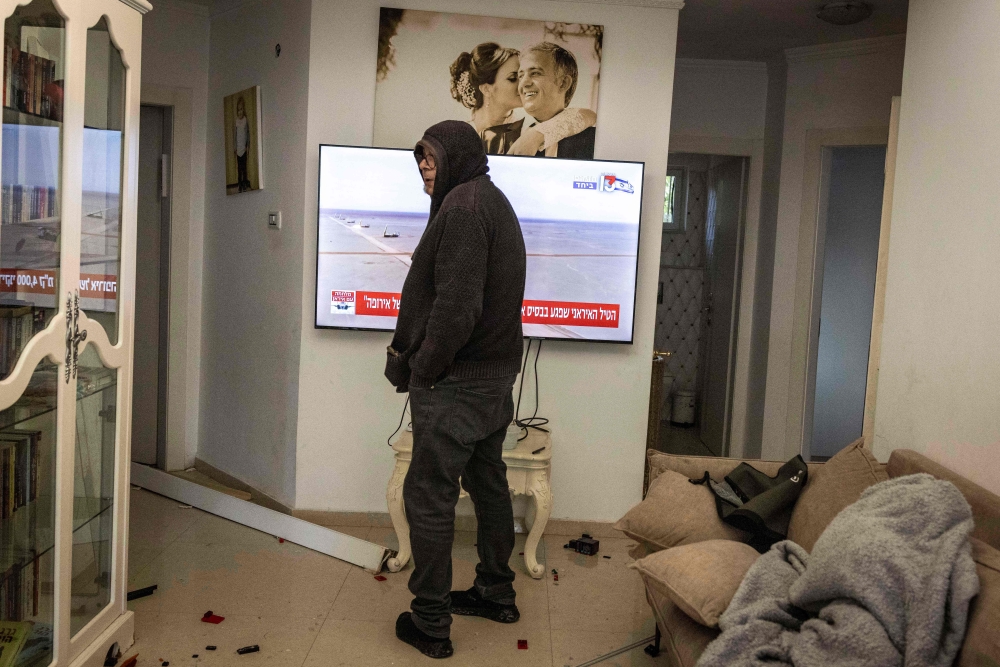
The conflict broadened today, with Israel announcing wide-scale strikes on Tehran, while Saudi Arabia said two ballistic missiles had been launched at Riyadh.
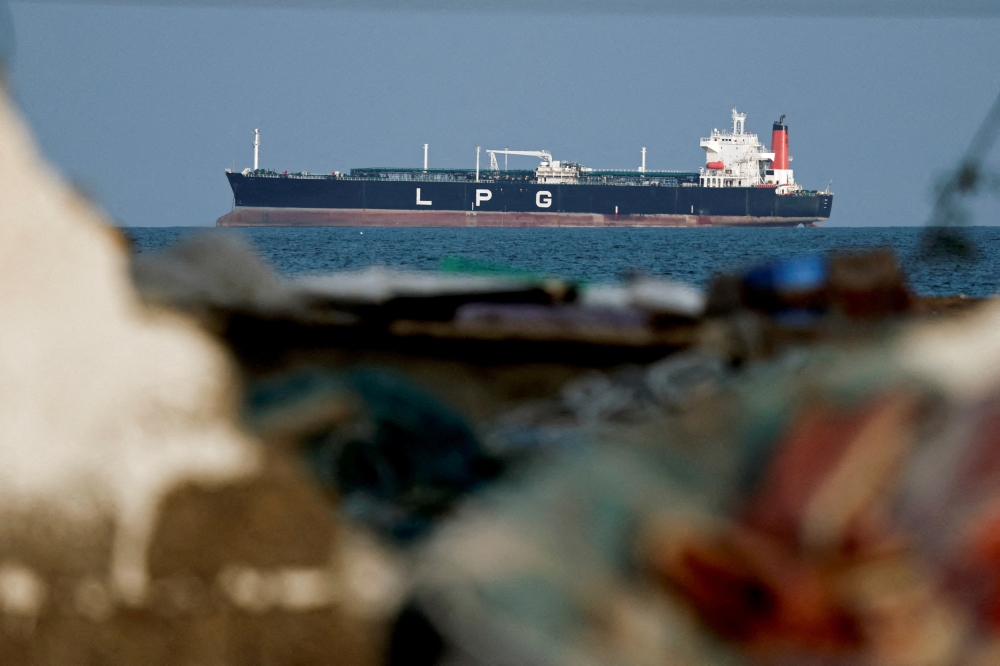
Trump issued his latest threat to Iran on Saturday, less than a day after signalling the US might be considering winding down the conflict. Iran pledged retaliatory strikes on infrastructure in nearby countries and that the Strait of Hormuz shipping lane for oil would remain closed.
The prospect of tit-for-tat strikes on civilian infrastructure in the region threatens the livelihoods of millions of people who rely on desalination plants for water.
With the yen weakening back toward the key 160 per dollar level, Japan’s top currency diplomat Atsushi Mimura signalled caution about speculative activity in oil markets spilling over into foreign exchange.
Speaking in Sydney, IEA Executive Director Fatih Birol warned that the current crisis poses a major threat to the global economy, surpassing the Middle East energy shocks of the 1970s.
Major equity indexes across Asia tumbled, with Japan’s Nikkei down as much as 5 per cent at one point. Inflation concerns hit global debt markets, with Japanese government bonds falling sharply, and the 10-year US Treasury yield rising to a near eight-month high of 4.415 per cent.
Before the US-Israeli war on Iran began in late February, investors had priced in two cuts by the Federal Reserve this year. But even one cut is now considered a distant prospect, and other major central banks are turning more hawkish.
“If markets price a US tightening cycle, the USD will lift strongly against all currencies in our view,” Joseph Capurso, head of international economics at the Commonwealth Bank of Australia, wrote in a note. “AUD would fall against most, if not all, major currencies if global downgrades occur.”
The European Central Bank kept rates on hold on Thursday, but warned of inflation driven by energy prices. The Bank of England also kept rates steady, while the Bank of Japan left the door open to a hike as soon as April.
The Australian dollar weakened 0.43 per cent versus the greenback to US$0.6993, and New Zealand’s kiwi fell 0.26 per cent to US$0.5819.
In cryptocurrencies, bitcoin gained 0.06 per cent to US$68,220.97, and ether rose 0.23 per cent to US$2,063.29. — Reuters