


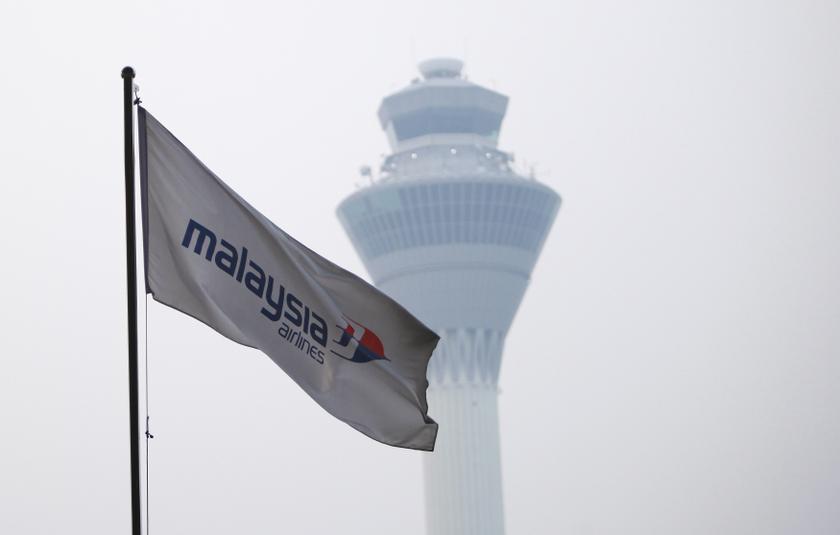


KUALA LUMPUR, Aug 26 — The proposed rescue plan for Malaysia Airlines, which will be announced by Khazanah Nasional Bhd end-September, cannot realise its objectives without the loyalty and trust of employees and union, says an academician.
Deputy Director Institute of Tun Dr Mahathir Mohamad’s Thoughts at Universiti Utara Malaysia Dr Ahmad Zaharuddin Sani Ahmad Sabri said what needed to be done now was for all quarters, irrespective of their hierarchy, to jointly shoulder the responsibility of turning around MAS into the premier national carrier.
“If the employees are not able to fulfill the management’s mission and vision, than MAS will not make any headway, The same can be said of MAS’ current ailing position. Now that a new policy and mission is in place, employees must remain loyal and trust in the management’s ability to achieve the desired objectives,” he told Bernama.
He said as MAS was now financially strapped, now was not the time for employees to ask what the company can do for them but what they can do for the national carrier.
“As employees, they should be asking what they can contribute and the sacrifices they can make to bring MAS out of the doldrums,” said Dr Ahmad.
Citing the example of Singapore Airlines, which was once faced with a financial crisis, he said employees agreed to a pay cut and many, among them, opted to leave the airline company due to financial considerations.
“So, to save the company, there is a need for minimum funds to be used.
Among other means is to cut salaries as what Singapore Airlines did. Are the staff, at every level of management and those under the MAS Employees Union, willing to sacrifice in this way to save the airline?” he asked.
Dr Ahmad also asked critics of the MAS’ restructuring plan to consider sitting down and thinking it over with stakeholders.
“It is fine to criticise, but will the ideas put forth help or condemn (the plan)?” he asked.
He disagreed with the view that since MAS faced financial problems for several years now, the country did not have to bear the burden anymore or that it was better to just close down the airline.
“What is important now is to solve the problem as amicably as possible and to come out with a win-win solution in the interest of both parties. We need th
staff as they are the backbone of MAS, and the management, which will be instrumental in making the mission a success,” he said.
MAS posted a loss of RM1.3 billion for the financial year ended 2013 and RM400 million for the first quarter of 2014.
The national carrier is expected to report a further loss for the second quarter of 2014, influenced by the cancellation of tickets following the incidents involving flights MH370 and MH17.
Maybank Investment Bank, in a research note, said privatising MAS was the best option to restructure its operations and to place the company back on a firm footing.
Although MAS is facing a financial crisis and suffered an image problem after the tragedies of MH370 and MH17, state-owned Khazanah Nasional Bhd took the bold move to buyout MAS at 27 sen a share, or RM1.4 billion, in a bid to delist and overhaul the loss-making flag carrier.
Dr Ahmad said, although analysts believed the privatisation move can rescue MAS, until today there has been no other party besides Khazanah Nasional which has come forward to “buy out” MAS.
“Realistically, will a third party buy MAS in its current state? Losses, year after year, excess staff and one-sided contracts are some of the problems plaguing MAS,” he said
“Just think, if Khazanah did not come forward, can MAS continue to operate? And, if the internal disputes result in Khazanah withdrawing itself, what will happen to the airline company,” asked Dr Ahmad.
On the various demands and conditions imposed by the MAS Employees Union, Dr Ahmad said it should be more responsible and not become a stumbling block to the rescue plan.
“All Malaysians do not want to see MAS being closed down, we love MAS. If we do not have MAS, there will be no MAS Employees Union,” he added. — Bernama


