


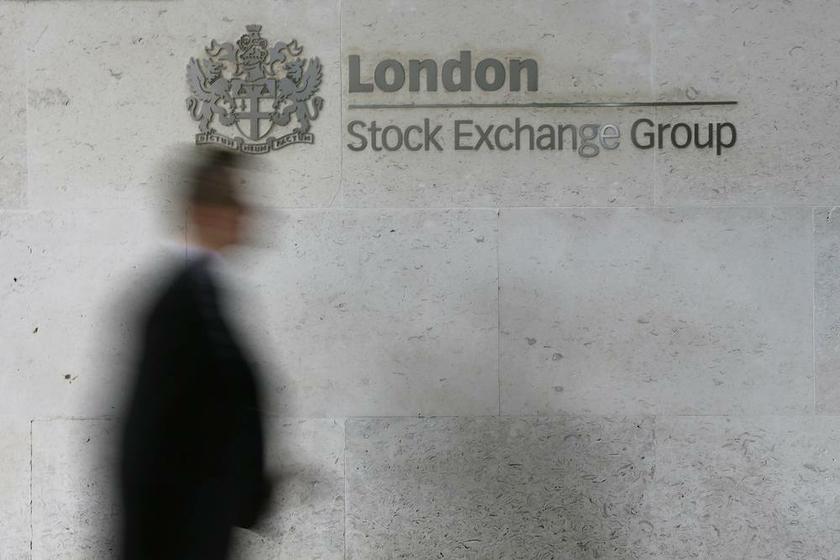
LONDON, July 18 — World markets remained under pressure today after the downing of a Malaysian airlines jet at the Ukraine-Russia border, new sanctions on Moscow and unrest in Gaza had sent investors scurrying into defensive assets.
European shares saw more selling after falling heavily yesterday, while German government bond yields remained near record lows, driven by uncertainty.
World leaders demanded an international investigation into the shooting down of the Malaysian plane with 298 people on board over eastern Ukraine, as Kiev and Moscow blamed each other for a tragedy that stoked tensions between Russia and the West.
Russia markets took the heaviest hit. Dollar-traded stocks in Moscow were down another 2.5 per cent to take their losses for the week to more than 8 per cent. The rouble, however, was up almost half a per cent though it was heading for its heaviest weekly loss in more than a year.”While Ukraine, Russia and the rebels deny any involvement or responsibility, tensions will most likely continue into the weekend,” Michael Rottmann, head of fixed income strategy at UniCredit, said.
“Furthermore, Israel sending ground troops into the Gaza Strip adds to geopolitical concerns. While at current levels both Bunds and US Treasury valuations look extremely rich, it is clearly not the time to position in the opposite direction.”
There were, however, some signs that markets were trying to steady.
Gold dipped as buyers cashed in on some of its 1.5 per cent overnight jump, while the Japanese yen and US government bonds — investors’ traditional go-to safe-haven assets — both gave up some ground.
European shares clawed back some of their initial falls and International Consolidated Airlines , owner of British Airways and Iberia, rose though Air France and Lufthansa were down.
US futures were also flat, suggesting some measure of stability might return to US markets.
Asian turbulence
The situation in Ukraine and the rising tensions between the West and Russia were not the only concern weighing on sentiment.
Israel announced the start of a Gaza ground campaign yesterday after 10 days of aerial and naval bombardments failed to stop Palestinian rocket attacks.
Asian markets had a turbulent day. Most emerging Asian currencies fell [EMRG/FRX] and Japan’s Nikkei stock average tumbled 1 per cent.
“The general theme in the market, the predominant theme today, seems to be risk aversion. So we do expect dollar/Asia to head higher in the near term,” said Divya Devesh, currency strategist for Standard Chartered Bank in Singapore.
“Whether this move will be sustained is still quite uncertain. It will depend on how the geopolitical risks unfold.”
The dollar edged up about 0.2 per cent to 101.34 yen, clawing back some of its slide of nearly 0.5 per cent overnight, its biggest one-day loss since early April.
The euro, which has lost roughly 0.9 per cent against the yen this week, traded at 137.05 yen after reaching a five-month low and hovered near a one-month low versus the dollar at US$1.3529 (RM4.30).
In commodities trading, US crude oil gained about 0.3 per cent to US$103.53 a barrel after jumping by more than US$2 yesterday. Russia pumps more than a tenth of the world’s crude. Brent was fetching 108.25 up 1.5 per cent on the week. — Reuters


