













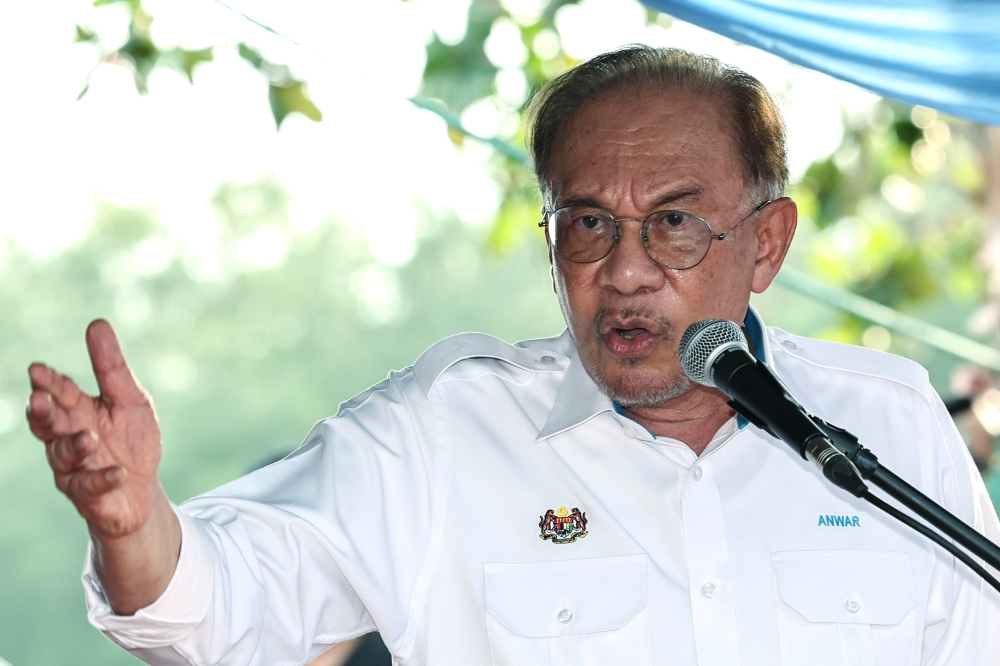
KUALA LUMPUR, July 14 — Prime Minister Datuk Seri Anwar Ibrahim today rejected accusations that he had failed to keep his pledge to lower petrol prices, saying Malaysia’s RON95 price remains cheaper than in oil-rich Saudi Arabia.
Anwar was responding during Prime Minister’s Question Time to Hulu Terengganu MP Datuk Rosol Wahid of Perikatan Nasional, who argued that Malaysia should not compare its petrol prices with those of non-oil-producing countries.
Rosol had sought to make the point that petrol prices should be lower in Malaysia because the country produces oil.
“Firstly, you asked why then (as Opposition) we asked for petrol to be reduced (RM1.50); and why compare to non-oil producing countries and compare to Saudi and Qatar. Hulu Terengganu I am telling you now the price of petrol in Malaysia is actually cheaper than in Saudi Arabia or even Qatar,” Anwar said.
“This is a fact. You can spin it how you want but the fact remains that our petrol price is cheaper. Yes we asked for petrol price to be reduced then but at the time the price in Saudi was 50 sen (per litre). Now our price is RM1.99 per litre while it’s over RM2.40 in Saudi Arabia,” Anwar added.
Malaysia historically provided blanket fuel subsidies to anyone at the pump, resulting in severe fiscal strain and rampant cross-border smuggling.
Under Anwar’s “Budi Madani” economic framework, the government introduced a targeted dual-pricing system using national identity cards to verify eligibility.
The partial targeting of subsidies had made it possible to bring the subsidised price of RON95 to RM1.99 per litre, Anwar, who is also finance minister, had said.
Meanwhile, global oil prices have surged amid escalating conflict in West Asia and disruptions to energy shipments through the Strait of Hormuz.
According to official figures released by Anwar, the government is on track to spend nearly RM40 billion on fuel subsidies for the full year of 2026 if global crude oil prices remain elevated.
This is more than double the RM15 billion initially allocated for fuel subsidies in the Budget 2026.


