


KUALA LUMPUR, June 16 — When Hatta Midy first moved to the Kg Baru Hicom People’s Housing Project (PPR) in 2010, the Sekinchan-born writer sought nothing more than a quiet sanctuary to live, eat, and sleep between shifts.
He quietly tolerated the rampant littering and the indiscriminate dumping that plagued the public housing community, ensuring his own habits remained beyond reproach. Yet, Hatta’s personal responsibility offered no protection from the projectiles launched from the floors above.
The breaking point arrived on a fateful morning in 2017. Dressed for the day, Hatta was walking along the ground floor corridor toward his motorcycle when a resident from an upper floor spat on him.
Composed but frustrated, he returned home to change. When he finally reached his vehicle for the second time, he found a used condom discarded in his front basket.
It was a double whammy that would have pushed anyone to a breaking point. Hatta, however, channelled his indignation into art, penning a telemovie script titled Maaf dari Khilaf.
The story follows a chain of unfortunate events in a PPR community triggered by a single, seemingly innocent piece of trash thrown by a child. Years later, the film remains a staple on TV3 during Ramadan, serving as a seasonal reminder of the lethal consequences of littering.
The telemovie earned widespread acclaim, but it also held up a mirror to the deep-seated prejudices many Malaysians harbour toward PPR residents: the assumption that these communities are inherently dirty, unhygienic, and dangerous.
Hatta realised that being a “model resident” was not enough to shatter that perception.
In 2019, he took his mission to the doorsteps of his neighbours. Living on the second floor of Block C, he launched MySampah, a grassroots garbage collection service.
Through a WhatsApp group, he served roughly 60 residents, collecting trash from their doors and hauling it to designated disposal sites for a fee as low as RM4.
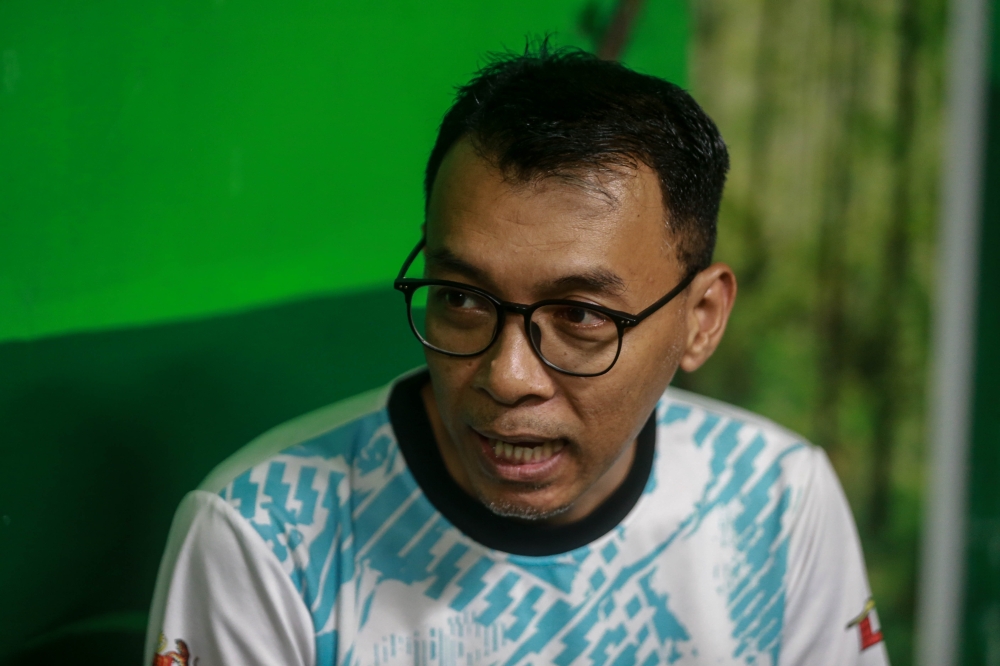
“After my work hours, I would wear a mask and push a trolley to collect the trash from the customers’ house starting from 10pm.
“I do it three times a week — on Mondays, Wednesdays and Fridays — and every two weeks once, I collect the payments,” Hatta told Malay Mail when met recently at PPR Kg Baru Hicom.
He recalls a time when the environment felt far more hostile.
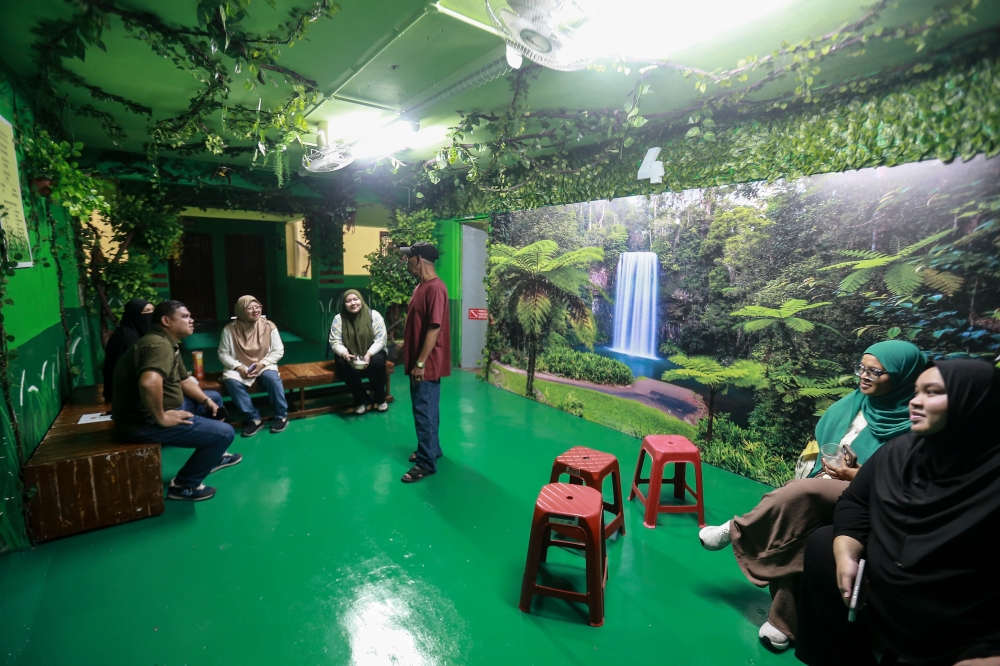
“At that time, the lift lobbies and stairways were eerie. Sometimes, the only light you got was when the lift opened for a resident to enter or exit. It was nothing like what you see now,” he said, gesturing toward a brightly lit lobby now adorned with forest murals.
This transformation was sparked by a cleanliness and beautification competition under Think City’s Kita-untuk-Kita (K2K) initiative.
With a modest grant of RM500 per participating floor, the project did more than paint walls: it ignited a dormant sense of ownership. Neighbors who once traded silence now traded ideas, forming committees to turn dingy corridors into lush, mural-filled walkways.
Hatta eventually paused MySampah to support the movement.
“Once the competition started, residents were working late at night to fix the lights, beautify the walls or discussing the concepts for their floor.
“Since I also operated late night, I suspended MySampah temporarily to avoid impeding their work. But, after the lift lobbies were refurbished, the residents kept the areas clean to preserve the spaces that they had beautified, reducing the need for MySampah,” Hatta explained.
Now, he is passing the baton. In August 2024, he enlisted a new generation: children aged 10 and up, including his daughter Nur Syifa Delisha, to join a campaign called Geng Suka Bersih.
The initiative mobilised 100 youths for cleaning drives across the blocks, forcing them to audit the very rubbish they collected.
The impact was immediate. Saidatul Umairah Md Khairi, 16, admits she once tossed sweet wrappers from her window. Now, she is the household enforcer.
“Whenever my mother sees my sister trying to throw rubbish from the window, she scolds her and asks, ‘what’s the point of joining Geng Suka Bersih if you’re going to litter anyway?’” she said.
Other teenagers, like Nur Syifa Delisha and Nor Damia Fatin Abdullah, both 15, have moved beyond cleaning to advocacy, spearheading funding bids from NGOs to sustain recycling campaigns.
With the youth taking charge of the corridors, Hatta is returning to his first love: writing.
He dreams of grooming a new wave of storytellers within the PPR, eventually publishing an anthology of short stories written by residents, for residents. These are the narratives he believes will finally dismantle the stigma, replacing prejudice with a sense of hope and optimism.


