













KUALA LUMPUR, July 27 — Tan Sri Ali Hamsa said he never threatened then auditor-general Tan Sri Ambrin Buang into amending or removing content from the National Audit Department’s 2016 audit report of 1Malaysia Development Berhad (1MDB), the High Court heard today.
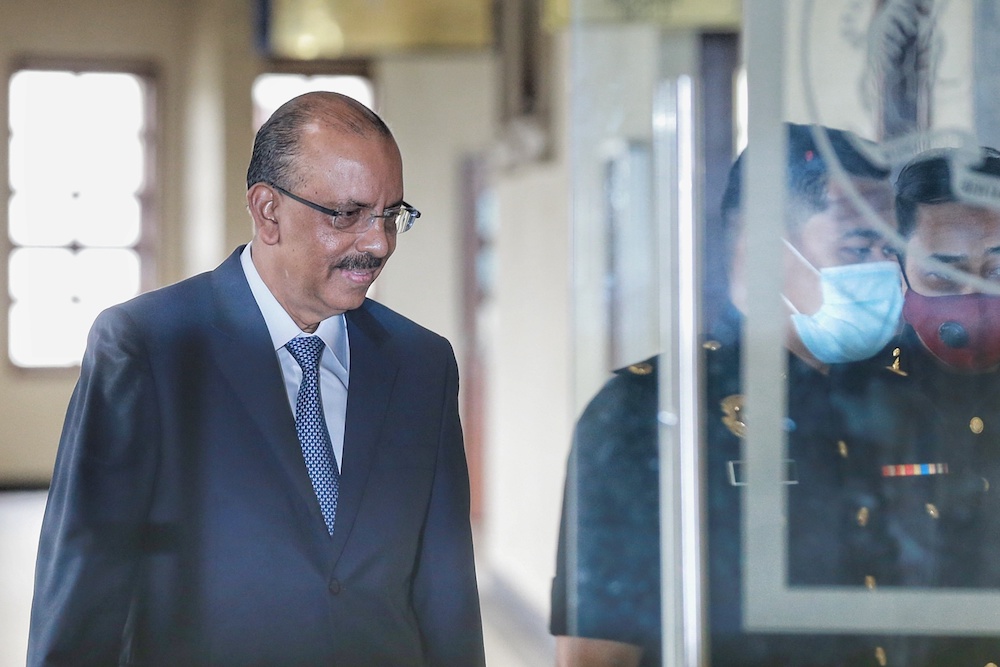
Ali, who was the chief secretary to the government from June 2012 to August 2016, was testifying as the fourth prosecution witness in the joint trial of former prime minister Datuk Seri Najib Razak and 1MDB’s former CEO Arul Kanda Kandasamy over the alleged audit report tampering.
When cross-examined by Arul Kanda’s lawyer, Datuk N. Sivananthan, Ali confirmed that he was the most senior civil servant in February 2016 via his position as chief secretary to the government and that he was more senior in rank than Ambrin.
Ali today reiterated that it was Najib who instructed him on February 22, 2016 to hold a coordination meeting to discuss the 1MDB audit report between the National Audit Department and 1MDB.
Ali had chaired the February 24, 2016 coordination meeting attended by top government officials and Arul Kanda, where Ambrin was asked to make various changes to the audit report on 1MDB.
Asked about the February 24, 2016 meeting, Ali said that it was left to Ambrin as the auditor-general to decide on the requests to remove content or make changes to the 1MDB audit report.
Sivananthan: At the end of this meeting, whatever decision was reached as to removal of paragraphs of the audit report, who made the final decision?
Ali: We just left it to the auditor-general to make?
Sivananthan: Was he pressured into doing that, did you compel him to do that?
Ali: No, Yang Arif.
Ali then agreed with Sivanathan that it was within Ambrin’s powers to say that he would not be removing information from the 1MDB audit report and that it was his final decision.
Sivananthan: Did you threaten him to follow whatever you said?
Ali: I never threatened him, Yang Arif.
Ali then went on to agree that there was no issue of anyone forcing or pressuring anyone to do anything throughout the February 24, 2016 meeting that he had chaired.
Sivananthan: There was never any moment during the meeting when you were there, Tan Sri Ambrin was told ‘if you don’t do something, it would not be in your interest?’
Ali: It was never told.
Among other things, Ali said that Ambrin was given the discretion to accept anyone’s view during the February 24 meeting or to amend or remove any issues mentioned in the 1MDB audit report.
Ali agreed that those present at the meeting can highlight issues but not dictate how things should be to Ambrin. He further agreed that it was ultimately up to the auditor-general or anyone conducting the audit to decide whether requests for amendment were reasonable.
As for why he had spoken of the 1MDB audit report’s political impact and how it should not “tarnish the name of our leader”, Ali said that he had made such introductory remarks based on what Najib had said in the earlier February 22 meeting.
“Yang Arif, based on the February 22 meeting, I have to go back to the 22nd because the PM then was very concerned, because the report have to be accurate, because this will leave a negative impact on the economy, Malaysia on the whole. So he gave some reasons, so I translate that as introduction,” he said.
Agreeing that the 1MDB audit report is based on facts and that any effect the report may have are non-issues and completely irrelevant, Ali said this was merely introductory remarks when asked why he had set such a tone for the February 24 meeting.
When Sivananthan said the February 24 meeting would not have taken place if Ali had not called for it, Ali highlighted that he was instructed to call for the meeting.
“This meeting would not have taken place if I was not asked to call for it,” Ali said, seemingly alluding to Najib’s instructions to do so in the February 22 meeting.
The February 24, 2016 meeting eventually resulted in the removal of four items from the auditor-general’s audit report on 1MDB, including mention of the existence of 1MDB’s two conflicting financial statements for the financial year 2014.
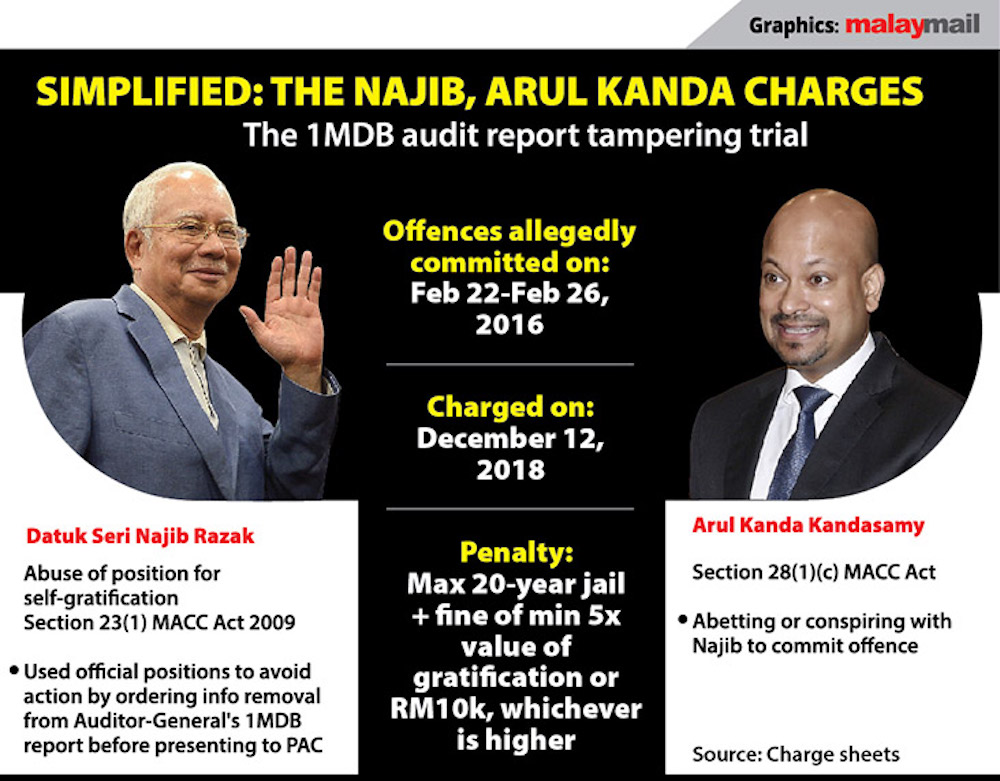
In this trial, Najib is facing the charge of having abused his position as prime minister and finance minister by ordering for changes to the auditor-general’s audit report on 1MDB before the report was presented to Parliament’s Public Accounts Committee to avoid any civil or criminal action against him in relation to his role in 1MDB’s company operations, while Arul Kanda was charged with abetting Najib in the report’s tampering.
The trial before High Court judge Mohamed Zaini Mazlan will resume this Wednesday, where Najib’s lawyer Tan Sri Muhammad Shafee Abdullah is expected to continue cross-examining Ali after having grilled him previously.
Shafee did not appear in court today as he was not feeling well and had received a medical certificate, his fellow defence lawyer Syahirah Hanapiah said.