


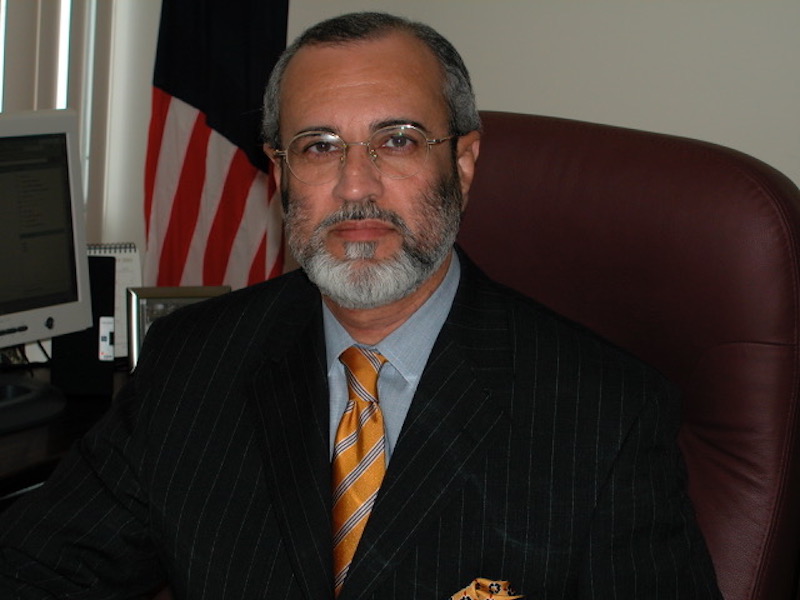
KUALA LUMPUR, July 25 — Excluding ambassadors from high-level meetings with foreign officials prevents them from effectively representing Malaysia, former ambassador Dennis Ignatius said today after Tun Daim Zainuddin met Chinese premier Li Keqiang without any Wisma Putra officials.
Dennis, who was previously ambassador to Chile, Argentina and several other South American countries, said including ambassadors in key meetings was important because they had a role to play in any follow-up action.
This also provided them with a better sense of the dynamics at play between both countries and helped them to better defend Malaysian interests.
“The ambassador is supposed to be the most senior representative at post and is supposed to enjoy the complete confidence of the government,” Dennis told Malay Mail.
“Leaving him out of important meetings (especially if other officials from the Chinese side were present), sends the signal to the host country that the ambassador is not privy to sensitive matters and is not seen as an important channel of communication between the two governments on critical issues.
“It, of course, undermines his position and weakens his ability to effectively represent his country,” he added.
Malaysian ambassador to China is Datuk Zainuddin Yahya, a career diplomat.
Daim, who heads the quasi-official Council of Eminent Persons (CEP), met with Chinese premier Li, Chinese Foreign Minister Wang Yi, and China’s National Development and Reform Commission vice chairman Ning Jizhe on July 18 in Beijing, in his capacity as a special envoy of the prime minister, without the presence of any Wisma Putra officials.
The CEP chairman went to Beijing — purportedly to renegotiate infrastructure agreements that the previous Barisan Nasional (BN) government signed with Chinese firms — before Prime Minister Tun Dr Mahathir Mohamad’s planned visit to China next month.
Dennis, who has 36 years’ experience in the Malaysian Foreign Service, said Daim’s visit as special envoy occurred under special circumstances with “delicate issues” on the table and it was not uncommon to have ‘“four-eye meetings”, but reiterated the importance of having the ambassador attend key meetings.
Citing his experience, Dennis observed that foreign governments rarely left their ambassadors out of the loop the way Malaysia, which has been under BN rule until the 2018 election, tended to do.
“The end result is that foreign governments prefer to deal with us via their ambassadors here rather than our ambassadors over there. This has been happening all too frequently I’m afraid, and is not helpful,” he said.
Daim previously served as finance minister in Dr Mahathir’s Cabinet between 1984 and 1991 and from 1999 to 2001.
Dennis said Dr Mahathir likely wanted to have some kind of agreement reached before he goes to China, so that his visit could signal the start of a new era in bilateral relations.
“Until there is some kind of consensus on the issue, we may not go. Smart move to announce the visit but no dates. This puts some pressure on China to reach a compromise, otherwise it will look bad,” said the former diplomat.
Former ambassador to Uzbekistan Datuk M. Redzuan Kushairi said Daim’s meeting with the Chinese premier, within the context of “quiet diplomacy”, was likely aimed at preparing for Dr Mahathir’s planned visit to China next month.
“Such a visit by Tun Daim and his meeting with the Chinese premier would not normally be publicised as it is supposed to be a function of quiet diplomacy,” Redzuan told Malay Mail.
“Be that as it may, there is now an expectation in the new Malaysia that there should be more transparency, more so when it comes to a conduct of relations with an important power and economic trade partner like China.
“In this context, there are understandable concerns that an important meeting such as this should have involved Wisma Putra, if indeed the ministry and our embassy in Beijing was not involved.”
Pacific Research Centre principal adviser Oh Ei Sun said it was within Dr Mahathir’s power to send a special envoy to conduct certain bilateral matters in the absence of the Foreign Ministry, noting that trade and defence cooperation with other countries were also generally conducted independently of the Foreign Ministry.
“There are matters that need to be formally discussed in front of foreign ministry officials, and there are matters which are better left for so-called four-eye meetings between the concerned representatives.
“For example, [United States] President Donald Trump met one-to-one recently with both North Korean leader Kim Jong Un and President Vladimir Putin of Russia,” Oh told Malay Mail.
“There is no hard and fast rule on attendance when it comes to discussion on substantive matters, although usually officials of similar levels or statures meet each other.”
Foreign Minister Datuk Saifuddin Abdullah told reporters that there was nothing wrong with having a special envoy, stressing that what was most important was to secure a good relationship with China.


