


KUALA LUMPUR, July 14 — Many ministers send their children to public schools and public universities instead of private ones, Higher Education Minister Datuk Seri Idris Jusoh insisted today.
While acknowledging that some ministers may not have chosen local public schools due to the “perception” regarding their quality, Idris maintained that Malaysian universities are improving their standards and in their global ranking.
“We are here to correct the perception saying that we are not as good.
“A lot of many other ministers are sending their kids to public universities and public schools. There may be some who do send to the private universities, but you cannot say all ministers are sending to private schools and private universities,” he told radio channel BFM in an interview during its The Breakfast Grille programme.
Idris confirmed that he had sent his three children to public schools and public universities.
“My eldest daughter went to public school and she had her first degree from UIA, my second son went to UiTM, my third son also went to UIA, they are from public schools,” he said.
UIA is the Malay abbreviation for the International Islamic University while UiTM is Universiti Teknologi MARA. It is unclear which university the minister was referring to with the UI abbreviation.
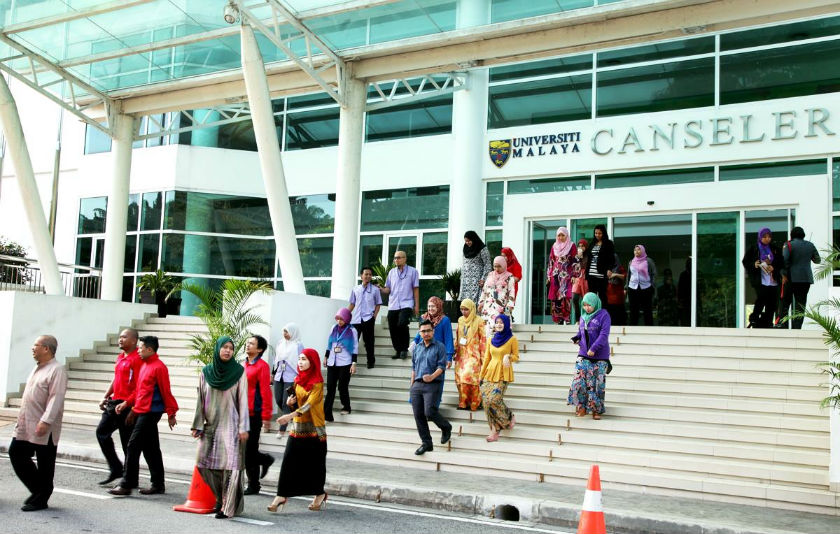
Earlier, he was asked to comment on a survey where Malaysians preferred to send their children to universities in the UK or Ireland instead of Universiti Malaya (UM) to study medicine.
“Malaysians are always a bit sceptical with our education system. Probably we are not doing as well before, but we are improving as time goes on,” he said.
Idris said many local universities have been improving in the global QS ranking, with UM climbing up to the position 146th from the 167th spot three years ago, while Universiti Sains Malaysia and Universiti Putra Malaysia have gone up from the 355th spot to 289th spot, and from the 411th to the 331th spot respectively.
He also said that some local universities are ranked comparably to or outshine other universities for some of the courses offered.
“There are some areas where we are top 100 in the world, we are doing much better than some of the so-called reputable universities throughout the world,” he said.


