


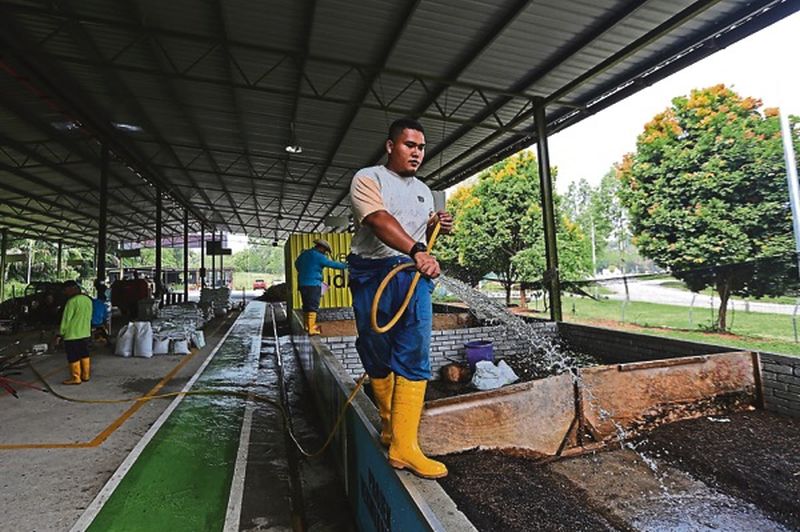


SUBANG JAYA, Jan 2 — A green initiative by the Subang Jaya Municipal Council, which aims to convert household waste to renewable energy is gaining momentum in the municipality.
The council’s environment department senior assistant director Mohd Hafiz Sharif said while its integrated biomass centre in Bukit Puchong opened in 2012, it was not until last year that the council decided to embark on a project to turn organic waste into electricity.
Hafiz said initiatives under the biomass project included organic-waste composting, vermin-composting, food waste separation and recycling of cooking oil.
“We turn organic waste to compost and even sell them to the public," said Hafiz.
“While organic composting usually takes 90 days to complete, we are using a method called vermin-composting, where we use African worms, and it only takes between 45 to 60 days to produce good quality compost for gardening.
Sharif said while the centre’s capacity to generate electricity via the bio-gas anaerobic digestion process had not reached its full potential, the council remains optimistic the project would succeed in the near future.
“The machine needs 500kg of food waste daily to generate 5kW of electricity which can power two houses per day. But currently, we cap it about 250kg daily due to insufficient waste.
“Even at full capacity, the machine will only be used to power the centre making it fully sustainable as the capacity and the waste we receive is too small for public use,’’ he said.
He said the council introduced a waste for cash pilot programme for residents in Bandar Bukit Puchong 1, 2 and 3 in October and the council was pleased with the positive response.
“The council offers RM1 for every kg of waste brought in by residents and in the first month, we received close to 3,000kg of waste.
“The initiative aims to encourage people to recycle and expose the benefits of separating their organic waste while providing them with aside income,’’ he said.
Sharif said the green initiative will also help to reduce waste being carried to landfills and lower carbon footprints.
“We notice 60 per cent of household waste in the municipal are organic in nature and we believe we can benefit from this untapped potential.
“We believe our initiative will be well accepted by the people in the long run as we intend to become a model green city for other local authorities," he said.
The biomass centre also has its own fruit garden which uses compost produced by the council.
The garden waste compost is sold at 80 sen per kg, RM7.50 per kg for food waste compost while vermin-compost is sold at RM8 per kg.


