


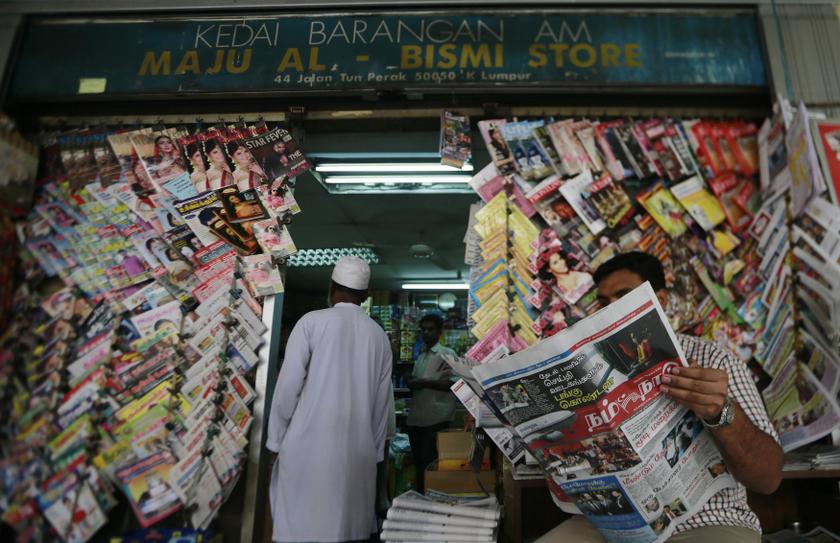


KUALA LUMPUR, May 4 — Malaysia needs to improve press freedom to achieve Vision 2020 as an independent media is central to good governance, the United Nations (UN) said today.
UN Resident Coordinator for Malaysia Michelle Gyles-McDonnough, in her address for World Press Freedom Day yesterday, noted that Malaysia ranked 147th out of 180 countries in media group Reporters Without Borders’ 2015 report on press freedom.
“Malaysia, as it eyes Vision 2020, can do much more to strengthen freedom of expression and freedom of the press, including online media,” Gyles-McDonnough said in a statement today.
“Reversing the recent trend where the Sedition Act has been used increasingly in a way that prevents Malaysians from expressing and debating, freely and openly a diverse range of political opinions and ideas would contribute significantly to achieving national objectives,” she added.
Opposition politicians, activists, and academics have been arrested or charged under the Sedition Act 1948 since last year, a colonial-era law that critics say is used to quell dissent.
Journalists from news portal The Malaysian Insider were also arrested for sedition last March over a news report linking the controversial hudud issue to the Conference of Rulers, which has since been retracted.
Gyles-McDonnough said today that a free and independent press helps ensure transparency, accountability and the rule of law, noting also that it is essential for economic development and the growth of a democracy.
“These are key ingredients to achieve Malaysia’s Vision 2020,” she said.
“Building an inclusive society, where growth and development are sustainable and ensure the wellbeing of Malaysia’s women and men requires an empowered citizenry.
It requires citizens’ access to accurate, fair and unbiased information, representing a plurality of opinions, and the means to communicate vertically and horizontally, thereby participating in the active life of the country,” the UN resident coordinator for Malaysia added.
Prime Minister Datuk Seri Najib Razak backtracked on his pledge to repeal the Sedition Act and strengthened the colonial-era law instead by tabling amendments during the last Parliament sitting, a move that critics say violates the right to freedom of speech and expression.


