




KUALA LUMPUR, March 23 — With no end in sight to Pakatan Rakyat’s (PR) protracted dispute over hudud, DAP leaders will huddle tonight in a crucial meeting to decide its future direction in the pact, a decision that could very well see the country’s strongest opposition front to date split after seven years.
Over the past few weeks, DAP and PAS leaders have been at each others’ throats in heated no-holds-barred exchanges over the latter party’s refusal to budge from its hudud ambition.
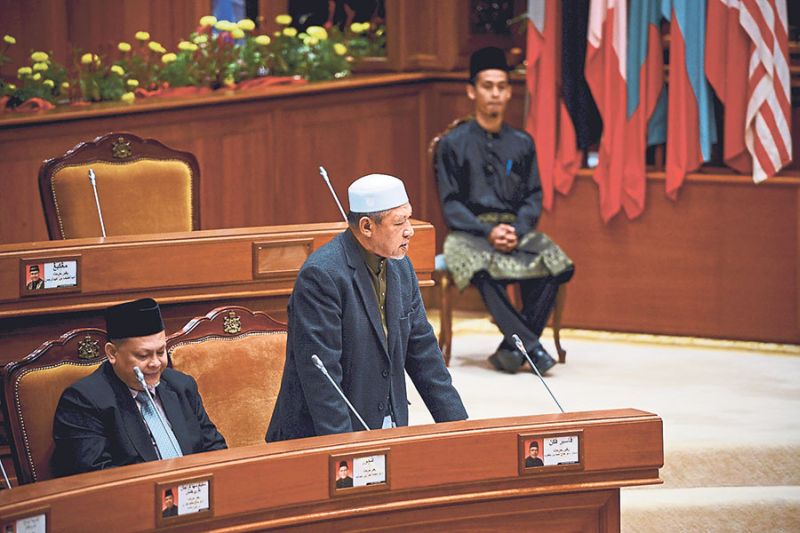
Their highly-publicised spat came to a boil last Wednesday when PAS, determined to stay the course in its Islamic state agenda, went ahead and tabled amendments to Kelantan’s Shariah Criminal Code II 1993 enactment.
The amendments were passed easily the following day as PAS representatives dominate the Kelantan assembly.
A bristling DAP lashed out at its partner with party leaders issuing hard-hitting statements accusing PAS of betrayal, dishonesty and deceit.
Immediately, the party announced its plan for tonight’s meeting. Its agenda: to review DAP’s future direction in PR.
It is uncertain whether the DAP leadership is truly weighing the option of exiting PR - the outcome would have far-reaching implications for the opposition front, particularly in Selangor, which may experience a hung assembly.
Leaders are also keeping their cards close to their chest, with many refusing to speak further on the matter.
But since Thursday’s passing of the Kelantan hudud amendments, media statements issued by some in DAP’s leadership appear to indicate that this could very well be an option.
Yesterday, DAP’s Sabah chapter set the tone when it publicly announced its decision to suspend all ties with its PAS allies in the east Malaysian state.
Later at night, DAP adviser Lim Kit Siang, although speaking on a personal capacity, suggested the formation of a brand new coalition altogether, one that counts leaders from both PR and Barisan Nasional (BN) as members.
DAP’s national organising secretary Anthony Loke, in a strongly-worded statement a day before the Kelantan amendments were passed, claimed his party was “backstabbed” by PAS as the hudud bill did not fall within the opposition coalition’s common policy framework.
“DAP would like to stress that we strongly object to Kelantan PAS’s move to ignore the PR presidential council’s decision on March 12... a provocative move meant to split the pact,” Loke said in his statement, referring to an earlier call by the PR presidential council for Kelantan PAS to drop its hudud plans.
The ongoing tiff between DAP and PAS is starkly reminiscent of a similar squabble in 1999 when both parties joined forces with Keadilan and Parti Rakyat Malaysia (PRM) to form Barisan Alternatif.
But that venture only lasted two years, ending in collapse when DAP withdrew from the pact in 2001 due to PAS’s insistence on forming an Islamic state in Malaysia.
With such a fractious history that now appears to be repeating itself, does this mean that DAP’s leaders will again unequivocally vote to remove the party from the opposition pact?
Some among DAP’s top echelon, however, think the situation can still be salvaged, especially with PAS’s party polls coming this June.
At least one senior DAP member casually suggested that it would work in everyone’s favour for the party to stay its hand, at least until the outcome of PAS’s internal polls as there would then be a clearer picture of the Islamist party’s future direction.
If the ulama faction - who ostensibly back incumbent president Datuk Seri Abdul Hadi Awang - were to retain or increase their power, then it would likely be a lost cause for DAP. But if the so-called progressives - who count Datuk Husam Musa and Dr Hatta Ramli as allegedly among their numbers - gain the upper hand, then there may be some common agendas that could be revisited.
Hudud aside, however, both PAS and DAP do share one ultimate objective - providing voters a viable alternative to topple long-ruling BN.
Before PR’s birth, the opposition parties did not fare very well as the Barisan Alternatif - in 1999, PAS snapped up 19 parliamentary seats, while DAP and Keadilan merely took three and one seats respectively. PRM scored none.
Nearly a decade later during the 12th general election in 2008, the opposition swept an unprecedented 82 parliamentary seats, leading to the current arrangement under the PR umbrella between PAS, DAP and this time PKR, which is the result of a merger between Keadilan and PRM.
And with the number of opposition seats having gone up by seven to 89 in the 2013 polls, the growing optimism over PR’s chances of finally taking over Putrajaya is understandable.
It, however, remains to be seen if both DAP and PAS are willing to step back and consider the so-called greater good that PR’s continued existence would do for the country, as both parties have argued for in the past.
Loke recently said “the writing is on the wall” when asked if Kelantan PAS’s push for hudud would lead to a repeat of the Islamist party’s disastrous 2004 general election outing under the “Islamic state” manifesto that lost it Terengganu and a near loss of Kelantan.
The question now though is whose wall the writing is on.


