


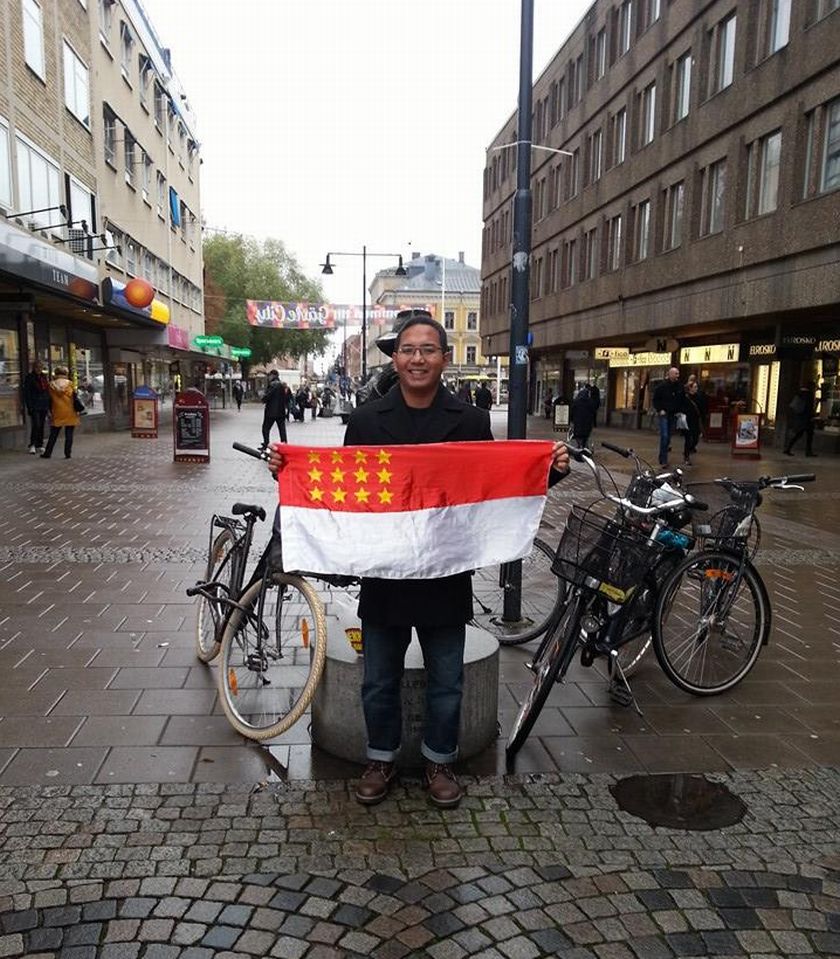


KUALA LUMPUR, Nov 17 — Undergraduates should not shy away from activism but join the burgeoning scene instead, former student activist Ali Abd Jalil has offered by way of advice to Malaysians.
The 29-year-old who fled the country to escape sedition charges and has now found political asylum in Sweden, also warned Putrajaya and universities against stemming the tide of student activism, pointing out that these youths represent the country’s future leadership.
“Students should participate in dialogues, forums, exhibitions or anything that can educate them. They should be concerned about every issue, do their research and find the solution.
“Students should be with the rakyat, know their problems and give ideas, and help all people who needed it,” he told Malay Mail Online in a recent email interview.
Ali said students should be given the opportunity to participate in peaceful demonstrations as part of their right to freedom of speech as these events effectively spread public awareness on certain key issues.
“If we stop the students from being active in any discussion, demonstration or politics, we cannot get good ideas and there is no good understanding to solve certain issues,” the former International Islamic University student said.
“If we stop students from speaking and assembling, we will lose quality-educated students. So, let the students be active in exercising their freedom of speech, we will get more ideas and create brilliant students.”
Ali, who remains active on Facebook, said he was “very impressed” with the current student activism scene in Malaysia, especially after students’ voices were silenced following the implementation of the Universities and University Colleges Act 1971.
“Students now collaborate with youths and NGOs which are concerned about the economy and people’s issues, and they are very serious about it,” he said.
“They always bring up issues such as poverty, corruption, racism, discrimination, misused power, judiciary and police who are not fair, and the Sedition act.”
Despite that, however, Ali lamented the federal government’s use of heavy-handed tactics to clamp down on students, as well as the failure by local universities to champion the struggle for academic independence.
“I want to tell every Malaysians, let us help the poor and needy. Our system must be changed … So we must wake up and change the system in a good way,” he said.
“Our resources and prosperity should be distributed fairly and equally. We should stop racism, discrimination, corruption, abuse of power, and autocratic fascist actions... All Malaysians are human and they should be treated with respect and humanity.”
Ali had been among the over 20 anti-government dissidents and opposition politicians who were arrested under the colonial-era Sedition Act 1948 recently in the space of one month.
He was repeatedly charged with allegedly insulting the Johor and Selangor royal houses, and was made to spend a total of 22 days in prison while under remand.
His case even caught the attention of global watchdog Amnesty International, who recognised him as a “prisoner of conscience”.
During his days in detention, student activists rallied to demand the authorities release Ali, whom they regarded as the “voice of the people” for his bold critique of the monarchy.
They also labelled him a “common man” subjected to an unjust and cruel law.


