


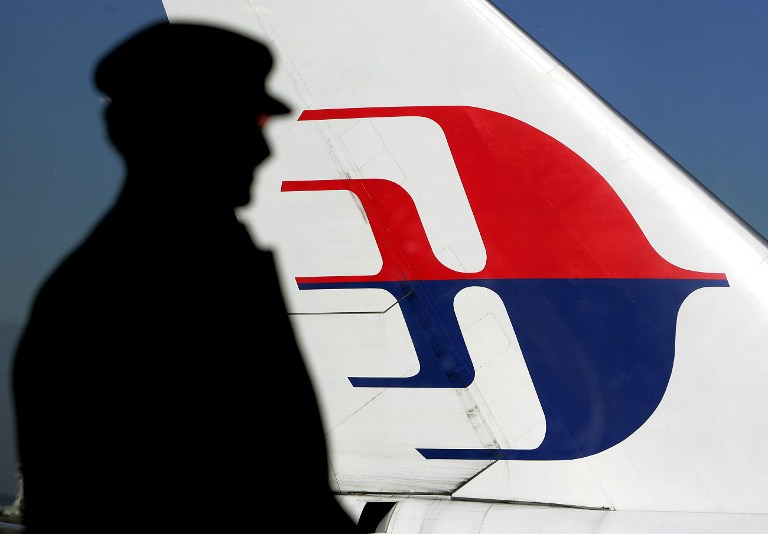


KUALA LUMPUR, May 16 — Increasingly vicious competition at a time when already-ailing Malaysia Airline (MAS) is struggling to cope with the fallout from Flight MH370 may prevent the flag carrier from making the recovery it needs to avoid a potential bankruptcy, the Wall Street Journal reported
Pointing to developments in the US air travel industry that saw the traditional full-service airlines decimated by the entrance of no-frill budget carriers, an air industry executive told the US newspaper that MAS was set to head the same way.
“What we saw in the US is a precursor to what we are going to see over here,” Vinay Dube, Delta Air Lines senior vice president for Asia-Pacific, told the WSJ.
In its report on MAS’s financial troubles today, the WSJ contrasted how the national carrier continued to be saddled with legacy issues — such as “a sprawling route network built up in earlier expansions” — with AirAsia that has emerged as the region’s most successful airline and which has now found a new home in klia2.
AirAsia operates in the low-cost sector and technically is an indirect competitor to MAS, although the reality is that all commercial carriers are increasingly vying for the same travellers.
Aside from AirAsia, Malindo also recently entered the local market while the region also contains rivals such as Scoot and Jetstar, among others.
And while AirAsia was ringing in the new, a snapshot of MAS’s financials revealed yesterday that its old problems have continued unabated and made worse by the disappearance of its Flight MH370 on March 8.
In a filing with the Bursa Malaysia to announce that it lost RM443 million in the first quarter of the year, MAS said the plane’s disappearance “had a dramatic impact on the traditionally weak first quarter performance”. It lost RM279 million in the same period last year.
The disappearance of MH370 that carried 153 Chinese nationals among the 239 people on board hit the carrier’s market in China most, causing it to lose 60 per cent of its sales there.
Yesterday’s announced loss also follows the swathe of red ink that has already been splashed on its books.
This February, MAS announced a worse-than-expected fourth quarter result for 2013 that saw it rack up another RM343 million in losses, putting the airline RM1.17 billion in the red for the entirety of 2013.
In 2011, it chalked up a record loss of RM2.5 billion.
Analysts are increasingly raising the prospect of a bankruptcy or heavy restructuring of the group to stave off the looming disaster.
Last month, MAS chief executive Ahmad Jauhari Yahya said it could take the airline as long as six months to recover from the impact of MH370, but indications are surfacing to suggest it is running out of time.
Yesterday, acting Transport Minister Datuk Seri Hishammuddin Hussein warned the airline not to expect government aid following the announcement of its first quarter loss.
Prime Minister Datuk Seri Najib Razak previously told the WSJ that Putrajaya was considering all options for MAS.
“We have to look at it from all angles... bearing in mind that Malaysia Airlines is a government-linked company. It’s not a private company, so there are certain repercussions in what you want to do in terms of how it is received by the employees and the general public,” Najib told the newspaper.
But it is this consideration that led one political observer to say that Putrajaya was unlikely to allow MAS to simply crash and burn.
“Malaysia Airlines is more than just a business. It also serves a social and political purpose. When it runs into trouble, it is very difficult for the government to behave in a commercial way,” Ibrahim Suffian, who runs independent polling company Merdeka Center, told the WSJ.
In 2005, MAS underwent a business turnaround plan under Datuk Seri Idris Jala, now minister in the Prime Minister’s Department in charge of the country’s economic performance, which reversed the losses that traced back to the 1997 Asian Financial Crisis.
But despite the publicised turnaround, the airline soon fell back into the red and registered its worst loss in 2011.
MAS shares were trading for 21 sen at 10am and were unchanged since the opening bell.
MH370 disappeared after leaving Kuala Lumpur for Beijing on March 8 with 239 people on board.
Initial search efforts were concentrated on the waters between Malaysia and Vietnam where MH370 was last heard from before it lost contact with the Subang Air Traffic Control.
But Inmarsat later confirmed more than a week later that satellites picked up electronic signals or “handshakes” from the aircraft well after it disappeared from sight, and that these signals had likely come from somewhere over the southern Indian Ocean.
The international hunt for MH370 then moved entirely to the large ocean swathe somewhere off the coast of Perth in Australia, despite doubts raised by experts over the aircraft’s drastic change of direction.
But until today, there has still been no sign of the missing aircraft. The hunt has now gone underwater, after experts confirmed that the aircraft’s black boxes have completely run out of batteries and would no longer be releasing signals.
Some 350 family members of passengers aboard the jetliner have been demanding that raw data be released for independent analysis, preferably to the Woods Hole Oceanographic Institution (WHOI), the non-profit research facility responsible for finding the remains of missing Air France Flight 447 in 2009, almost two years after it crashed into the Atlantic Ocean.
Amid questions about how the investigation has been conducted, the family members made the demand in an open letter sent to the leaders of Malaysia, China and Australia, earlier this month on May 8.
But yesterday, Hishammuddin insisted that the raw satellite data is not in Malaysia’s hands.
“The raw data is with Inmarsat, not with Malaysia, not with Australia, not with MAS. So if there is any request for this raw data to be made available to the public, it must be made through Inmarsat,” he told a press conference.


