


KUALA LUMPUR, June 3 — Behind the popularity of rattan and bamboo, lias handicraft items are now emerging as a ‘hidden gem’ from the interior of Ulu Sugut, Ranau, Sabah that not only generates the community economy, but also revives traditional treasures that are almost extinct.
Lias handicraft entrepreneur Junisa Agang, 43, said the uniqueness of lias, which is a wild plant from the palm family, is now an attraction after being featured at the Borneo Native Festival (BNF) 2026 here, recently.
She said the effort, which started with just five women last year, has now grown to 80 participants involving more than five villages in Ulu Sugut, thus injecting income into the local community consisting of housewives, single mothers and youth.
“In Sabah, the lias tree is not foreign to them, but, in most districts, this tree is extinct. So it is an advantage for us in Ulu Sugut to still have lias palm trees,” she told Bernama recently.
Junisa said that realising that the tree is becoming increasingly difficult to find, she, as a representative of the Ulu Sugut women’s group, is determined to promote lias products to ensure that the traditional heritage of the Dusun Tinagas community is not lost in time.
Speaking about the specialty of the product, Junisa said that their community now produces about 30 types of items including modern handbags and wallets, without neglecting traditional Dusun Tinagas designs such as basung (basket), barait (backpack) and bubu (fish trap).
She said that each product is the result of a personal touch that requires great patience, and even a complicated handbag can take up to three days to complete.
“Each bag design is the result of their own creativity. So we took the approach of undergoing a short-term training for three days at the Sabah Handicraft Centre in Keningau to improve our sewing skills,” she said.
She said that previously they only received small orders from Singapore, but their involvement in the BNF gave them the opportunity to introduce the product to foreign tourists including those from Cambodia and China.
Meanwhile, from the land of Kenyalang, rattan and bamboo products have become the ‘mainstay’ for the women of the longhouses in Nanga Sumpa, Lubok Antu, Sarawak.
Representative of the Nanga Sumpa Handicraft Association Jani Muking, 49, said that participating for the first time in BNF 2026 through the sponsorship of Sarawak Energy opens a new chapter in promoting the community’s artistic products to visitors at home and abroad.
“Normally we only sell handicraft products to tourists who visit the Nanga Sumpa homestay but, through BNF, we are not only able to promote handicraft products but also introduce the traditional treasures of the Lubok Antu community,” she said.
According to Jani, each handicraft unit such as gaga (basket), bemban (handbag), raga (basket), seluk (basket using the tying technique) and sintung (rattan basket) on display is a symbol of the sweat of about 30 longhouse women who are determined to ensure that the heritage of their ancestors is not lost in time.
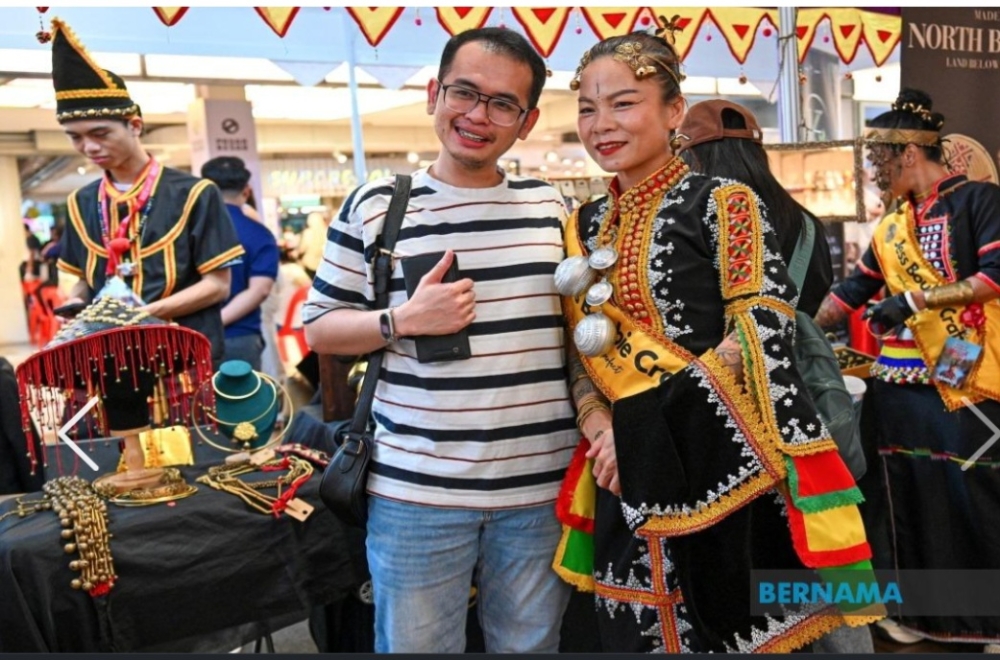
BNF 2026 which took place at Pasar Seni from May 22 to 24 is an annual event organised by the Kuala Lumpur Sukaseni Association (Sukaseni) in conjunction with the celebration of the Kaamatan Festival in Sabah and Gawai Day in Sarawak. — Bernama


