


BANGI, May 31 — Whispering is usually regarded as a safer way to speak when experiencing hoarseness, a sore throat or throat inflammation as many believe it helps rest the larynx or voice box and prevents the condition from worsening.
However, forced or prolonged whispering may actually affect the voice box.
Dr Nadhirah Mohd Shakri, a surgeon and clinical lecturer at the Department of Otorhinolaryngology-Head and Neck Surgery at Hospital Canselor Tuanku Muhriz Universiti Kebangsaan Malaysia (HCTM UKM), said many people misunderstand the effects whispering can have on the voice.
“Many do not realise that whispering can actually place strain on the voice box. When whispering, individuals tend to use the neck muscles and voice box forcefully to produce sound.
“If done repeatedly or over a prolonged period, it can cause tension in the voice box and disrupt healthy voice production,” she told Bernama after the Specialised Voice Care Training Programme for Muezzins held in conjunction with World Voice Day 2026 here recently.
According to Dr Nadhirah, prolonged strain caused by improper voice use may expose individuals to conditions such as muscle tension dysphonia, as well as lead to the formation of growths, including vocal cord nodules, polyps and cysts.
She said habits such as shouting or speaking too loudly also increase the risk of injuries to the voice box, including minor bleeding in the vocal folds that may lead to the formation of vocal polyps.
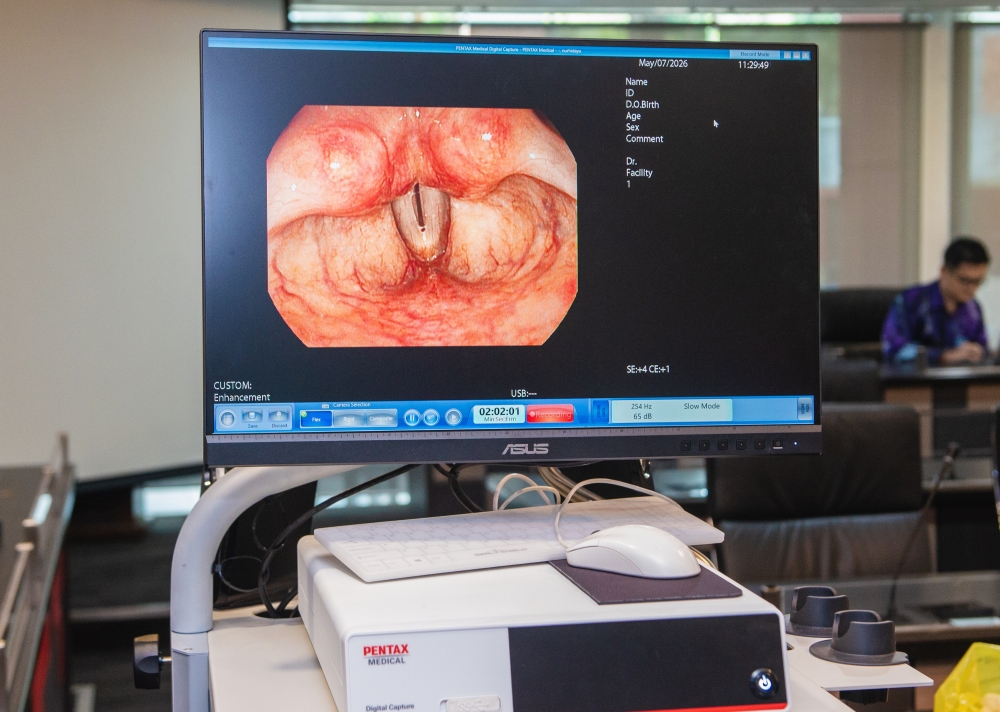
“If complications such as vocal cord cysts or polyps occur, surgery may be required. However, procedures involving the voice box also carry the risk of scarring, which can affect voice quality in the long term.
“That is why I always stress that prevention is better than treatment. Early screening is important to determine whether someone has a voice disorder or is using improper vocal techniques,” she said.
Dr Nadhirah added that acid reflux can also affect the voice box.
“Reflux is not just a digestive problem because stomach acid can also affect the voice box, causing symptoms such as hoarseness, throat discomfort or frequent throat-clearing,” she said.
She also advised the public to be alert to early signs of voice disorders, including hoarseness lasting more than two weeks, voice tiring easily, or the need to strain while speaking to the point that the neck feels sore.
“If hoarseness persists for more than two weeks, consult an ENT (ear, nose and throat) specialist for further examination. Don’t rely solely on remedies such as honey or lemon without identifying the actual cause.
“We need to examine the condition of the voice box through endoscopy because that is the only way to determine whether there are nodules, growths or other abnormalities,” she said.
Meanwhile, HCTM UKM speech rehabilitation officer Dr Nor Shahrina Mohd Zawawi advised individuals who rely heavily on their voices, such as teachers, lecturers, speakers, trainers and singers, to learn proper vocal techniques to avoid injury to the voice box.
She said excessive voice use without proper technique may lead to vocal fatigue, neck tension and gradual changes in voice quality.
“Many people only seek treatment when their voice becomes severely hoarse or disappears completely, even though early signs such as tiring easily while speaking, frequent throat-clearing or throat discomfort also indicate the voice box is under strain,” she said.
Dr Nor Shahrina said good vocal hygiene or voice care practices include staying well-hydrated, getting adequate vocal rest and reducing voice use when experiencing a cough, sore throat or respiratory infection.
“Speech and voice therapy can help individuals learn safer and more efficient breathing, voice production and resonance techniques suited to their professional and lifestyle needs,” she said. — Bernama


