


KUALA LUMPUP, Jan 11 — In the small Pahang town of Raub, the pungent scent of durian is the smell of money, thanks to a global rush fuelled by China’s insatiable appetite for the Musang King, a prized variety so coveted it has been dubbed the “Hermès of durians.”
Once a 19th-century gold mining town that dug for treasure underground, Raub has now found its fortune above it. The town is one of many in Southeast Asia at the centre of this boom, fuelled by China’s voracious and growing demand, BBC reported.
In 2024 alone, China imported a record US$7 billion (RM28 billion) worth of durians — a threefold increase from 2020 — with over 90 per cent of the world’s durian exports now headed there.
“Even if only 2 per cent of Chinese people want to buy durians, that’s more than enough business,” said Chee Seng Wong, factory manager of Fresco Green, a major durian exporter in Raub.
He recalls how farmers once cut down durian trees to make way for oil palms. “Now it’s the other way round. They’re chopping oil palms to grow durians again.”
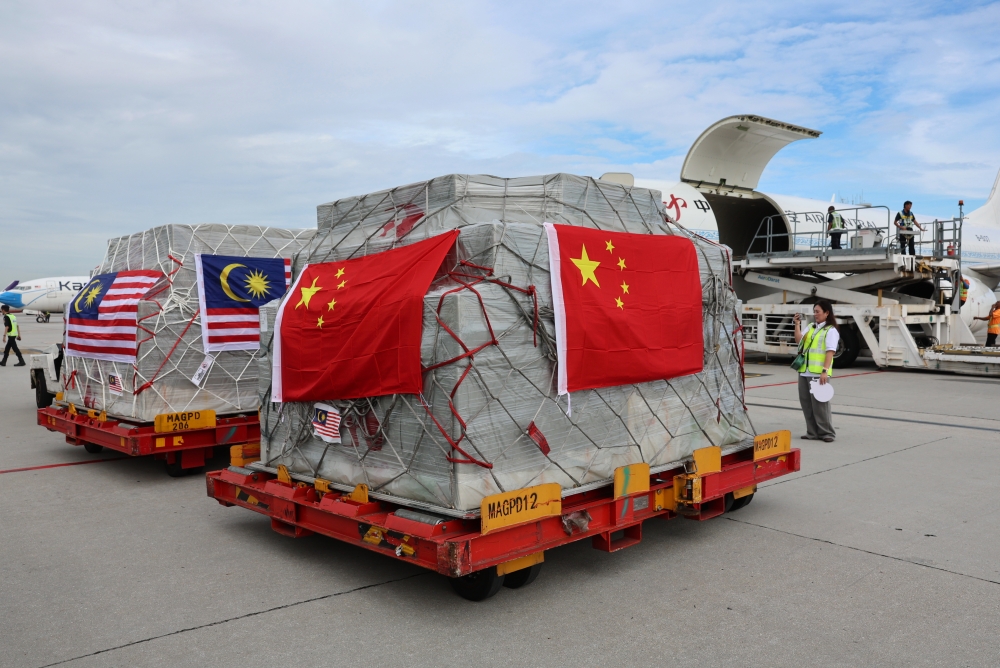
The King of fruits conquers China
With an aroma so divisive it’s banned on public transport, the durian has earned the title “King of Fruits” from its fans and “the world’s smelliest fruit” from curious tourists.
Yet, it has found an ever-growing fanbase in China, where it has transformed from an exotic gift into a social media status symbol, starring in everything from durian chicken hotpot to durian pizza.
While Thailand and Vietnam dominate China’s durian supply, Malaysia is rapidly gaining market share with premium varieties like the Musang King, which can fetch anywhere from US$14 to US$100 depending on quality.
“Once I ate Malaysian durian, my first thought was, ‘Wow, this is delicious. I have to find a way to bring it to China’,” said Xu Xin, a 33-year-old who sells the fruit back home and was in Raub hunting for the best imports.
Her confidence is mirrored by the busloads of Chinese tour groups flocking to rural Malaysia for a taste.
They eagerly dig into platters arranged from mildest to richest, culminating in the complex, almost alcoholic bitterness of the Musang King.
“Nowadays there are more customers who walk into the shop and ask, ‘Are there any bitter ones in this batch?’” Xu said.
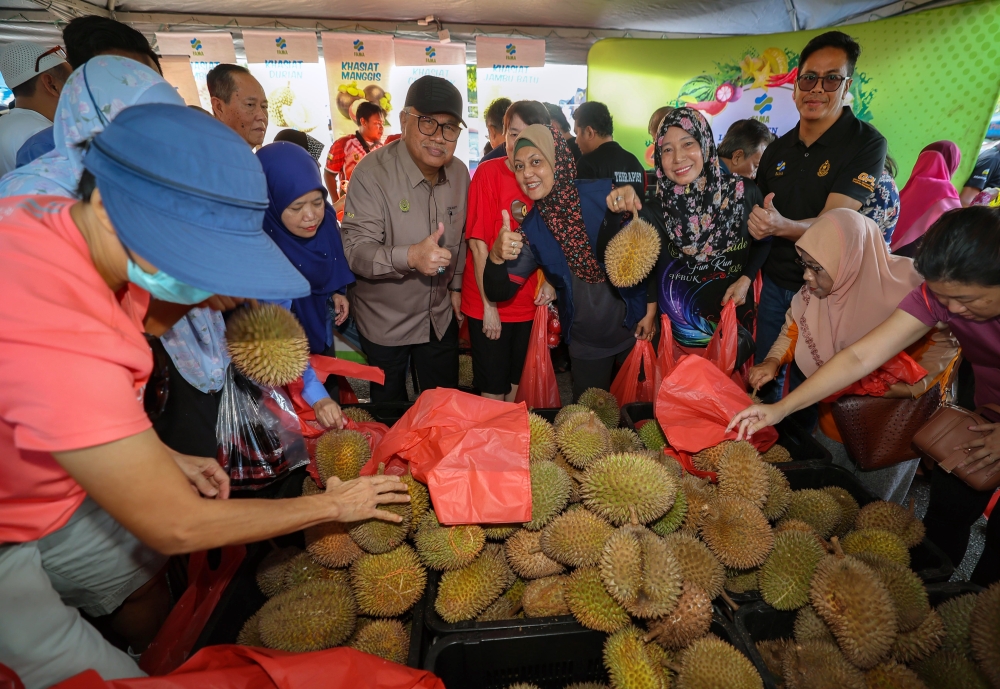
Raub’s durian dynasties and diplomatic deals
This demand has made millionaires out of farmers like Lu Yuee Thing, or “Uncle Thing,” who owns several farms and a bustling durian shop. At 72, he still wakes at dawn to harvest the fruit, a testament to the hard work behind the “easy money.” The best of his harvest, the Grade AA durians, are destined for China.
Beijing has skilfully woven this durian craze into its diplomacy, signing a flurry of trade agreements with Southeast Asian nations.
These deals, often touted as celebrations of bilateral ties, also dovetail with China’s regional infrastructure investments, such as the China-Laos Railway, which now transports thousands of tonnes of fruit daily.
But the clamour comes at a cost. Food safety concerns have erupted over chemically ripened Thai durians, Vietnamese coffee farmers have pivoted to durians, driving up global coffee prices, and in Raub, a turf war has broken out between farmers and authorities over land use.
Meanwhile, a potential coup is brewing on China’s island province of Hainan, where years of agricultural trials are finally bearing fruit.
China has long pushed for self-sufficiency in everything from renewables to AI, and it is now eyeing what state media calls “durian freedom.”
For now, Hainan’s harvest accounts for less than 1 per cent of China’s consumption.
But as Uncle Thing sees it, “Hainan has already succeeded in its experiment... If they have their own supply and start importing less, our market will be affected.”
While many in Raub dismiss the threat, it’s hard to ignore that as China chases its own supply, the Musang King’s throne sits a little shakier than before.


