


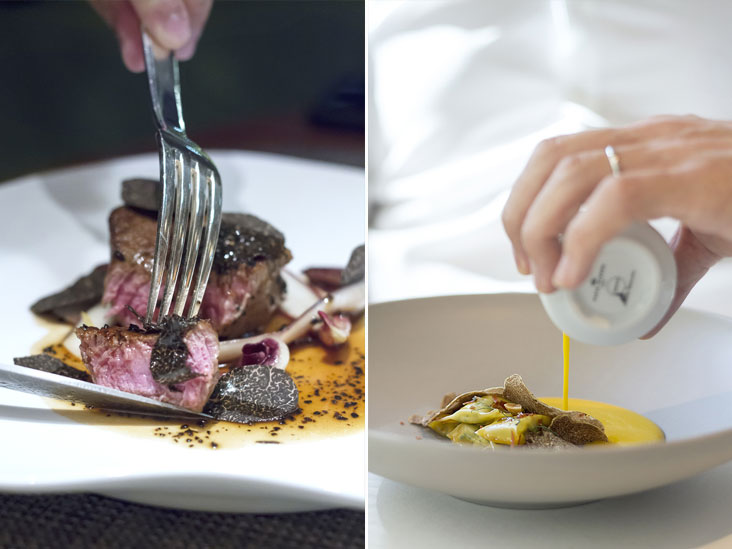


TOKYO, May 13 — The aroma of truffles, available only for a brief season, is like none other. Whether black or white, this delicacy can lift up a dish from good to great.
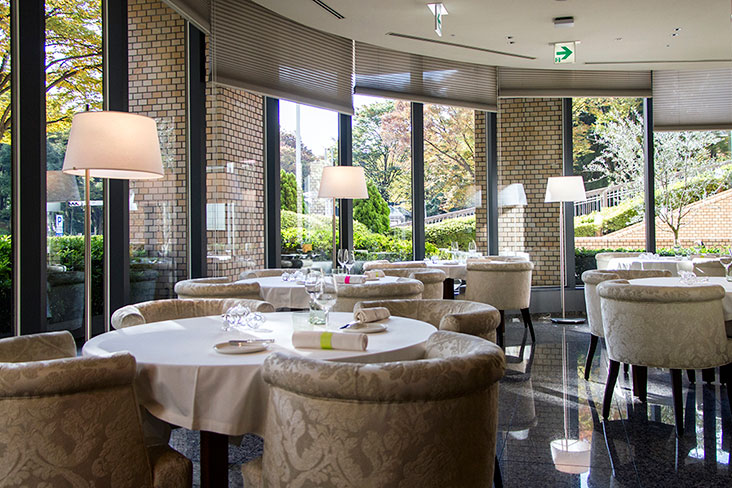
Certainly this is true of the Michelin two-star Cuisine[s] Michel Troisgros in Tokyo, famed for its twice-a-year truffle showcase.
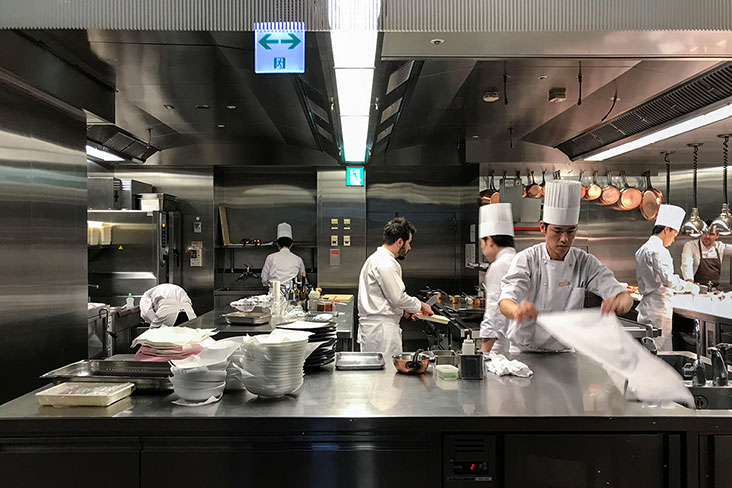
Led by 37-year-old Executive Chef Guillaume Bracaval, the restaurant’s Black Truffles Fair mirrors the black truffle season spanning January to February, while the White Truffles Fair catches the beige-hued variety at their peak from mid October to early December.
![Cuisine[s] Michel Troisgros, a Michelin two-star restaurant in Tokyo](https://www.malaymail.com/uploads/imported_images/Crave/2018/2018-05/Troisgros02.jpg)
While there are around 70 species of truffles, only white truffles (Tuber magnatum), harvested mainly in Italy’s Piedmont region, and black truffles (Tuber melanosporum), found in parts of France such as Provence and Perigord, are truly prized.
Unlike other fungi such as mushrooms, truffles grow entirely underground and are usually “hunted” with the help of specially trained dogs or pigs.
Legends of such truffle hunts were probably part of Chef Bracaval’s childhood growing up near Lille, Northern France. Hailing from a family of farmers, he recalls, “I was lucky to always eat vegetables and fruit from our own garden. My two brothers liked going to the garden with my father but for me, I prefer to stay in the kitchen. I think I started to learn from seeing my mother making food every day with the vegetables my father grew.”
No one else in his family is in the culinary field, aside from an uncle who runs a pâtisserie. Chef Bracaval would visit the shop when he was young to learn about pastries.
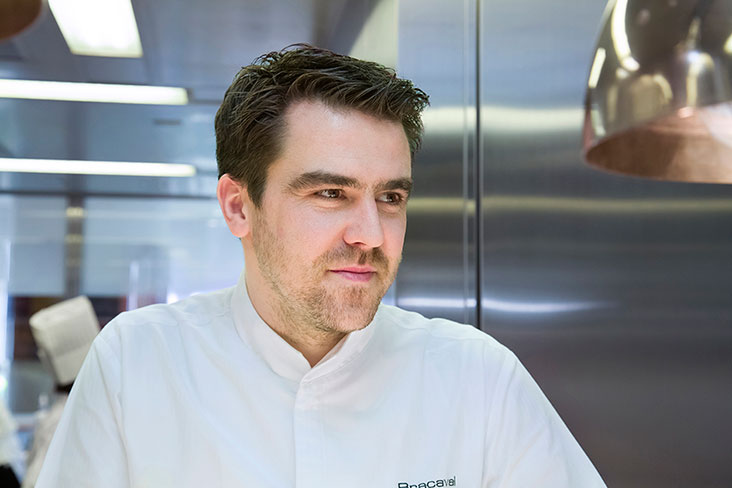
At 15, he gained admission to local cooking schools, followed by stints at Michelin three-star restaurants in Paris, including L’Arpège, Ledoyen and L’Ambroisie.
A real career turning point came when Chef Bracaval moved to Tokyo in 2011 to work at French restaurants such as Tateru Yoshino Ginza and l’Art et la manière. In 2012, he was chosen to head Cuisine[s] Michel Troisgros. (No mean feat, considering its owner, Chef Michel Troisgros, was named best chef in the world 2018 by a group of his peers.)
Over time, Chef Bracaval’s appreciation for Japanese cuisine grew. He says, “When I arrived in Japan, I visited many places to see ingredients and techniques of the Japanese kitchen. As a cook, one became a student again because everything is new. I learned again. Here in Japan, I remembered what my parents taught me — to respect people by being simple and humble.”
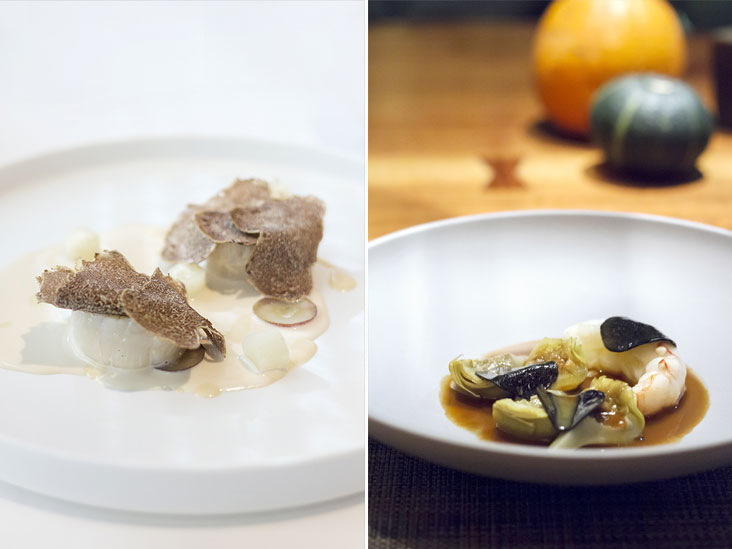
That simplicity shines through in his menu. Appetisers are musings upon land and sea: the latter thanks to Japan’s bounty of fresh seafood, the former a preview of the magic black and white truffles can invoke.
Hokkaido scallops turn transcendent with freshly shaved white truffles. A few discs of black truffle perfume scampi and artichokes in a shallow pool of seafood bisque.
For mains, Cuisine[s] Michel Troisgros does the classics very well, albeit with a Japanese twist: a fillet of wagyu beef with Perigueux sauce. Here the rich brown sauce traditionally flavoured with Madeira, a dry sweet wine, is infused with black truffles and a hint of orange.
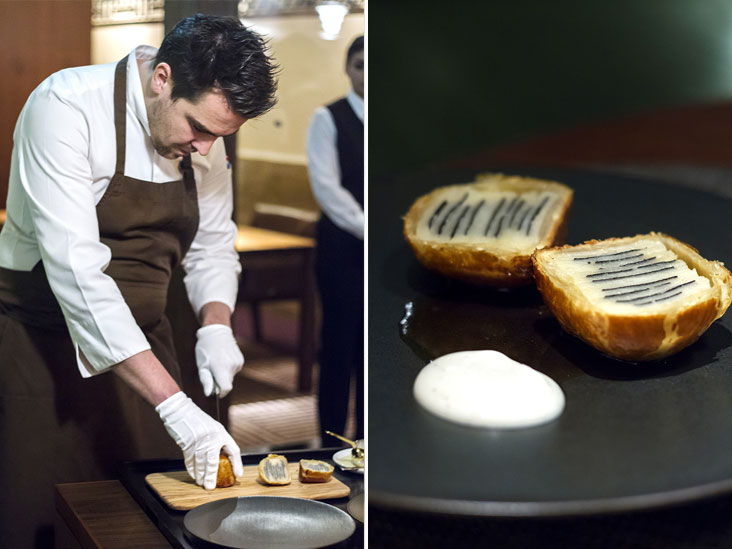
Truffles are creatively incorporated in some of the dishes, such as Chef Bracaval’s signature potato pie. Slices of potato layered with black truffle, wrapped in delicate pastry. Served with a salty Comté cheese sauce and mushroom jus, it’s delightful how a simple comfort food can be reinterpreted so heavenly.
Chef Bracaval discusses his philosophy in using truffles to create his dishes: “I learnt a lot about truffles when working with Bernard Pacaud in l’Ambroisie; we used more than 10 kilograms every week! My inspiration comes from what I learn about the product, from my experience with Michel Troisgros and from my life in Japan. This potato pie, for me, is important so as to have one dish made with only vegetables on the menu, something I learn from L’Arpege with Alain Passard.”
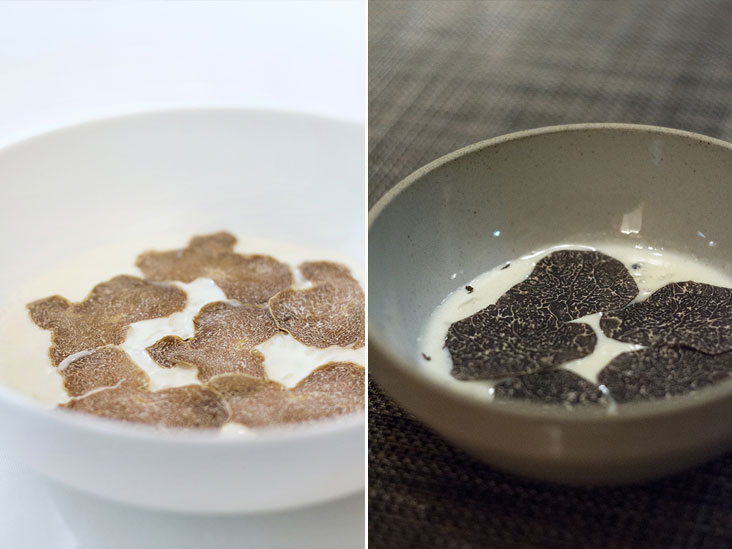
In selecting ingredients for his menu, Chef Bracaval focuses on what’s in season. He explains, “I try first to find all my ingredients in Japan and if I cannot find enough quality, I look in France or Italy. The most important thing is the quality. Even if the price is higher, I prefer to use less quantity but better quality.”
Less can indeed be more. A “risotto” pudding made from milk and rice, and laced with Comté Millésime, is another deceptively simple dish that transforms depending on what type of truffle it’s paired with. White truffles make it richer and more deeply aromatic while black truffles tones it down a notch, making every spoonful mildly redolent.
In fact, white truffles are generally considered to be more intensely fragrant to the extent they’re usually shaved raw on top of dishes rather than being cooked directly. Black truffles, however, often benefit from some light cooking to help release their full flavours. Hence the genius in Chef Bracaval’s black truffle potato pie.
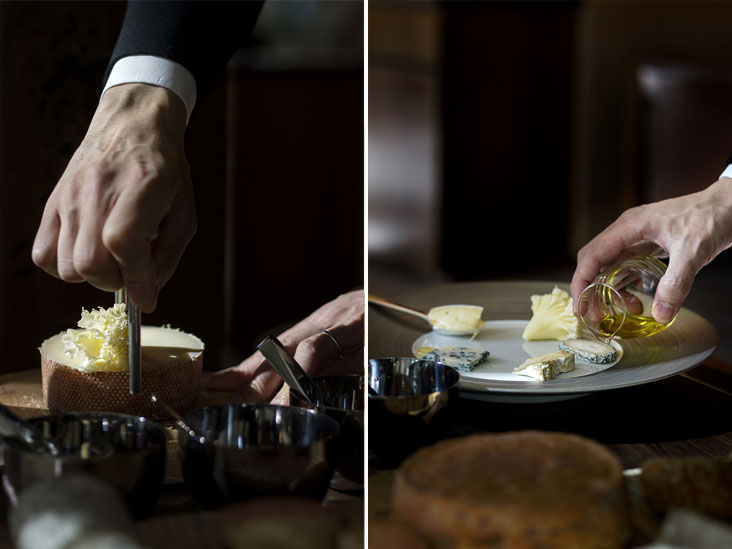
Of course, not every course has to be truffle-mad. Cuisine[s] Michel Troisgros has an especially fine cheese cart from which guests choose their favourites. If one selects the Tête de Moine, originaly produced by Swiss monks, the maître d’ gives an unexpectedly touching performance. Fragile rosettes of cheese are crafted by turning a girolle. Fine dining isn’t only about the flavours, surely, but the experience too.
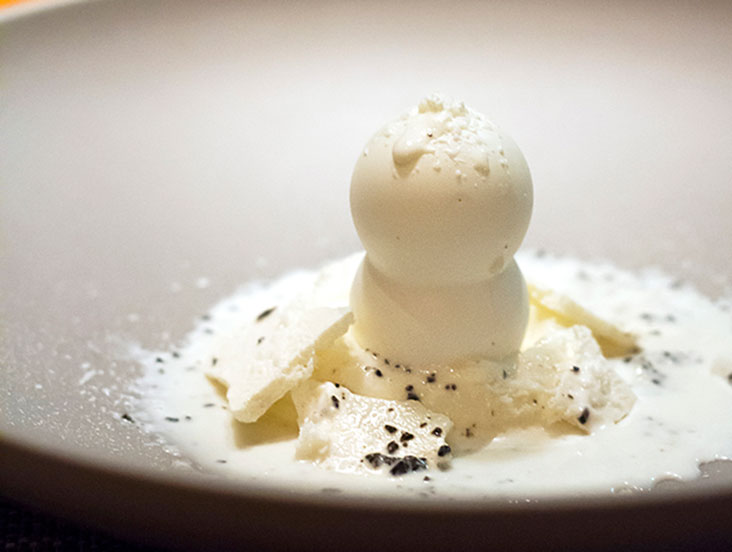
For dessert, we adore the very kawaii “Milk Snowman” that arrives with a sauce of fresh milk and truffles. The snowman turns out to be mascarpone and panna cotta encased in white chocolate with milk meringue flakes and caramel. Surprisingly light rather than cloyingly sweet.
Light and sweet could well describe Chef Bracaval’s life now in Tokyo. He has had many moving experiences, especially when working with other equally passionate people in the kitchen.
He says, “I like these moments where I can create something with my hands for other people, and first of all, my own family. To be a chef but at the same time, be a father.”
Life, not unlike truffles, whether black or white, has but a brief season. All the more reason to savour every moment.
Cuisine[s] Michel Troisgros
2-7-2 Nishi-Shinjuku, Shinjuku-Ku, Tokyo, Japan 160-0023
Open Thu-Mon lunch 12pm-1:30pm & dinner 6pm-8:30pm; Tue & Wed closed, except holidays
Tel: +81 3 3348 1234


