


NEW YORK, May 16 ― Here is the bad news and the good news about fava beans.
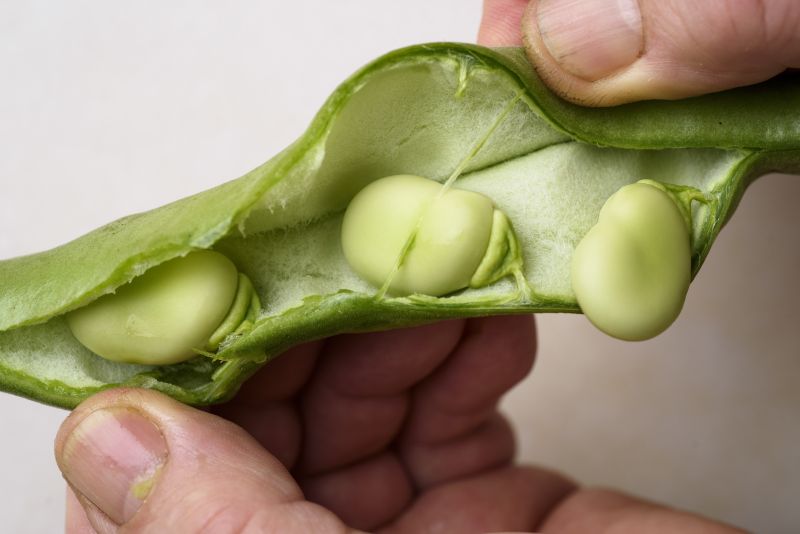
First, the bad: Sorry, but a cook has to spend a fair amount of time and effort with them, and there’s no getting around it. The first step is shucking the beans from their giant pods. Wait, there’s more: Each bean must then be peeled individually. Removing the gray outer skin to reveal the bright green jewel within is without question a chore.
The good news, however, is that fava beans are exquisitely delicious.
If you can get your hands on some small, smooth young pods (about the diameter of a small carrot and about 4 inches long), the peeling question is moot, because no beans have yet formed inside them. The pods can be grilled whole over coals or cooked a la plancha or stir-fried in a hot wok. Chopped to add to a vegetable soup, the immature pods stand in nicely for tender green beans.
For the first favas that show up at the market in late spring, many find peeling is unnecessary, and it’s true that when the beans are very small — no bigger than a pea — they are tender enough to eat skin and all. (Still, some fava fanatics peel even the tiny ones.)
Another way to avoid peeling is by roasting larger favas in their skins, coated with olive oil and sprinkled with salt. Hot from the oven, they make a great snack, eaten one by one with your fingers, sucking the bean from the skin. And eating raw favas straight from the pod with pecorino cheese and salami is another time-honored treat throughout Italy.
But generally, when the beans are fully formed and get to be the size of large lima beans (each pod will have six or eight), they taste and look better naked. They really should be peeled, especially for these lovely mashed favas on toast. Peeling can be done in stages, even a day ahead, with an assistant if possible.
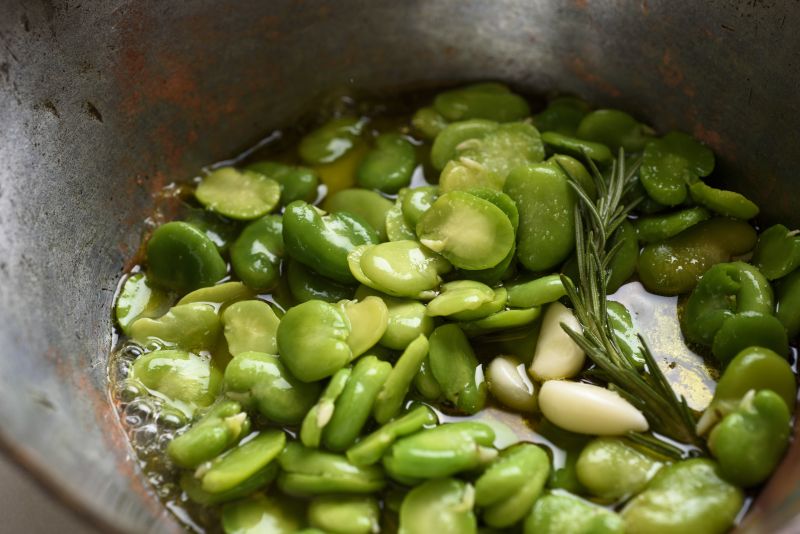
With the work of peeling out of the way, you will be glad to know that the mash comes together quickly. A little olive oil and garlic, a splash of water, some chopped rosemary and just a few minutes on the stove. Larger, somewhat starchier favas work best.
The ambrosial warm green spread on freshly toasted baguette rounds is the perfect spring aperitif. Even though it takes about 5 pounds of fava beans in the pod to yield a small bowlful of mashed favas, this labor of love is worth it.
Mashed fava bean toasts
Yield: 2 cups, about 36 small toasts
Total time: 40 minutes
5 pounds fava beans in the pod
Extra-virgin olive oil
Salt and pepper
4 cloves garlic, minced
Pinch of crushed red pepper
1/2 teaspoon freshly chopped rosemary
1 baguette, thinly sliced
Coarse sea salt, optional
1. Shuck the beans from their pods, discarding the pods.
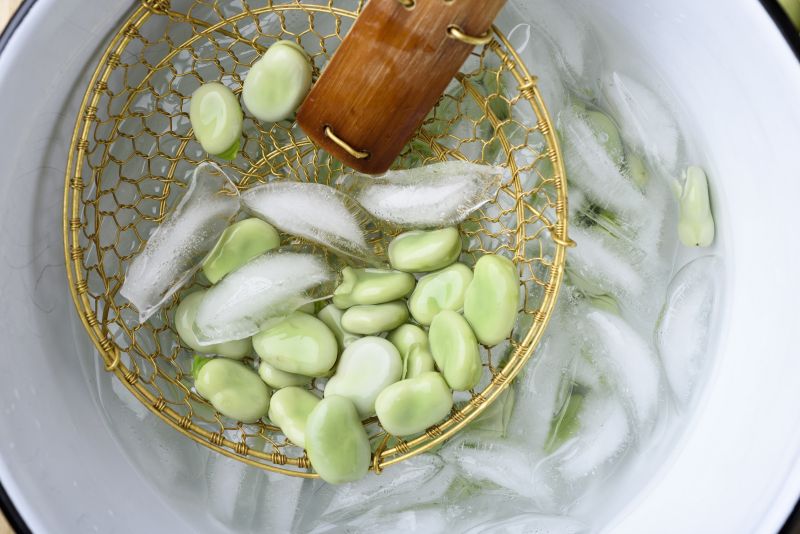
2. Blanch the beans: Drop shucked favas in boiling water for 1 minute, then plunge into ice water. When cool, drain in a colander, then pierce outer skin from each bean with thumbnail and squeeze to slip off skins. Discard skins and set peeled favas aside. (May be prepared up to 24 hours ahead of time.)
3. Put 2 tablespoons olive oil in a skillet over medium-high heat. Add peeled favas and season generously with salt and pepper. Stir to coat with oil, add garlic, and let sizzle for a few minutes without browning. Add 1/2 cup water, cover and let simmer until beans have softened and most of the liquid is gone, about 10 minutes. Turn off heat.
4. Using a potato masher or wooden spoon, mash favas roughly. (If favas are larger and starchier, they may have begun to fall apart already, which is fine.) Put pan back on stove and turn heat to medium. Stir in crushed red pepper and rosemary (and a little water if the mash is too thick), adjust seasoning, and transfer fava beans to a warm bowl.
5. Lightly toast baguette slices. Smear each toast with a tablespoon or so of mashed fava. Drizzle with more olive oil and sprinkle with coarse sea salt if desired.
And to Drink ...
The rich, green flavour of fava beans calls for white wines that are crisp and lively, with herbal elements. I’m thinking of Chablis, particularly young, straightforward village Chablis rather than the more complex premier cru or grand cru bottles. Sancerre, like Chablis, combines herbal and mineral flavours in a fresh way that would complement favas beautifully. Other options include vivacious whites like fianos from Campania, good Orvietos from Umbria or vermentinos from Liguria. You can also try pinot blancs from Alsace, Austria or Oregon. (Silence of the Lambs buffs can always pull out “a nice Chianti.” As for the liver, you’re on your own.) ― The New York Times


