





PETALING JAYA, June 9 — Some foods survive because they are celebrated. Others endure more quietly, passed down through generations through habit, memory and the hands of those who still make them.
For many Malaysians, traditional kuih belong to the latter category. They appear at family gatherings, festive celebrations and morning markets, familiar enough to be taken for granted.
Yet many of these recipes, once commonplace, are becoming increasingly rare as fewer people learn the labour-intensive skills required to make them.
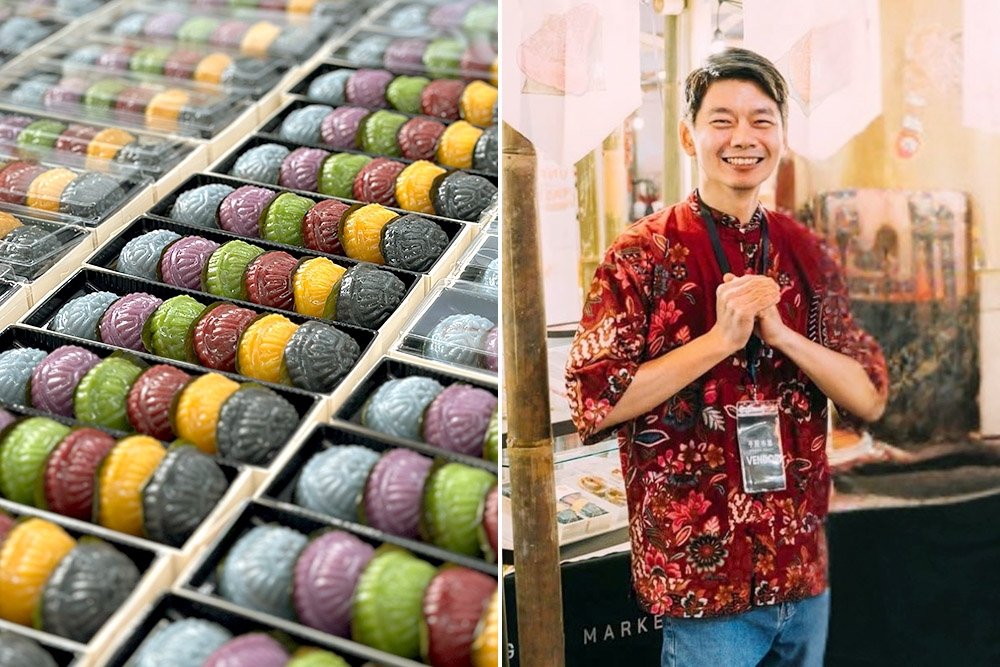
Among those concerned by this gradual decline was former pastry chef Sam Teoh, 41, whose response was to found KuihMe.
After postgraduate studies in pastry arts in Taiwan, a stint as a commis chef at The Westin Kuala Lumpur and a silver medal at the Malaysian International Baking Confectionery (MIBC) 2008, Teoh had built a respectable career in the pastry world.
“I saw how Taiwan elevated its traditional confections — pineapple cakes, mochi, sun cakes — into products the whole country is proud of,” he says.
Beautifully packaged and prominently displayed at airports, hotels and gift shops, these treats had become ambassadors for Taiwanese culture. What Teoh saw back home was a stark contrast.
“When I looked at Malaysia’s kuih scene, I saw something just as rich, just as culturally significant — but stuck at the pasar malam level. Sold in plastic bags. No branding. No story. No pride in the presentation.”
That conviction eventually became KuihMe, a PJ-based business dedicated to preserving and elevating heritage kuih through craftsmanship, natural ingredients and thoughtful presentation.
He says, “KuihMe started not from a business plan on paper, but from a conviction that had been building for years: Malaysian kuih deserves better.”
Of all the traditional kuih Teoh could have chosen, he settled on one of the most recognisable: ang ku kuih.
The tortoise-shell-shaped delicacy, traditionally associated with longevity and blessings, remains a familiar sight at festivals, family gatherings and religious occasions. Yet Teoh believes its future is far from guaranteed.
“It’s quietly disappearing — fewer people make it by hand, and most young Malaysians have never tasted a properly handmade one.”
His pastry training allowed him to approach the classic kuih with a craftsman’s precision. Through repeated adjustments to filling ratios, steaming times and dough hydration, he arrived at the version that now anchors KuihMe’s offerings.
Teoh shares, “Our skin is made primarily from sweet potato, not fully glutinous rice flour, so the texture is softer and lighter.”
Equally important is the company’s commitment to natural ingredients.
He promises, “Every colour you see is extracted from natural plants like beetroot, pandan and black sesame. No artificial colouring, ever.”
Ask Teoh what distinguishes KuihMe from other traditional kuih makers and his answer comes in three parts: “the person, the ingredients, and the craft”.
His professional pastry background, he says, brings a level of technical discipline to the process without compromising authenticity.
“We work with authentic traditional recipes and never take shortcuts.”
That philosophy extends to production. Every piece remains individually hand-shaped, despite the efficiencies machinery could offer.
Teoh explains, “Each batch takes about 45 minutes. I could use machines, but I choose not to. The texture of handmade kuih simply cannot be replicated.”
The company’s tagline — 那些差点消失的味道 (or “Taste flavours that have all but disappeared”) — captures the broader mission behind the business.
“We believe heritage food deserves modern pride. It belongs on your table today, not in a museum.”
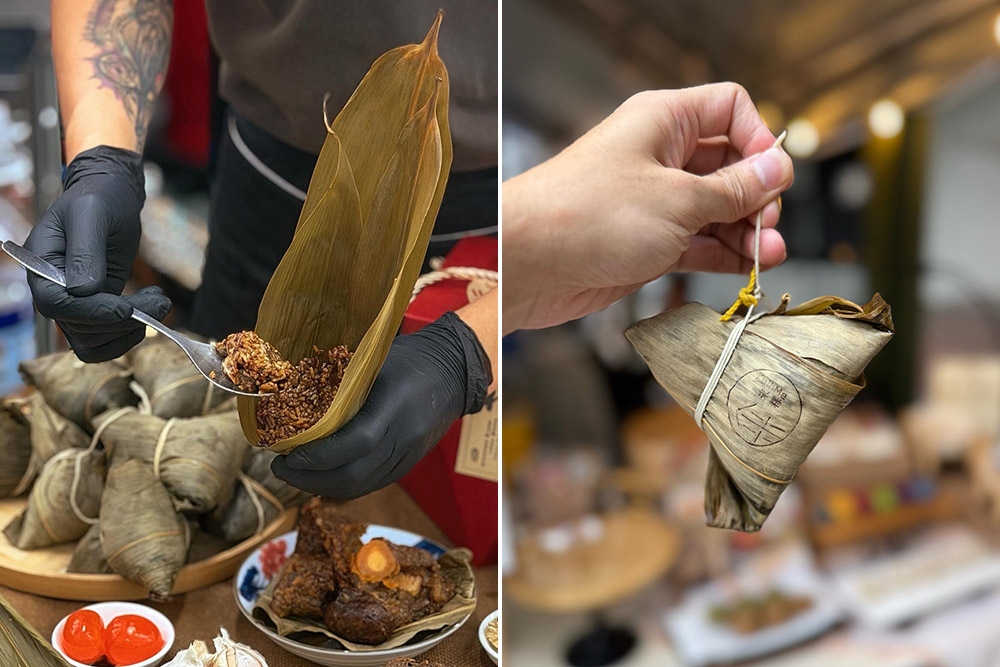
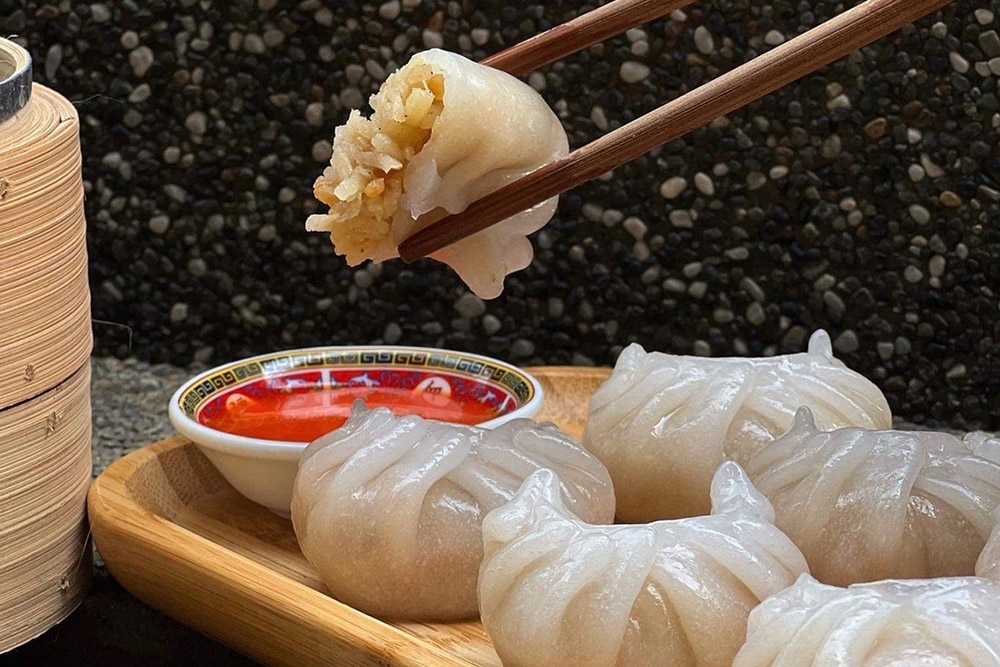
While KuihMe is best known for its ang ku kuih, Teoh has expanded the range to include other heritage foods, including chai kuih (Teochew steamed savoury dumplings) and bak chang or Chinese rice dumplings.
“These bak chang aren’t just seasonal,” he says. “They’re a permanent part of our menu, with Dragon Boat Festival as the peak period.”
KuihMe has two signature rice dumplings: the Ah Ma Salted Chicken and Ah Gong Mui Choy Chicken. (No pork or lard is used.)
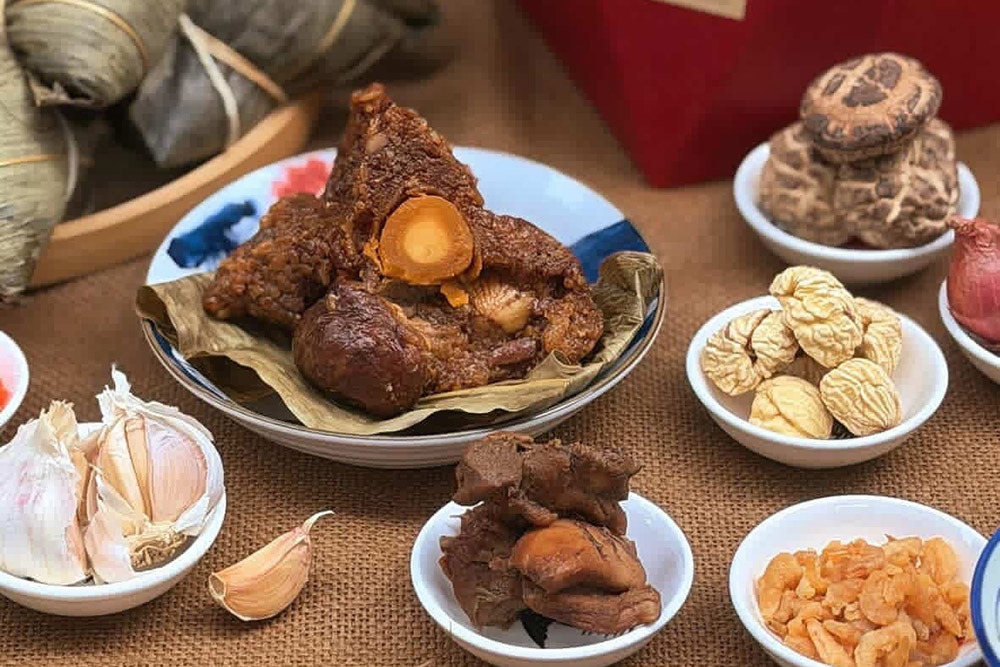
Teoh explains, “Ah Ma and Ah Gong — grandmother and grandfather. We wanted that warmth to come through the moment you see the name.”
The former draws inspiration from Teochew traditions while the latter incorporates preserved mustard greens, a flavour profile deeply familiar to many Malaysian Chinese households.
He adds, “Both were developed through a lot of trial — getting the filling ratios, steaming times and wrapping technique right. We use traditional bamboo leaf wrapping tied with twine — the way it’s always been done.”
Yet Teoh notes that the appeal of these foods increasingly transcends ethnic boundaries.

“It’s not just Chinese families buying them. Our Malay and Indian friends enjoy them too. Food in Malaysia has always been a bridge, and I think that’s worth protecting.”
Balancing innovation with authenticity is a challenge faced by many heritage food businesses. Teoh’s guiding principle is straightforward: “Modern presentation, traditional soul.”
The form can evolve, he explains, but the essence must remain intact.
“Think about yam cake and cassava cake — they’ve been around for generations. You can change the shape, the mould, the way you cut and plate it — but the taste must remain.”
For all the effort invested in technique and presentation, the moments that matter most to Teoh are often the simplest.
“The moments that stay with me are when someone takes a bite, goes quiet, and then says — ‘This tastes like my mum’s.’”
Customers are often surprised to discover that the products are made with sweet potato and naturally derived colours. Those moments of discovery frequently become lasting relationships.
One customer, he recalls, buys their ang ku kuih every time she visits her mother.
“It gives them something to talk about. The taste, the memory, the old kitchen.”
For Teoh, those stories have become just as important as sales figures.
“I started KuihMe because I saw a gap in the market — but what I found was a gap in people’s hearts.”
Looking ahead, Teoh’s future plans include corporate gifting, hotel partnerships and collaborations with like-minded brands. The long-term aspiration is even bigger: to see Malaysian heritage food recognised alongside the iconic traditional confections of other countries.
“Japan has wagashi. France has pâtisserie. Taiwan has pineapple cakes. Malaysia has kuih — and it deserves the same respect.”
For Teoh, preserving tradition is not about nostalgia alone. It is about ensuring that these flavours remain part of everyday life — not relics of a disappearing past, but living expressions of Malaysian culture.


