


JANUARY 30 — Malaysia today does not suffer from a lack of opposition.
It suffers from an opposition that is in complete disarray.
The problem facing the country is no longer whether there is enough criticism of the government. There is plenty.
The deeper and more worrying issue is that the Opposition has failed to demonstrate even the most basic capacity to govern – or to cohere.
Politics, after all, is not merely about protest. It is about organisation, discipline, policy coordination and the ability to manage contradictions. On all four counts, the current Opposition falls short.
Start with internal party management.
An Opposition that cannot resolve its own factional disputes has little credibility claiming it can manage a complex, plural federation like Malaysia. Internal quarrels fester, leadership signals are mixed, and strategic direction remains unclear.
When party machinery itself is dysfunctional, governance becomes impossible.
This is not a matter of ideology.
It is a matter of competence.
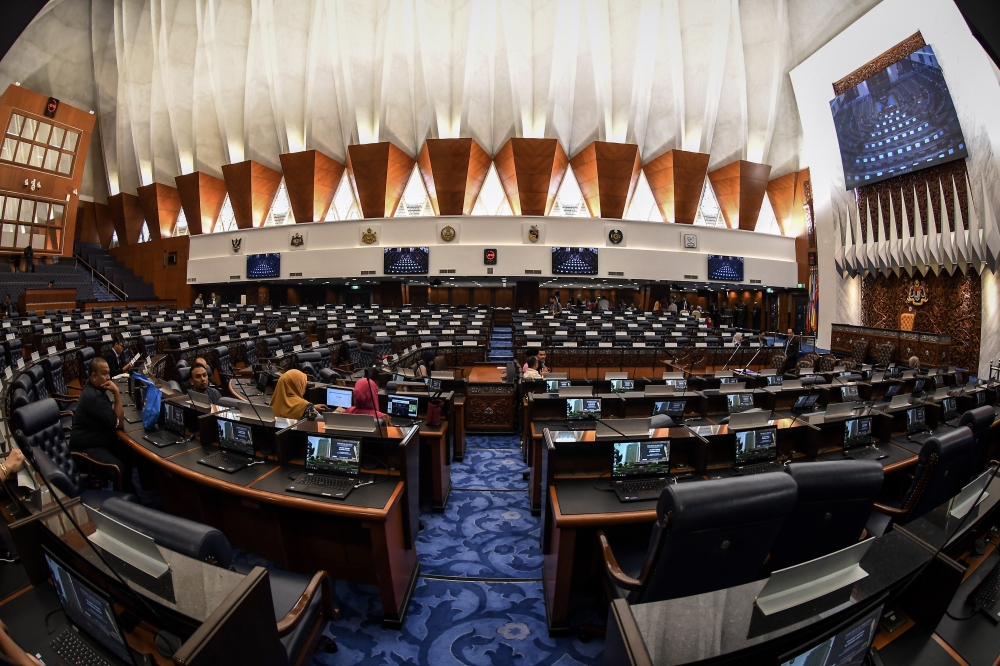
If internal party issues cannot be settled, how can national issues – far more complex, sensitive and high-stakes – be addressed? Leadership is revealed not in rhetoric, but in the ability to impose order on one’s own ranks.
The prime ministership question exposes this weakness even more starkly.
The Opposition has not resolved who it trusts, who it rallies behind, or what kind of leadership it actually offers Malaysians. This ambiguity is not tactical subtlety; it is strategic paralysis.
When the question of national leadership is “beyond them to solve,” it signals a deeper vacuum at the core.
Compounding this is the presence of PAS within the Opposition bloc – an actor that behaves less like a coalition partner and more like an electric eel.
Difficult to grasp, unpredictable in movement, and capable of delivering political shocks that destabilise any shared platform.
PAS brings with it a different political logic, different priorities, and a different conception of governance.
Managing such a force requires extraordinary coalition discipline, ideological clarity and firm leadership.
The Opposition has shown none of these qualities.
Instead of harmonisation, there is constant friction.
Instead of coordination, there is improvisation.
Instead of strategic coherence, there is mutual discomfort disguised as unity.
A coalition that cannot manage its most ideologically assertive component cannot hope to manage a country as diverse as Malaysia.
The problem does not end in peninsular Malaysia.
It worsens when East Malaysia is considered.
“Peninsula-plus” politics – where Sabah and Sarawak are treated as electoral add-ons rather than equal partners – remains unresolved within the Opposition. Issues of federalism, autonomy, development equity and representation require sensitivity, consistency and long-term engagement.
These are not matters that can be addressed through slogans or episodic visits.
Yet the Opposition has failed to articulate a credible, sustained approach to Borneo Malaysia. Without a serious framework for East Malaysian governance, any claim to national leadership rings hollow.
Governance in Malaysia is not merely about winning Putrajaya.
It is about managing diversity across geography, ethnicity, religion and economic structure. It requires coalition discipline not just during elections, but throughout the governing cycle.
By contrast, what Malaysians are witnessing today is an Opposition consumed by internal tensions, uncertain leadership, incompatible partners and an inability to scale its politics beyond protest.
This is not healthy Opposition.
Nor is it constructive democracy.
A weak Opposition does not strengthen accountability. It weakens it. When the alternative is incoherent, the governing coalition faces criticism without credible replacement.
Democracy suffers not from the absence of dissent, but from the absence of a viable counter-elite.
The irony is that Malaysia has experienced the costs of unstable coalitions before. Voters are now far more sensitive to political chaos, elite infighting and policy paralysis.
They have learned – painfully – that government collapse is not abstract theatre. It affects livelihoods, currencies, investor confidence and social cohesion.
An Opposition that mirrors these failures rather than learning from them does not inspire confidence. It raises alarm.
Until the Opposition can demonstrate that it can manage its own parties, discipline its partners, resolve leadership questions, engage East Malaysia seriously and offer a coherent governing vision, it remains unfit to govern.
Criticism alone is not leadership.
Noise is not strategy.
And disarray is not an alternative.
Malaysia deserves an Opposition that can govern – not merely oppose.
* Phar Kim Beng is a professor of Asean Studies at the Institute of International and Asean Studies, International Islamic University of Malaysia.
** This is the personal opinion of the writer or publication and does not necessarily represent the views of Malay Mail.


