


JANUARY 14 — When I was younger, there was never much doubt about what I was supposed to become. I did well in school. I liked science. I could memorise, reason, and perform when it mattered. So naturally, the expectation followed. Medical doctor.
It was not a malicious expectation. It was almost affectionate. Teachers said it with pride. Relatives said it with certainty. Friends repeated it like it was already decided. In a system where academic ability often pointed to a narrow set of “successful” destinations, medicine felt like the logical end point. A well-marked route. A familiar map.
At that age, I did not question it. When you are young and capable, it feels comforting to have a path laid out for you. You do not have to choose. You simply have to follow.
Except following someone else’s map has a way of revealing its limits.
When things did not unfold the way I had imagined, when the medical school episode in Australia ended in disappointment, I carried more than just failure back with me. I carried confusion. Not about my ability, but about my direction. For the first time, I realised that being “good at school” was not the same as knowing who I was.
The map I had been using was not wrong. It was just not mine.
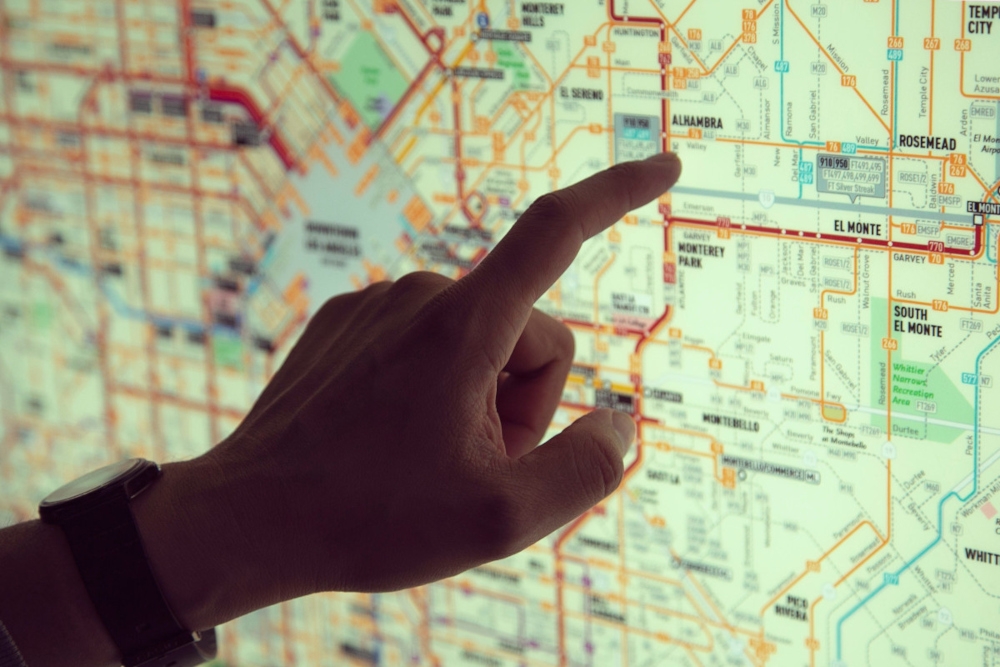
It took time to see that clearly. At first, I did what most people do. I tried to redraw the same map with small adjustments. Different route, same destination. “There’s ‘medic’ in biomedical engineering, right?” I once convinced myself. Different institution, same expectation. It felt responsible. Sensible. Safe. But something was still off.
Over the years, as life unfolded in quieter ways, I began to understand that maps are often drawn after journeys are completed. They make paths look clean, linear, and intentional. What they rarely show are the detours, the pauses, the doubts, the moments where someone almost turned back.
This is where many of us get lost, without realising it. We mistake clarity for correctness. We assume that because a path is well-trodden, it must be right for us. We borrow timelines, definitions of success, even measures of faith, without asking whether they fit our terrain.
The problem is not that the advice is bad. Most of it is well-meaning. The problem is that it was not written with our lives in mind.
I see this often now. In students who feel behind because they did not peak early like their mates. In professionals who look accomplished but feel oddly hollow if you speak to them in private. In people who did everything right, yet cannot explain why something feels misaligned.
They are not failing. They are cruising with someone else’s coordinates.
Faith, at least as I understand it, was never meant to function as a GPS. It does not tell you which turn to take at every junction. It offers something quieter, and perhaps more demanding: a compass.
A compass tells you direction, not distance. It anchors values, not timelines. It reminds you where north is, but leaves the walking to you. Two people can follow the same compass and still take very different routes, because their landscapes are different. Their grasses greener, their skies bluer.
You see, when we confuse maps with compasses, we become impatient with ourselves. We rush. We compare. We assume that deviation is failure, rather than information. We forget that discovery often looks like delay from the outside.
I have learned, sometimes painfully, that you do not “find yourself” by arriving somewhere impressive. You find yourself by paying attention to your surroundings while walking. By noticing what gives you energy and what drains it. By being honest about what fits and what does not, even when the mismatch is inconvenient.
Looking back, I am grateful that my early ambition did not fully materialise the way others expected it to. Not because the path was wrong, but because following it blindly would have required me to abandon questions that mattered. Questions about meaning. About contribution. About what kind of work allows me to remain whole.
Yes, without a map, I don’t always know where this path leads. But I definitely recognise the person walking it.
And that matters more than the destination ever did.
* Ir Dr Nahrizul Adib Kadri is a professor of biomedical engineering at the Faculty of Engineering, the Director of UM Press, and the Principal of Ibnu Sina and Tuanku Bahiyah Residential Colleges, Universiti Malaya. He may be reached at [email protected]
** This is the personal opinion of the writer or publication and does not necessarily represent the views of Malay Mail.


