


OCTOBER 9 — The thing about executions is they don’t happen in the dark.
They happen while the rest of us are brushing our teeth, cursing traffic, or deciding between kopi O or teh tarik.
At six in the morning, Singapore hanged a man named Pannir Selvam Pranthaman — Malaysian, 38, poet, brother, son — for carrying fifty grams of heroin.
Fifty grams. The weight of a cheap chocolate bar.
They say they caught him in a random inspection.
That’s the first lie.
There are tens of thousands of motorcycles crossing the Causeway every day.
No one gets “randomly” pulled aside for carrying fifty grams of anything.
They had a tip-off. Somebody told them.
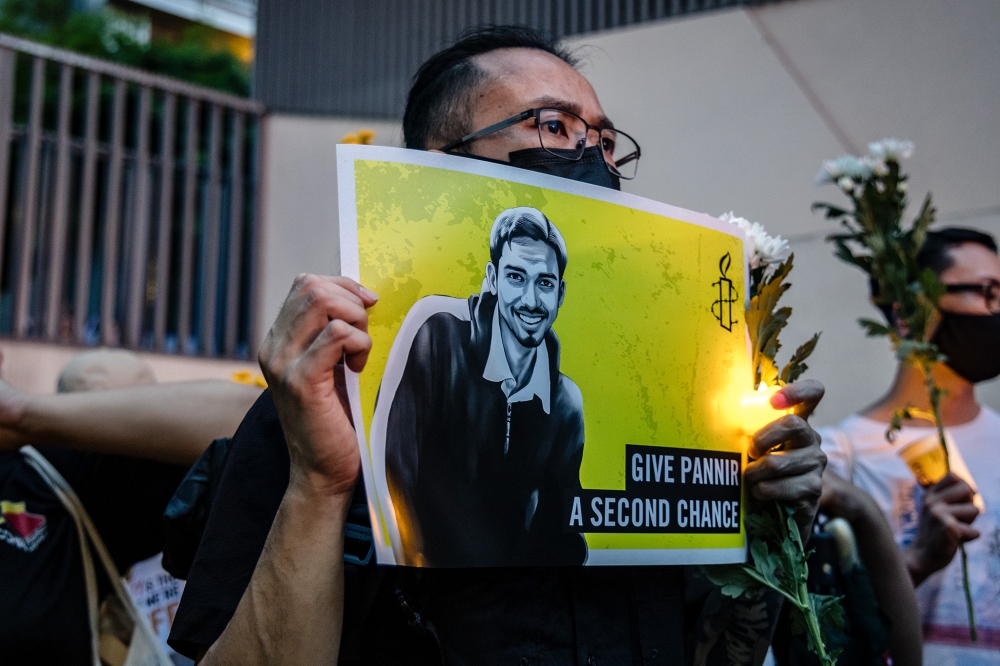
So here’s the real question: if they knew, why didn’t they stop him in Johor, where he could’ve been arrested, charged, and still alive?
Why let him cross into Singapore — knowing full well it’s a one-way ticket to the gallows?
Because it’s not about stopping crime.
It’s about hanging someone for it.
It’s about theatre. The illusion of order.
A ritual that says: “See, we’re tough on drugs.”
At six am, they killed him.
At six-thirty, his family was told to collect the body.
No mercy. No hesitation. Just the mechanical precision of a country that’s built efficiency into its DNA.
He’d asked for one thing — to testify in an ongoing investigation into the drug trade that swallowed him. The court refused to even hear it. No due process, no patience, just a date and a rope. By sunrise, the state had done its job.
Singapore likes to believe it’s the adult in the room, running a clean shop in a dirty region.
But that’s the grand hypocrisy.
You can’t claim moral clarity when your banks wash the money of warlords, when arms dealers dine at your rooftop bars.
You can’t hang couriers and let capital move unchecked through your spotless city.
Fifty grams — that’s not a cartel. That’s a man being used, discarded, and then displayed as a warning.
A mule, not a kingpin. A poor man caught in the gears of a machine that mistakes cruelty for deterrence.
They call it justice.
But justice that can’t see poverty isn’t justice — it’s revenge.
And the Singaporean version is wrapped in silk and paperwork, the gallows hidden behind glass and palm trees.
Let’s be honest: if deterrence worked, the hangman would be out of a job.
But he’s not. He’s still busy, because killing one desperate man doesn’t change the price of heroin or the desperation that drives it.
The data says it doesn’t work. The state says it must.
Because killing is simpler than rethinking.
Pannir Selvam — or Paul Silas, the name he wrote under — wasn’t a monster.
He was a man who made a mistake, and a state that made none.
That’s the tragedy. Bureaucracy doesn’t bleed. It just signs.
Slavery was once legal. Apartheid, too. Every evil on earth came with a rubber stamp and a straight face.
When a system forgets mercy, it stops being civilised — no matter how clean the streets look.
Someday, the gallows in Changi will go quiet — not because compassion triumphed, but because reason finally did.
Until then, the city will keep its conscience white, its paperwork tidy, and its hands red.
And somewhere, between the roar of morning traffic and the smell of coffee, a small voice will keep asking: why didn’t you stop him before he crossed the bridge?
* This is the personal opinion of the writer or publication and does not necessarily represent the views of Malay Mail.


