


SEPTEMBER 13 — Germany’s diplomatic corps gathered in Berlin this week under a cloud of uncertainty, summoned home by Chancellor Friedrich Merz to hear a sobering message: Europe’s long-standing partnership with the United States is not what it once was.
“The US is reassessing its interests — and not just since yesterday. And so we in Europe must also adjust our interests, without false nostalgia,” Merz declared before some 600 ambassadors.
His words were striking not because they were wholly unexpected, but because they captured a moment of historical reckoning. Since the Marshall Plan and Nato’s founding, Europe has relied on the American security umbrella.
But Washington today — under Donald Trump’s second presidency — speaks a different dialect: tariffs, transactionalism, and conditional defence guarantees. Europe must now contemplate an autonomous role in global affairs, even as its own security challenges multiply.
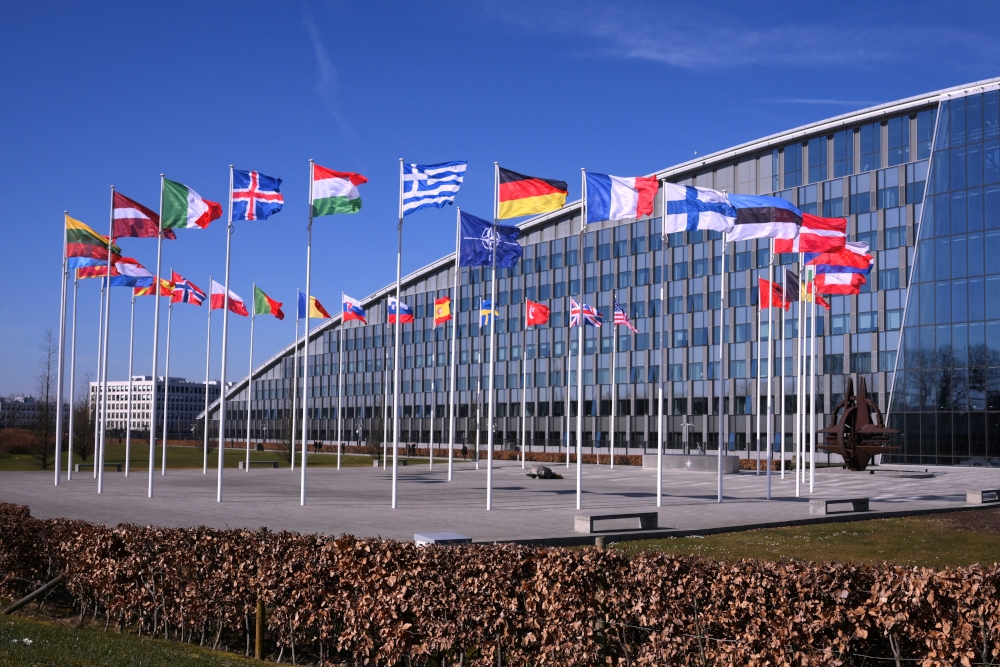
A transatlantic shift exposed
Barely a day after Merz’s intervention, Moscow offered its own reminder of Europe’s vulnerability.
Russian drones crossed Polish airspace 19 times overnight, forcing Nato to scramble fighter jets and mobilise German Patriot batteries to intercept them.
The symbolism was unmistakable. While Europe debates its drift from the US, Russia is testing Nato’s credibility in real time.
The contrast is stark: speeches in Berlin emphasising independence, while in the skies above Central Europe, dependence on American military coordination remains palpable.
Germany’s diplomats — many of them veterans of decades in Washington, Brussels, and Asian capitals — know that such mixed signals risk undermining deterrence. Europe’s adversaries will exploit every hesitation.
Lessons for Asean
Why does this matter to Southeast Asia? Because Asean has long observed the “transatlantic model” as a reference point for its own diplomacy. Germany, after all, is not just Europe’s anchor; it has become a development partner of Asean, investing in governance reforms, green transition projects, and capacity-building.
The challenge Germany faces in recalibrating relations with the US mirrors Asean’s own dilemma between Washington and Beijing. Both regions must learn to act autonomously while remaining interdependent with superpowers.
Both must avoid “false nostalgia” — for Asean, the easy assumption that American primacy guarantees stability; for Europe, the belief that the Cold War alliance automatically extends into the present.
The test of diplomacy
For Germany’s diplomatic corps, the week underscored that speeches and symbolism matter less than practical readiness.
Ambassadors were reminded that they must prepare Berlin for a multipolar age: where US support cannot be taken for granted, Russian pressure is constant, and Asian partnerships — including with Asean — are increasingly strategic.
For Asean, the lesson is equally sharp. Europe’s hesitation in managing its security reveals the costs of depending too heavily on an external power.
As Asean prepares for a turbulent East Asia Summit in Kuala Lumpur next month, with Trump, Putin, Xi, and Modi all in attendance, it must also summon the courage to act collectively — without clinging to nostalgia for an order that no longer exists.
Merz’s call was not only for Germany. It was, indirectly, for all regional organisations facing the twin realities of superpower rivalry and regional fragility.
Breaking up is indeed hard to do. But clinging to illusions can be even harder to survive.
* Phar Kim Beng, PhD is the Professor of Asean Studies at International Islamic University of Malaysia and Director of Institute of Internationalisation and Asean Studies (IINTAS).
* Luthfy Hamzah is a Research Fellow at IINTAS.
** This is the personal opinion of the writer or publication and does not necessarily represent the views of Malay Mail.


