


APRIL 22 — It is the custody case that has caught the attention of the nation.
Last year, S. Deepa’s six-year-old son and nine-year-old daughter were converted to Islam by her then-husband, Izwan Abdullah, without her knowledge or consent.
Following a custody battle in the Syariah and Civil courts, Deepa was awarded custody of both children by the Seremban High Court. Just one day later, Izwan responded by violently kidnapping his son.
Resurrecting the same old tired issues of race and religion, the case reflects the continued complexity of Malaysia’s dual-track legal system and the difficulty in upholding convictions when the two courts supposedly have “separate but equal powers”.
Yet the case also shines a light on the disturbing issue of official attitudes towards domestic violence and abuse. Deepa claims to have lodged over 20 police reports against Izwan for domestic violence.
In August last year, she was assaulted so severely that she received an Interim Protection Order (IPO) from the police. When snatching their son, he allegedly attacked her again.
Clearly, both the IPO and custody order here have been violated, warranting his immediate arrest.
And yet Inspector-General of Police Tan Sri Khalid Abu Bakar (the man whose job it is to uphold the law and protect the rights of all citizens) has instead urged both parties to “settle the problem privately” due to the separate judgments issued by Shariah and civil courts.
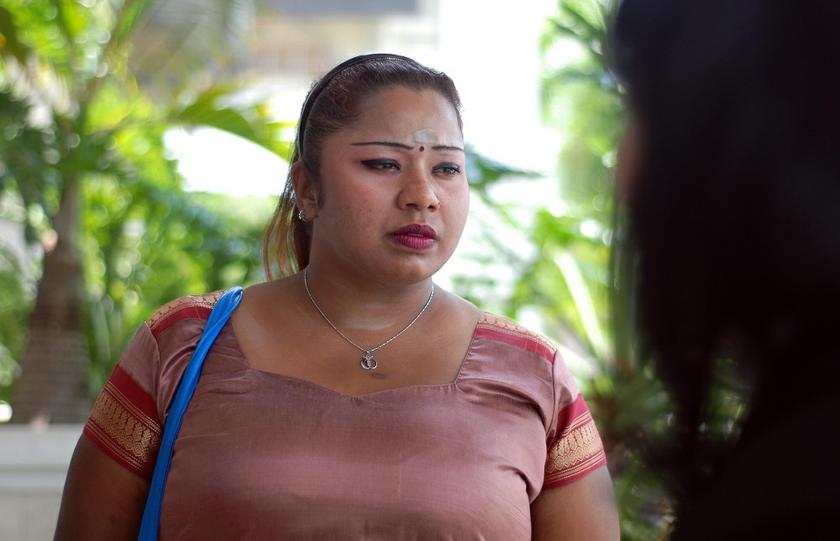
He also added that the police were not worried about the abducted son’s safety “because he was with his father” and that no warrant of arrest had been issued contravening the High Court’s custody order granted to Deepa.
As comforting as it is to know that the IGP is not worried about the safety of Deepa’s son, I am quite sure that she and many others do not share his confidence.
His irresponsible remarks urging the couple to simply “talk it out” highlights the prevailing attitude in Malaysia that domestic abuse is not a serious offence worthy of prosecution by the police.
Reports of abuse are routinely downgraded, calls for help dismissed and — as is the case for Izwan — violent kidnappers are left to roam free.
The statistics paint a damning picture. According to the police and Ministry of Women, Family and Community Development, 3,488 cases of domestic violence were reported in 2012.
This would be a high enough figure, if not for the fact that domestic violence as a crime is grossly underreported due to a culture of shame and silence, fear of possible repercussion, and lack of supportive spaces for victims.
The characterisation of domestic disputes as a “private matter” is a universal barrier to the accurate reporting of violence and the subsequent response to the violence.
Of course, this isn’t just a belief held by Malaysians. Here in England, a poll by the BBC shows that over half of people believe that domestic violence is something that happens behind closed doors and for the partners to sort out.
More people would call the police if someone were mistreating their dog than if someone were mistreating their partner. Domestic violence is an endemic crime that cuts across racial, religious and cultural divides.
But in Malaysia the problem is exacerbated by what appears to be the official condoning of such actions and a reluctance to get involved when religion is cited as a factor. The IGP’s remarks send a clear message to vulnerable women: You are on your own.
The Women’s Aid Organisation (WAO) has already come out in defence of Deepa and summed it up neatly: “Did the ex-husband give Deepa the chance to talk things over before he converted their children to Islam? He didn’t. Should Deepa be forced to talk things over with an abusive ex-husband? We don’t think so. Did the ex-husband want to talk when he violently snatched the son from Deepa? He didn’t.”
Am I surprised that the IGP holds such dangerously ignorant views? I’m not. It would hardly be the first time a Malaysian public official has displayed prejudice and contempt for women’s rights.
Just last month, Deputy Home Minister Datuk Wan Junaidi Wan Jaafar made a statement in Parliament claiming that Malays are “more sensitive” to statutory rape than other races, who are “more inclined to accept it and are therefore less inclined to lodge police reports.”
These kinds of statements, which he has since asked to be expunged from the parliamentary record, not only serve to stoke the fire of racial discontent, they also downplay the suffering of the underage victims and their families.
I rather feel that Malaysian government officials should be made to undergo intensive gender equality training courses before they are allowed to open their mouths in public. Or perhaps a course in simple human decency and common sense would suffice.
It is also interesting to note that Izwan has only attempted to kidnap his son, and not his daughter. Is the supposed religious salvation of his daughter not as important to him as his son’s? I wonder why.
All this reminds me of Prime Minister Datuk Seri Najib Razak’s comments at the 50th National Women’s Day celebration in 2012. In his speech, he boldly declared that there was “no need” for a women’s rights movement in Malaysia because equality was given to us from the start.
While I agree that Malaysia has made significant progress in terms of equal pay and education for all, Deepa’s case reflects the way that entrenched cultural attitudes routinely discriminate against women. It exposes crucial gaps in the kind of support we provide for victims of domestic violence.
It prompts us to ask serious questions about the response of the police and other state agencies to domestic violence. And it reminds us that we need to hold public officials accountable for their remarks, especially when they are so damaging.
In this respect, it appears that once again, the sisters are going to have to do it for themselves.
Malaysia’s Joint Action Group for Gender Equality (JAG) is currently running its annual spoof awards —Aiyoh … WatLah!? Nominees for 2014 feature public acts and statements that perpetuate sexism, misogyny, homophobia, or transphobia.
The sad thing is that this year’s winners, as in the past, will probably wear their medals with pride rather than shame.
In 2014, it feels like it should go without saying, but here goes — domestic violence is not a “private” problem. It is a social problem. It is a political problem. It is a human rights problem. But above all, it is a crime — and along with kidnapping, one that Izwan Abdullah should be prosecuted for.
*This is the personal opinion of the columnist.


