


KOTA KINABALU, Nov 27 — Sabah’s young voters – 30 per cent of the entire electorate under 30 years of age – are emerging as one of the most influential blocs this election with “kingmaker” powers.
Despite that, they are likely also the least informed. Political observers said that this is not because of apathy, but largely due to barriers of distance and cost, especially for the thousands studying or working outside the state or their hometowns.
“They tend not to attend ceramahs or meet-and-greets but they do their research online. They are attracted to concise videos, short explainers, and they will fact-check using whatever tools they have – even AI,” she told Malay Mail.
Adelina Adna, the youth chairs of non-governmental group Sabah Action Body Advocating Rights (Sabar), said political awareness among young Sabahans has surged since Undi18, but the gap between urban and rural exposure remains stark.
“Personality matters. They want someone who can communicate clearly, who is credible, and who can explain their policies,” she said.
Sabah’s youths have historically been a decisive but underperforming electoral force, with turnout generally lower than older age groups.
In both the 2020 state election and the 2022 general election, young Sabahans voted in far smaller numbers than voters aged 40 and above.
According to statistics from the Election Commission, youths under 30 are pivotal in nearly all 73 seats, with the exception of Api-Api where they comprise just 9 per cent of voters. Elsewhere, they make up between 17 and 41 per cent.
Seats with the largest share of young voters include Karambunai near Universiti Malaysia Sabah, Nabawan in the interior, and Bugaya in Semporna.
Youths account for over a third of voters in 29 state seats.

Despite being heavily courted through youth-centric benefits like digital credits, entrepreneurship grants, and training programmes, little has been done to improve young voters’ ability to actually participate in the democratic process.
There are no subsidised travel schemes or absentee-voting options for outstation Sabahans, and voter education efforts remain concentrated in urban areas.
Urban-rural divide in youth political awareness
Universiti Teknologi Mara political lecturer Tony Paridi Bagang said candidates matter more to youths than party brands, with younger voters gravitating toward clean governance and untainted leadership.
“Party identity, ‘Sabah-for-Sabahans’ sentiment, economic policy, these matter too, but it depends on their exposure,” he told Malay Mail.
In rural areas, interest varies widely depending on the community. While social media has some influence, much of the decision-making still depends on who is physically present: candidates who visit, community leaders who speak up, or family members discussing choices.
Reports show that young voters are influenced primarily by social media, followed by peers, and lastly by family.
But rapid online information also poses risks.
“Many are intelligent, but underinformed or misinformed. Only 20 to 35 per cent of youth are being reached effectively,” Adelina said, adding that despite the enthusiasm sparked by Undi18 in 2022, rural exposure remains low.
Youth outreach
Recognising their significance, the Gabungan Rakyat Sabah (GRS) government introduced several incentives targeting young voters; among them are educational grants like Budi and Bakti amounting to RM75.5 million, and one-off student aid of RM300 to some 20,000 students, flight subsidies like GRS SubFly, and youth entrepreneurship programmes.
Election candidates across the political spectrum have also been tailoring their strategies around the media habits of this voter group.
In Kota Kinabalu, Parti Warisan candidate Loi Kok Liang focused on issues like parking and market upgrades while relying on short, high-engagement videos to attract younger voters.
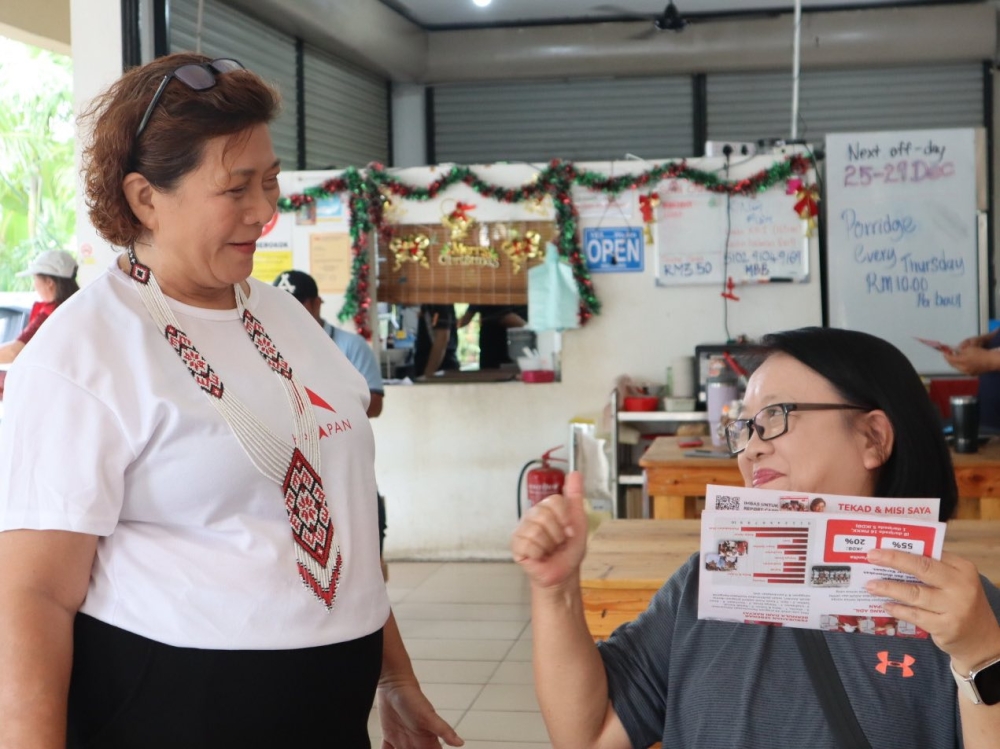
In Kepayan, incumbent assemblyman Datuk Jannie Lasimbang organised sporting events like pickleball, e-sports and basketball and volleyball court upgrades for youth support.
“We also campaign on social media, livestream ceramahs, run podcasts; we go where young people are,” she said.
Party loyalty?
However, despite political efforts to woo young voters, activists say many younger voters care less about race-based or party-aligned voting compared to older generations.
However, they do look for other personal character traits and outspokenness.
“They look at who is trustworthy. They want leaders with clean reputations, no drama, no scandals, and who actually do the work,” Adelina said.
“For many of them, it’s about the individual, not the party.”
Ryan Yong from Tenom, 18, said many first-time voters are paying closer attention to policies than to slogans.
“The political atmosphere is very dynamic this election. People are ready for real change,” he told Malay Mail, adding that youths understand their future depends on choices made now.
Jayfernie Louis from Keningau, 25, said credibility was her top criterion, and she preferred candidates from local parties who could advance Sabah’s rights.
“Young people will feel the effects of whatever government is formed. That’s why we need to vote,” she added.
But not all youths are engaged. Nineteen-year-old Johnie Matlin from Keningau told Malay Mail that politics simply isn’t on his mind.
He works at his family’s eatery and says he has not met any candidates nor knows which constituency he belongs to.
“Maybe I’ll just do what my family says,” he said.
“I don’t know any of the candidates. After this weekend, it’ll be over.”
Johnie isn’t alone, many young voters are barely out of their teens and are less inclined towards politics, particularly in rural areas.
“They will mostly go with family ties or if not from a political leaning family, then they will listen to the talk among friends,” said Adelina.
What youths really want
The youth-centric initiatives are still being overshadowed by the larger narrative being promoted in Sabah — basic infrastructure issues persists and the perception of corruption and lack of transparency adds to the growing distrust and anti-establishment sentiment that is common among the younger voters.
While national parties are not dismissed outright, many Sabah youths prefer local leaders with clear values and little baggage.
“They want stability and accountability,” Adelina said.
“They want leaders who won’t jump, won’t fight over positions, and who are actually here to serve Sabah.”


