


KUALA LUMPUR, Nov 22 — For decades, Malaysia’s National Art Gallery, or Balai Seni Negara, has stood as the symbolic heart of the nation’s artistic expression — housing thousands of works and hosting exhibitions that helped shape Malaysia’s cultural landscape.
But for director-general Amerrudin Ahmad, 55, the future of Malaysian art isn’t confined within the gallery’s walls along Jalan Tun Razak.
It’s being shaped in fishing villages, small towns and riverbanks far from the capital — through a deliberate effort to decentralise and bring art to the people.
“When we decentralise, we realise we are no longer on the colonial-era track,” he said in an interview with Malay Mail at the gallery.
“By decentralising, we elevate local businesses, highlight what is unique, and involve credible people to benefit the community.”
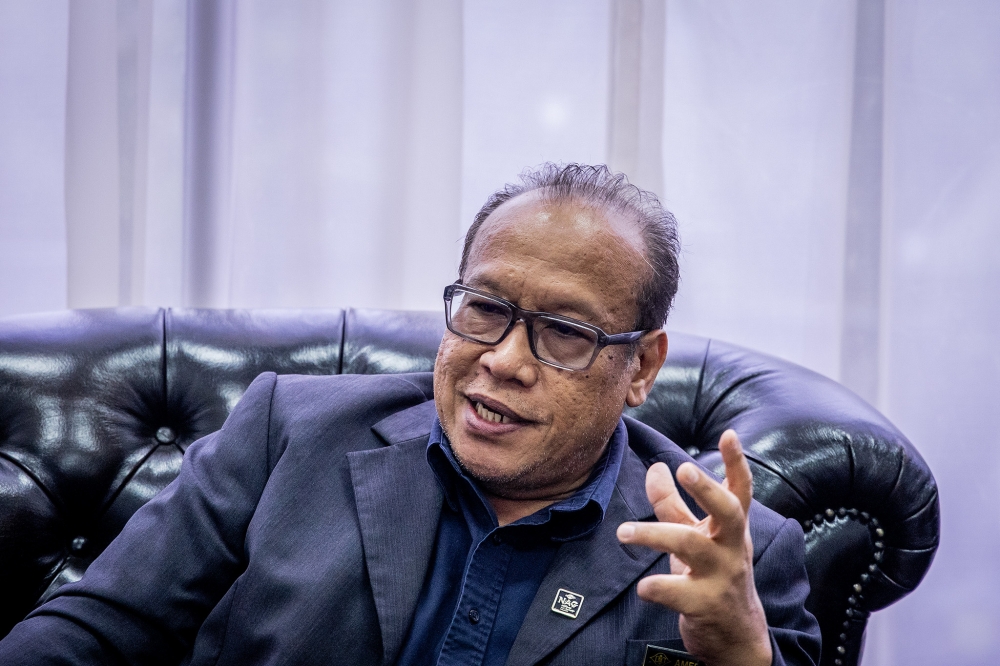
Amerrudin, who has served 27 years with the gallery and was previously its deputy director-general and senior curator, explained that the shift is part of a broader rethinking of the gallery’s role — from being a repository of fine art to becoming a bridge between artists and ordinary Malaysians.
“One of our main functions is to preserve knowledge,” he said.
“The most important bridge to ordinary people, the makcik-makcik, the villagers, is information.
“There are more than 30 art galleries in Kuala Lumpur and over 70 nationwide, but our role is different. As a national institution, we focus on our function to society.”
Art beyond Kuala Lumpur
For decades, major exhibitions and competitions like the prestigious Bakat Muda Sezaman (Young Contemporaries Competition) were confined to the gallery’s halls.
Since 2022, however, the competition has adopted a site-specific format, where shortlisted artists develop their projects within their own communities.
“Previously everything was done here. But when we changed our approach, we saw originality and creativity without limitations, including size,” Amerrudin said.
He gave the example of one of the past entries from Sabah.
The artist worked with a remote Bajau community in Pulau Silk with no electricity or running water, reviving traditional symbols through a large sculpture that functioned as an “ice box” for storing freshly caught fish.
“The project is called Aisbok Bajau. The fishermen would go out to catch fish and then return, some to sell them, some to keep them for their own consumption.
“They’d bring the catch home and store some of it in the ice box. This way, they’d have fresh fish to eat. But the ice box itself was a sculpture, an artistic approach,” he said.
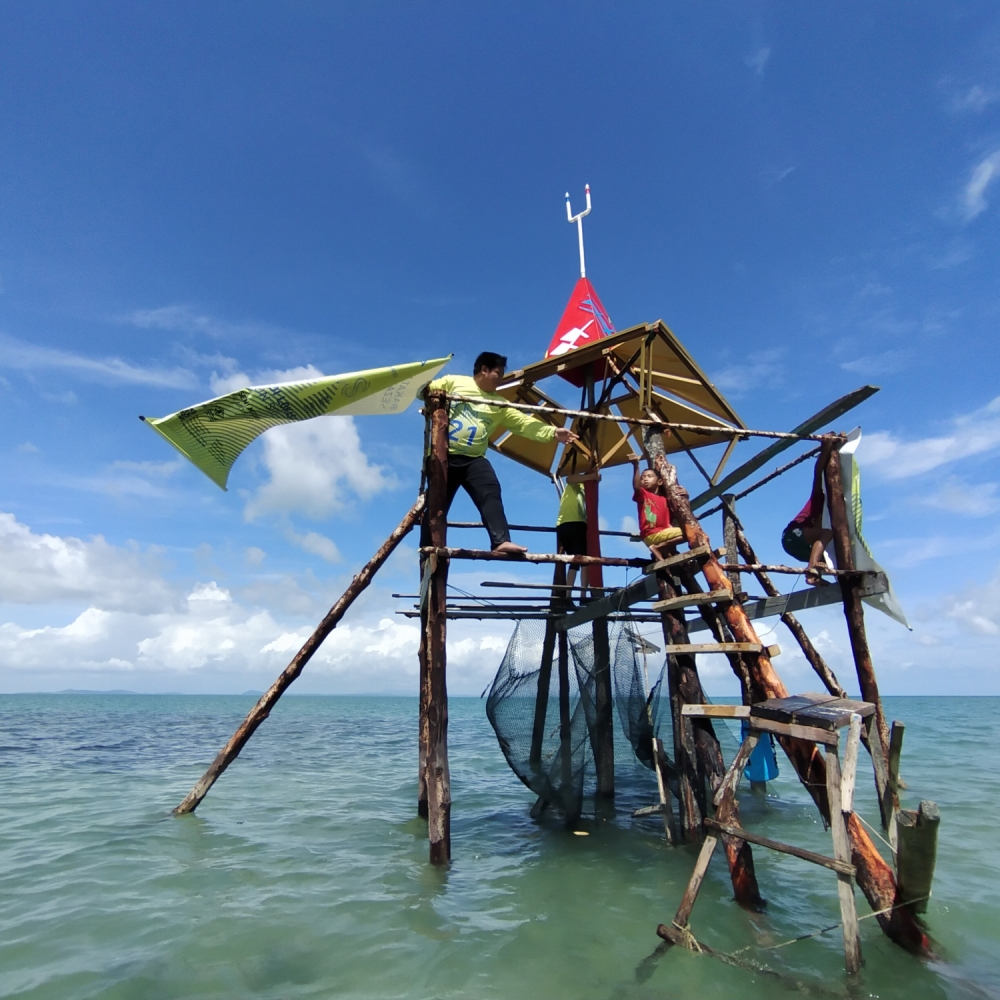
The artwork attracted visitors and corporate social responsibility projects from private companies to the island, turning a community art project into a practical solution with social and economic impact.
Another artist in Raub, Pahang, Mohamad Ismadi Sallehudin, built close ties with villagers through his Art Garden Madi studio in Ulu Dong.
Taxi drivers in Ulu Dong know him by name, said Amerrudin, with locals taking pride in his projects.
“When artists are involved with the community, the community knows them. There’s a sense of ownership,” Amerrudin said.
In Kuala Terengganu, a mural painted on bridge columns now serves as a navigational marker for fishermen.
“The fishermen tell their children, ‘If you want to bring the boat home, follow the painting.’ When you show them art, they might not understand. But when it benefits them, they get it,” he added.
@ohmyganung Makin cantik tiang Jambatan Sultan Mahmud. Kreatif betul diorang dapat lukis macam ni. Kalau naik bot cruise sungai Terengganu boleh singgah nanti. Biasanya tak mahal pun nak naik bot ni. Jambatan Sultan Mahmud, Kuala Terengganu
original sound - Ohmyganung - Ohmyganung
Breaking away from the old model
The National Art Gallery has always reflected Malaysia’s evolving identity.
It was established in the 1950s during a time when visual propaganda was a powerful tool for post-colonial nation-building.
“Back then, countries with multiple races and no standard language relied on visual communication,” Amerrudin said.
“The British had to set up a National Gallery before artists could bring their own collections.”
In line with that early vision, the Cabinet approved the use of the Dewan Tuanku Abdul Rahman at No. 109 Jalan Ampang on April 22, 1958, to house the newly formed Balai Seni Lukis Negara (as it was then known).
As the nation grew, so did the institution.
On May 21, 1984, its new premises at No. 1 Jalan Sultan Hishamuddin — the former Hotel Majestic — was officiated by then prime minister Tun Dr Mahathir Mohamad.
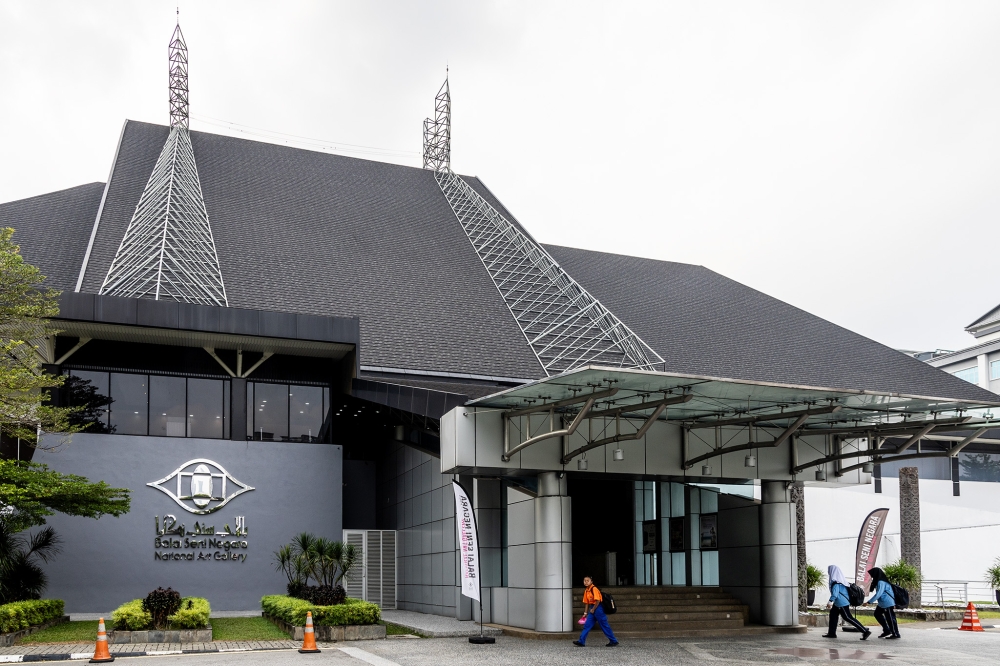
The gallery eventually moved to its current location on September 27, 2000, also inaugurated by Dr Mahathir.
For decades, these centralised spaces embodied the gallery’s role as the country’s cultural hub. But Amerrudin said the world has changed — and so must the gallery.
“Our approach is no longer just exhibitions in KL, but connecting with communities everywhere. In the modern world, connecting with people without crossing borders is no longer an issue,” he said.
He added that the gallery doesn’t compete with commercial galleries.
“So we said ‘you continue doing what you’re doing. We’ll help you with whatever you need — customs, tax, anything — we’ll support you.’ We should help them, not compete.
“If we sell art here, it becomes a conflict of interest. Private galleries have to survive. We focus on society instead.”
Adapting during Covid-19
The pandemic accelerated this shift.
With physical exhibitions halted and maintenance work disrupted during lockdowns, the gallery redirected funds to social media promotions.
Instead of hiring agencies, they worked with artists to produce videos promoting themselves and the gallery.
“We repositioned ourselves, telling the youngsters out there that the National Art Gallery is one of the cool places for OOTD,” Amerrudin said with a wide smile, referring to the the popular social media acronym for “Outfit of the Day”, where people take stylish photos of what they’re wearing.
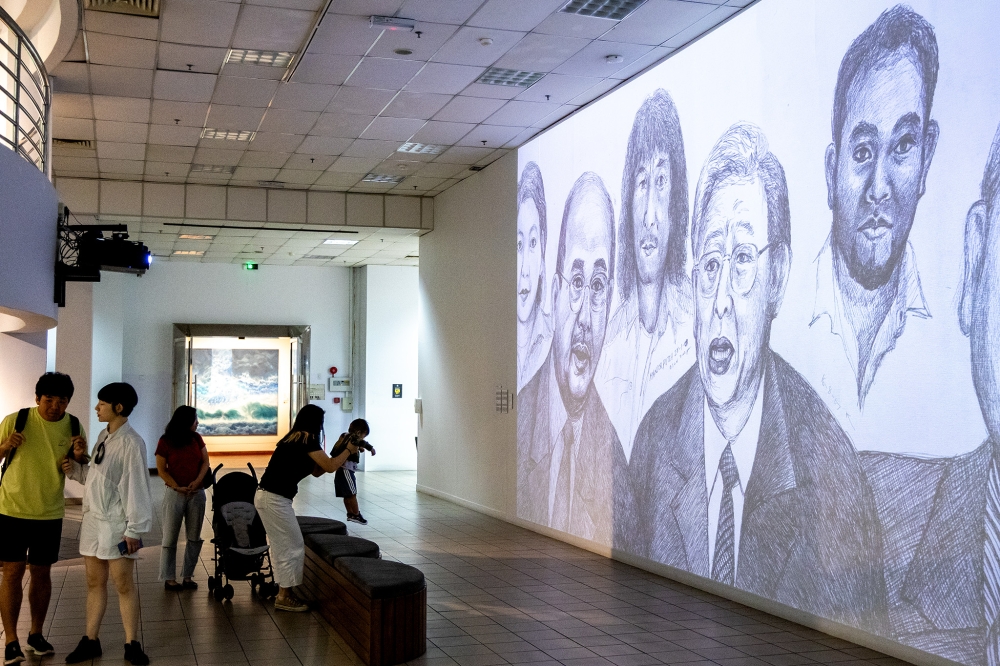
The gallery began engaging directly with visitors online, while upgrading its physical spaces — adding more sofas and planning to enhance its cafe — to make it a safe, comfortable place for families.
“Rain, storm, traffic jam, scorching hot, please come here. Have a coffee, wait for your kids, or let your kids wait for you here. It’s a controlled environment because we preserve treasures. We have CCTV, security, the temperatures, it’s all controlled. And parking is free as well,” he said.
“When we say one of our main roles is for society, we mean it. It’s all about you,” Amerrudin added.
Despite this shift, the gallery’s permanent exhibitions remain one of its core functions, serving as an anchor for its role as the nation’s custodian of artistic heritage even as its programmes extend beyond Kuala Lumpur.
From central authority to local wisdom
Amerrudin stressed that decentralisation is not about control.
“People no longer want to hear the grand narrative, which is the single truth. Everyone has their own truths. We focus on what they (the artist) can find, which is local wisdom,” he said.
While the gallery continues to maintain its mainstream exhibitions and collection of around 5,000 artworks, only around eight per cent are on display at any given time due to space constraints.
The rest, he said, lives on through community engagement and decentralised programmes that extend the gallery’s reach far beyond Kuala Lumpur.
“Globally, this is the new approach. There’s resistance to doing things the old way, but we’ve learned from the past,” he said.
“We’re moving forward — with society at the centre.”
Amerrudin said that when people start to look for it, they will find that art is already all around them.
“You don’t have to go far, it’s already part of your surroundings. Art is all around,” he said.


