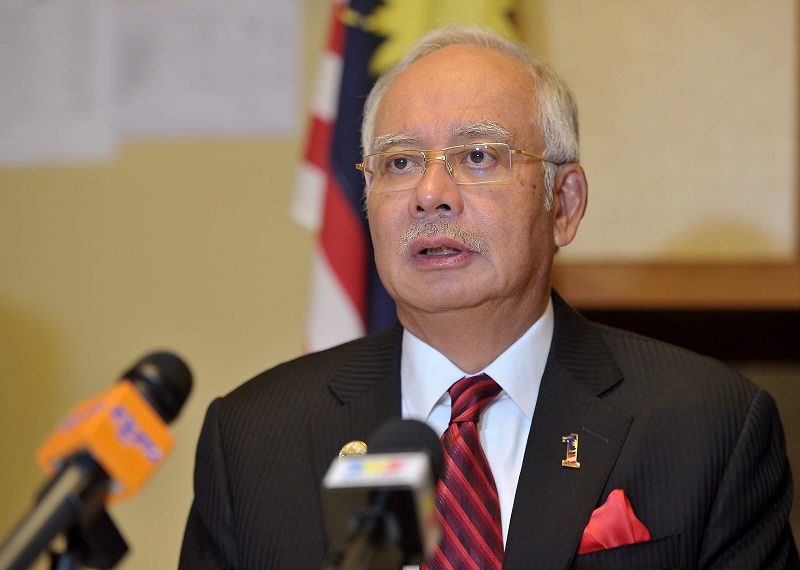


KUALA LUMPUR, April 10 — Parliament’s passage of a new anti-terror law strengthening the Sedition Act 1948 and which restricts fundamental civil liberties this week shows Malaysia is departing from Prime Minister Datuk Seri Najib Razak’s reformist vision, The Economist said in its latest weekly edition.
The London-based current affairs and business publication alleged that the Najib administration was reversing its previous promises to reform outdated legislation by bringing back detentions without trial through the Prevention of Terrorism Act (Pota) and by imposing harsher sentences on speech deemed seditious.
“Both pieces of legislation highlight how far Malaysia has retreated from the reformist policies that Mr Najib espoused during his first term, which ended in 2013.
“Supporters plead that the prime minister is tacking right only to head off leadership challenges from even less palatable parts of his party (on April 2nd Mahathir Mohamad, an influential former prime minister, renewed his call for Mr Najib to step down). But that is not much comfort to anyone,” the influential publication said in a piece titled “Lurch to illiberalism”.
While Najib had previously fulfilled his promise to scrap the Internal Security Act1960, The Economist said the Barisan Nasional (BN) government has revived “some of the old law’s power” through Pota ― where suspects can be detained indefinitely.
Despite Putrajaya’s justification of Pota with the threat of the Syria-based terrorist group Islamic State with over 90 locals nabbed by police, The Economist raised doubts over the necessity of such a law.
“Many fewer Malaysians than, for example, Belgians are thought to have travelled to Syria.
"Nor is Malaysia, a moderately Muslim country, battling provincial Islamic insurgencies of the sort that trouble its neighbours, Thailand and the Philippines,” it said.
It adding that human rights group International Commission of Jurists has claimed that Putrajaya had not shown proof that the wide powers under Pota “are warranted”.
Critics have also questioned the “suspicious” timing of the police’s reported haul of 17 individuals from a terrorist cell plotting attacks in the Klang Valley just hours before Pota was debated in Parliament, it said.
“The big worry is that the law will become a new weapon in a worsening crackdown on opponents of Umno, Mr Najib’s party, which has ruled Malaysia in coalition since the 1950s but which was nearly unseated in elections held in 2013,” The Economist said.
The publication noted that Najib had previously vowed to abolish the Sedition Act, but said Putrajaya had instead chose to give the retained law a sharper bite.
“Yet while pushing through the new anti-terror rules, his government took the opportunity to table changes to the act which would greatly toughen sentences and forbid speech that denigrates religion,” it said.
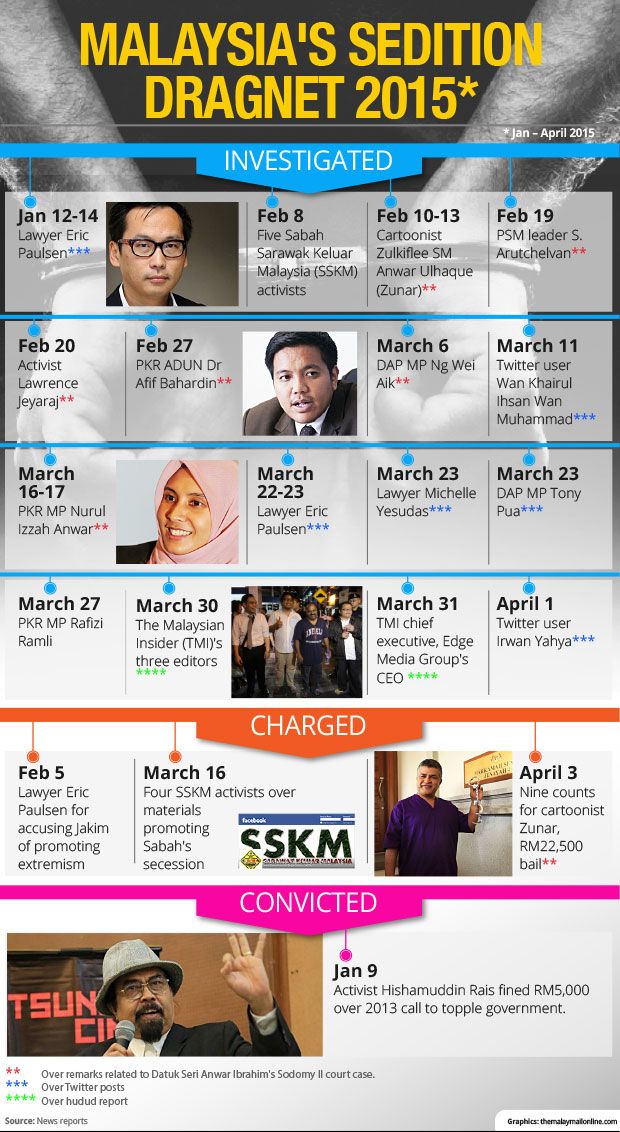
It also noted that police had nabbed 36 people in just three months this year for allegedly making seditious remarks as the “archaic law” is used “more frequently than ever”.
The Sedition Law has been used to largely arrest activists and opposition leaders, with many of the cases this year involving Twitter posts and comments on Opposition Leader Datuk Seri Anwar Ibrahim’s second sodomy case.